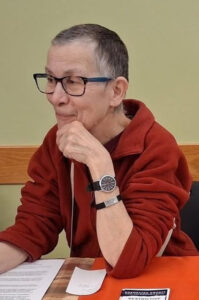
In May, 2023, about ten people gathered around a table at New Covenant Fellowship in Champaign to launch the Champaign-Urbana Reparations Coalition (CURC). Dr. Jeffrey Trask, already leading New Covenant’s efforts toward reparations for African Americans, led the meeting. Dr. Trask has continued to direct CURC as the group has grown in size and goals over the past three years.
CURC’s short-term goal is to establish and fund a Champaign County Reparations Commission for African Americans to study the need for reparations and bring recommendations for action to the public governing bodies and the University of Illinois, Urbana-Champaign (UIUC). We’ve made good progress toward that goal. The city of Urbana (on June 9, 2025) and the Champaign County Board (on October 23, 2025) have already committed funds to this effort. We propose an 11-person commission. At least 51 percent of the commission is to be composed of community members, to ensure that the leadership and recommendations authentically represent African American residents of Champaign County. We await a decision about support for this commission from the city of Champaign and, possibly, the village of Rantoul.
In February, 2026, students at UIUC approved a referendum in support of reparations. The student organizers initially had to collect signatures to get the referendum on the ballot, and then get folks to vote. Their hard work paid off! The non-binding referendum was approved by 87 percent of those who voted. It read: Shall UIUC study, repair, and prevent harms caused by racial injustice by following Urbana in providing the necessary resources to join Champaign County’s reparations commission?
But what are reparations? Reparations are acts of repair. They are not charity. They include acknowledgement of harm and policies that remedy historic and ongoing anti-Black practices, and can include payments. Financial compensation for generations of land theft, embodied harm, and relentless hateful practices will never be sufficient to remedy the damages. Yet however inadequate, recompense needs to be a part of the repair. Repair can take many forms, as we in the Champaign-Urbana Reparations Coalition (CURC) aim to demonstrate. Some possibilities include offering tax credits, debt dismissal, rent relief, elimination of bad credit scores, reappraisal of housing stocks, regular history teach-ins, wellness stipends, and more. You get the idea: we can imagine and then enact a future in which we want to live.
One outcome of the coalition’s work is an FAQ (Frequently Asked Questions) document on our website. Nearly every issue links to reparations: health, education, housing, employment, the wealth gap, land ownership, civil rights, and so on. Some say it is an overwhelming concept; and, indeed, reparations, like any fundamental transformation, is a lot to tackle. CURC builds coalitions and leverages organizational strengths to build cultures of repair and healing. There are already efforts underway in Champaign County that could be made more intentional to foster a culture of healing, in addition to new endeavors.
It is not up to white people to decide how and what to prioritize in addressing centuries of egregious harms. That’s why we need a local group of those most impacted by enslavement and its legacies—a commission—to make these decisions. They must have financial and logistical support to meet, oversee research, and then make recommendations about how to proceed to implement reparations. Also, we need to include political representatives from the start, so that there is buy-in from the folks who will introduce legislation.
People’s potential is thwarted everyday by systems designed to elevate and enrich a small number of people and corporations that have taken power for their own benefit. Reparations is a way to tackle unjust systems; individuals comprise systems, yes, but this effort is not primarily about individuals. Reparations is a “big tent” approach to challenging systems, addressing critical human needs like housing and education, by collaboratively imagining and building inclusive, equitable social structures. Effective reparations hold not only corporations liable for past and current harms but also myriad complicit groups such as government, faith communities, health care and educational institutions, and criminal justice systems. The various publics that have failed to act, or actively participated in oppression, are responsible for harms, and redress is overdue.
Creating a culture of repair helps all of us by promoting healing and intervening for justice. We don’t have time to sit around and feel guilty; rather, we must grieve the damage done in the past and present and, simultaneously, act to undo the systems that perpetrate and perpetuate the harm. Join us! Sign up for our mailing list and check out other ideas on our website.
Sharon Irish serves on the board of the C-U Reparations Coalition, which is an institutional member of the Independent Media Center.