
On May 1, International Workers’ Day, a crowd of around 200 students, campus workers, and Champaign-Urbana community members marched from the Alma Mater statue on the UIUC campus to the Swanlund Administration Building just up the street. They carried with them a petition with over 950 signatures—mostly from undergraduate and graduate students—calling on the University administration to enact a slate of policies that would provide proactive protection for international and noncitizen students and scholars from illegal and inhumane threats from federal immigration enforcement.
The May Day march marked the high point of an ongoing public pressure campaign by several labor unions representing workers at UIUC, that had begun in late January, 2026, during the Immigration and Customs Enforcement (ICE) “surge” in Minneapolis and ensuing mass mobilizations against it. A member motion from a steward at a general membership meeting of the Graduate Employees’ Organization (GEO Local 6300, representing most graduate workers at UIUC) proposed that GEO launch a campaign to secure a specific set of protections for international and noncitizen students and workers at UIUC; the proposal passed with the unanimous support of attendees.
Over the following months, the GEO’s Solidarity Committee researched and refined the demands, which include that the University: 1) explicitly commit to not allow immigration enforcement officials into private campus spaces without a judicial warrant, and take steps to ensure compliance with this policy; 2) use the Illini-Alert system to warn campus community members of verified immigration enforcement presence, and allow vulnerable workers to work from home in the event thereof; 3) create policies to allow students unjustly affected by immigration enforcement activities to finish their degrees abroad, and establish a fund of at least $500,000 for logistical support and legal defense of impacted students and workers; and 4) cease all business relations with companies that provide material support to ICE.
Solidarity was central to GEO’s organizing. The same member who made the original motion brought the demands to the Campus Labor Coalition (CLC), where the Service Employees’ International Union (SEIU) Local 73, the Campus Faculty Association (CFA), the Association of UIUC Academic Professionals, and the Non-Tenure Faculty Coalition (NTFC, IFT Local 6645) agreed to organize a joint campaign.
The University of Illinois’s use of planes operated by Global Crossing Airlines (GCA), the largest operator of deportation flights for ICE, to transport its NCAA athletes became a major rallying point of the campaign. SEIU had already launched a national campaign to pressure universities to drop GCA (which also operates as Global X and TopFlight), under the slogan “De-ICE these flights.” In early March, a GCA plane with the registration number N837VA, believed to be carrying UIUC collegiate athletes, was seen landing at Willard Airport. According to reporting by AP News, the same plane had been used by the Department of Homeland Security to illegally deport people to the notorious CECOT prison in El Salvador. Local reporter Brian Dolinar discovered via a Freedom of Information Act request that UIUC spent over $1.5 million on GCA flights in 2025, and requested comment from the University, which shifted blame to Anthony Travel, the agency that booked the flights, and to the NCAA, which books flights for tournaments. Most use of GCA to transport UIUC athletes, however, has occurred outside tournaments. University President Tim Killeen has maintained that the University does not have any “open contracts” with GCA, although the CLC has never claimed that it does.
When concerned students, workers, and community members arrived at Swanlund in the early afternoon of May 1, they found the doors locked and Director of Labor and Employment Relations Robb Craddock waiting outside. Craddock stated that he would accept the petition and deliver it to Chancellor Charles Lee Isbell Jr. Rally participants made their dissatisfaction clear and called on Isbell himself, or a similarly high-ranking administration official, to receive and acknowledge it. Representatives from GEO, NTFC, and CFA eventually handed the printed petition to Craddock, who lingered outside Swanlund for several more minutes while protesters chanted. Craddock was later joined by Assistant Vice Chancellor for Operations and Administration Kristin McMurray. Craddock and McMurray eventually departed unceremoniously, and the protesters soon dispersed.
Since that rally, the petition has been presented to Chancellor Isbell and President Killeen several more times. The University has yet to issue an official response. A recent “Federal Updates” email sought to assure campus community members that the university is working to protect international students “[e]ven when this work is not publicly visible”; but no changes in policy have been enacted. The University has continued to refuse to assert its legal right not to comply with non-binding administrative warrants, including when Craddock was asked directly by GEO negotiators during collective bargaining sessions in June and July.
The CLC believes that the University of Illinois, as one of the country’s largest and most prominent universities, located in a politically sympathetic state, has a duty to take not just reactive but proactive measures to protect its most vulnerable community members. Administrators have hidden behind vulnerable groups as a shield, claiming to not want to attract undue attention, while ignoring the demands from members of these groups themselves to enact affirmatively protective policies. In negotiations with the GEO, the university has rejected proposals for additional protections for international students, as well as guarantees of health insurance coverage for gender-affirming health care, and child-care subsidies to make a postgraduate education more accessible to parents. Whatever their purported values, the actions of University administrators send a clear message to international and noncitizen students and other vulnerable classes: they are more concerned with maintaining “business as usual” than protecting their community. With the recent federal ruling that undocumented students are no longer eligible to receive state financial assistance, access to safe education for immigrant and noncitizen students is becoming more precarious, and the University shows no signs of changing its path.
The GEO is also demonstrating solidarity in organizing with the CFA, a university faculty association collecting cards to become a union. With union representation and collective bargaining rights, faculty at UIUC will join the GEO and other unions on campus, including SEIU Local 73, AFSCME Local 698 & Local 3700, NTFC Local 6546, and other unions on or near campus like IUOE Local 399, Plumbers & Pipefitters Local 149, and Teamsters Local 26.
The GEO, which is currently renegotiating the collective bargaining agreement that covers over 6,000 graduate workers, and its coalition partners will continue to fight for protections for the immigrant community. Community members are encouraged to participate in an ensuing letter-writing campaign, as well as on-campus rallies to support the campaign for international student protections and the GEO’s ongoing collective bargaining efforts.
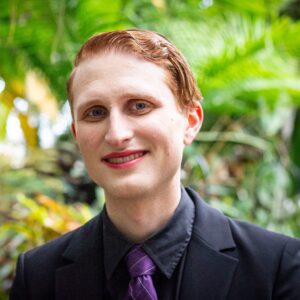
Xenia C. Osterhout is a recent PhD graduate of UIUC and served as the GEO steward for the School of Integrative Biology during her studies.

Emma Walters is a PhD candidate at UIUC and GEO member, and served as a co-chair of the GEO’s Solidarity Committee for the 2025/26 academic year.
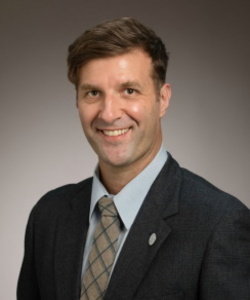
Jon Hale is a Professor in the College of Education and a member-representative-at-large of Campus Faculty Association.