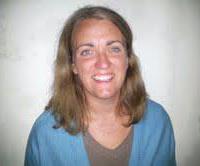
From left to right: Eunice Nelson Rivers, Debrae Phillips Lomax, Estelle Nelson Merrifield, and Angela Rivers.
Early African American settlers from Tennessee, Kentucky, and Missouri who relocated to the outskirts of Champaign County and became farmers and teamsters, ultimately moved to Champaign as early as 1863, built churches (Bethel A.M.E. and Salem Baptist) and railroads, became business owners in the twin cities, served their country in two world wars, and attended and worked for the University. Most notably, they offered educational, religious, and material support to Black college students when the University could (would) not enforce desegregation on campus. Families such as the Andersons, the Earnests, the Lees, the McCurdys, the Nelsons, the Phillips, the Popes, and the Scotts are among the earliest and most prominent Bethel families, who socialized within the supportive confines of racial bonds, several becoming united by marriage. One such case is that of Joseph F. Nelson, a deputy sheriff (in charge of prison keys) in the early 1900s for Champaign County, who married Stella Anderson, daughter of Angeline Scott.
The Nelson sisters—Eleanor Nelson Conrad, Estelle Nelson Merrifield, Hester Nelson Suggs (now deceased), and Eunice Nelson Rivers—actively contributed memories and lived experiences to my research on African Americans in Champaign-Urbana—what archives and libraries could never offer. Aiming to record their racial work and to enlighten the University on the self-supporting (and long-standing) civic work of African Americans, the Nelson sisters became my mentors, willing to instruct me, even outside racial boundaries; in turn, I was willing to be instructed, and inhabit their homes, church, and neighborhood. Memories, even if frail or incomplete (not in their case), can challenge and rectify official records: the sisters interrogated narratives of unproblematic access to white spaces locally. They demonstrated that when Black settlers finally established themselves in Champaign at the turn of the century, wishing to connect with the campus culture, they encountered a University that privileged white men and a city seldom receptive and often openly hostile to their visibility.
Continue reading →