President Harry Truman was the first world leader to recognize the theft of the Palestinian lands of 1948 as Israel; he did so eleven minutes after its creation. When discussing the topic, he’s quoted to have said, “I am sorry, gentlemen, but I have to answer to hundreds of thousands who are anxious for the success of Zionism. I do not have hundreds of thousands of Arabs among my constituents,” and referred to the Zionist pressure as “unwarranted interference.”
The Zionist lobby in America has been alive and well since before the Nakba, the Palestinian catastrophe that led to the violent displacement of more than 750,000 Palestinians—half the population at that time—and the massacre of more than 15,000 in the time leading up to the creation of Israel and shortly after. The largest Zionist lobbies in America today are Christians United for Israel, American Israel Public Affairs Committee (AIPAC), and Conference of Presidents of Major American Jewish Organizations. There are many other prominent and almost as large organizations, like J Street, Zionist Organization of America, Institute for the Study of Global Antisemitism, and Republican Jewish Coalition.
We see the lobby’s effect in how Palestinians specifically and Muslims more broadly are dehumanized in the US, how misinformed Americans are on Palestine, and how much of our tax dollars are used to fund the Israeli apartheid and occupation of Palestine.
Today, though, we are at a point of no return.
Americans have seen with their own eyes, on their own screens, the brutality of the Israeli Terror Forces. They have seen indiscriminate destruction of the Gaza Strip. They cannot unsee the mass use of sexual violence, including rape against Palestinian hostages and prisoners. And they will never forget the children hanging from walls and the parents carrying what is left of their children in shopping bags.
As time passes, this lobby is forced to spend a ludicrous amount of money to attempt to control a narrative it can no longer contain. Just a few weeks ago, it unseated Republican Kentucky Representative Thomas Massie, who is not as friendly to Israel as they would like. This race currently stands as the most expensive House race the US has seen yet, with spending at over $30 million.
Backtrack to about two decades ago—when the Zionist lobby’s framing was the only one easily accessible to the American public, to the launch of the BDS movement, and you see the beginning of the lobby’s crumbling. In 2005, representatives of Palestinian civil society called upon the world to impose broad boycotts and implement divestment initiatives against Israel similar to those applied to South Africa in the apartheid era. This is known as Boycott, Divestment, and Sanctions, or BDS for short. Boycott initiatives are consumer-focused; divestments on an institutional level; and sanctions require governmental measures, like arms embargos.
In 2014, Israel’s economy began to see the effects of the calls for BDS, especially following Israel’s massacres in Gaza in the summer of 2014, when more than 2,200 Palestinians were killed, including 551 children. That year, foreign direct investments in Israel dropped nearly 50 percent. In response, Israel devoted $25.5 million to an anti-BDS task force.
In 2015, Illinois was the first state to pass an anti-boycott law, and many states followed suit. Today 38 states have an anti-boycott law. These typically take one of two shapes: limiting investments in institutions that boycott Israel, or requiring government contractors to pledge they will not boycott Israel.
Illinois’s anti-boycott bill was the former; it specifically amended the Illinois Pension Code to prohibit investments in companies that boycott Israel. The bill created a situation where the Illinois Investments Pension Board (IIPB) is no longer responsible to the pensions it’s funding, but to Israel first. As Andrew Herrera, lobbyist for the Illinois Coalition for Human Rights (ILCHR), said on Wednesday, May 20 in Springfield, “The IIPB is the only body in Illinois making decisions about your pension that has zero legal duty to the people whose pensions it [controls], no fiduciary responsibility, no appeals process, no audit, no annual report, no published rules. That’s ridiculous. At face value that’s ridiculous, and the fact [is] that we are making these exemptions, we are making this rule—that in effect can bankrupt the state pensions—to advance Israeli foreign policy. That is a betrayal. There’s no other word for that.”
In 2019, the IIPB withdrew investments of around $100 million from Unilever, strictly because one of its brands, Ben & Jerry’s, took a stand for human rights and withdrew sales from the Occupied Palestinian Territories (they still operate within the Palestinian lands of 1948, what is known as Israel today). With the current political climate and the increased awareness amongst the American public, we will only see the list of companies who withdraw their investments, manufacturing, and markets from Israel grow. This bill limits the market for investments strictly to support a country committing apartheid, occupation, and genocide. Israel is currently ranked as the most disliked country in the world, according to the 2026 Democracy Perception Index by Nira Data.
There is no turning back.
Aside from the fiduciary concerns related to a bill like this, it has also broadly led to a chilling of human rights activism in the state. To quote the ILCHR, “the state of Illinois is actively suppressing human rights advocacy and shielding Israel from accountability by retaliating against companies that use economic means to put pressure on Israel.” This bill, though narrow in scope, has also been used in multiple instances since 2015 to deter ethical investment policies that include divesting from entities that profit off of war, occupation, and apartheid. In Champaign, when organizers asked the city to divest, the city lawyer cited this law as the reason the city could not do so.
Today, 22 Illinois Representatives and 14 Illinois Senators have sponsored a bill to turn this around and return the state to neutrality. The Illinois Human Rights Advocacy Protection Act (HB2723/SB2462) would repeal the 2015 AIPAC-sponsored anti-BDS law. The bill has grown from one sponsor, Illinois Representative Abdelnasser Rashid, to the current 36 sponsors in a little over a year. The ILCHR is confident that if it is brought to a vote today it would pass; but, alas, the Zionist lobby continues to try and shut it down. And the people continue to push it forward.
If you live in Illinois and you would like to see a neutral playing field for human rights, protection of First Amendment rights and the right to boycott, and a moral stance on injustice, then you support HB2723/SB2462. Contact your representatives in the Illinois assembly and senate today. You can learn more and quickly send them a letter here.
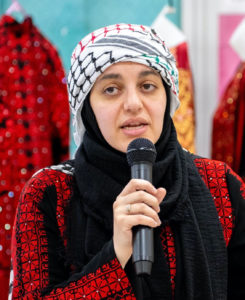
Dua Aldasouqi is a member of the Palestinian diaspora and CU Muslim Action Committee. She is dedicated to advocating for Palestinian rights and self-determination. She is a registered dietitian by profession and enjoys writing and performing poetry.