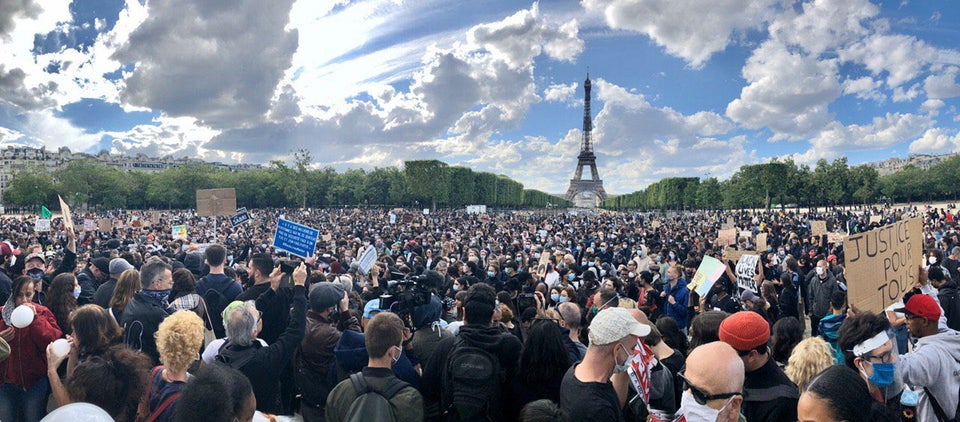
Tens of thousands demonstrate in Paris on June 6, 2020, in solidarity with US George Floyd protests
While we are rightly preoccupied with abuse by the police in the United States, almost no Americans know anything about policing and justice in other countries. France offers a particularly interesting case. In January, six nongovernmental organizations, including Amnesty International and Human Rights Watch, used a French legal provision to put the government on notice for racially discriminatory identity checks, a practice which they found “widespread” and “deeply rooted.” In June, the Council of Europe expressed “extreme concern” about conditions in French police stations and prisons after a report by its Committee for the Prevention of Torture, based on a December, 2019 visit, showed beatings, racist and homophobic insults, overcrowding, use of solitary confinement, and lack of psychiatric care in some cases.
On July 22 and 23, the French legislature passed two security bills, one on preventing terrorism, and one against “separatism” and to bolster “respect for the principles of the Republic.” The new laws, subject to review by the Constitutional Court—which in April struck down a previous version—are the state’s response to popular and police protests since George Floyd demonstrations spread from the US to France just over a year ago, but also build on longer-term trends of police violence and racial profiling, and protests against them, on the one hand; and the escalation of official and media rhetoric around security, Islam, terrorism, and immigration on the other. Continue reading →