The Reality of the Worker: May Day Speech

by Gus Wood

May Day speech inspired by the activism and speech/words of the legendary Lucy Parsons

Brothers and sisters, the objective is clear today: We need workers to unite.

Workers! Unite!

Brothers and sisters, we have reached the point of no return. Our very existence, our very essence as humans, our very livelihood as workers is being viciously assaulted by a white supremacist, ruling class onslaught of hatred. This underbelly of grotesque, cancerous malignancy festers in a racialized capitalist system that continues to not only destroy the communities that we built, but also to divide us along racial, class, and gender lines.

WE SAY NO MORE! Workers Unite!

Workers, we must understand our material conditions in this system: We live under a superficial, commodified pay system in which if you can’t pay, you can’t have. Everything has a price set upon it; earth, air, light and water, all have their price. And those that cannot work, they starve. Love, honor, fame, ambition, all the noblest aspirations that you and I hold dearest to our personal and social spaces, are also now commodified; they are all bought and sold daily. Those that cannot afford, they are isolated, ridiculed, oppressed.  Everything is upon the market for sale: all of humanity under capitalism is merchandise and commerce. Our land, which is the prime necessity of existence, is held for a price, and the millions of working poor perish physically, mentally, and emotionally because they cannot pay. Food, water, clothing, and shelter exist in super abundance, but are withheld from the masses for that price.

The productive and distributive forces of nature, united with the power and ingenuity of the working people, are reserved for a price. The mental, moral, intellectual, and physical qualities are dwarfed, stunted, and crushed to maintain that price. And the working masses perish from the horrific effects of day after day of exploitation. This system is antagonistic to our very health as it relentlessly stresses our bodies and our minds. According to the Centers for Disease Control, the age-adjusted suicide rate in the US jumped 24 percent between 1999 and 2014, from 10.5 per 100,000 people to 13 per 100,000 people. In total, 42,773 people died from suicide in 2014 compared to 29,199 in 1999. This exploitative system also created and now facilitates the resurgence of explicit, overt racism that contorts our class consciousness. The Bureau of Labor Statistics shows that the average white family in the U.S. has a net worth of more than $100,000, compared to less than $27,000 for African American and Latino families. More than 25 percent of blacks and Latinos languish below the official poverty line, and more than a third of black and Latino children live in poverty. Over half of African Americans between 16 and 24 cannot find the livable wage jobs that continue to disappear. In this system, our labor, our time, and our bodies are superfluous. The Labor Department notes that over 250,000 working people have been laid off while 362,000 people have stopped looking for work in the first four months of the year. That is over half a million lives thrown into volatile chaos and possible demise at the expense of this exploitative system. Yet, when we fail to find employment that will provide the basic necessities, or a sheriff throws us out of our homes for missing a loan payment with a ballooned interest rate, or our children suffer horrific medical catastrophes because of unaffordable medicines and procedures, Neo-Conservatives tell workers that we are lazy and do not work hard enough. Neo-Conservatives tell us that we do not deserve to make a living wage that correlates with the skyrocketing cost-of-living. Neo-Conservatives tell us that $7.25 an hour is more than enough to provide basic necessities for a household in 2016 America. Brothers and sisters, only our agency will silence those fraudulent voices for good!

WE SAY NO MORE! WORKERS UNITE!

And for what reason do we allow this abuse? Our bodies to contort, our blood pressure to rise, our mental stability to deteriorate? What rewards do we reap as exploited workers? Not wages! Based on wage statistics from the Social Security administration, over 50% of all American workers make less than $30,000 a year as the cost of living skyrockets. It’s not for some unrealistic goal of “opportunity” or “freedom.” According to the Bureau of Labor Statistics, among the 10 jobs projected to grow the most over the next ten years, five of the 10 jobs pay less than $25,000 and seven of the 10 jobs pay less than the average annual wage of $35,000. And where will the majority of our children be working after going into hundreds of thousands of dollars in debt attending private universities like the University of Illinois, attempting to exercise this “freedom” and “opportunity”? As dishwashers and restaurant cooks! As janitors and fast food servers! As personal aids and retail store cashiers! Sub-working class labor that does not pay the basic bills nor put basic food on tables nor put basic clothes on children, nor keep decent water in homes! Capital has not only devastated communities by depleting our housing and social resources, but it also destroys opportunities and genuine democracy by taking away the ability for people to determine our own destiny.

We say NO MORE! Workers Unite!

Can it continue? NO it will not continue, because capitalism works in dialectics, meaning that it does create these horrific conditions and divisions in society, but it also creates the conditions for workers to organically develop a collective consciousness against their oppression.

How? Workers Unite! Workers Unite!

Thus, any serious discussion of the fight for fair labor and workers’ rights with the NTFC, SEIU, and GEO, any discussion of ending wage theft and sub-working class employment, any discussion of eliminating debt peonage and student loan armageddon, any discussion of destroying racial, gender, and sexual discrimination in employment practices has to take up not only a critique of capitalism, but also a credible strategy for abolishing it! For all workers, that strategy hinges on the revolutionary potential of a unified, multiracial and multi-ethnic working-class front that does not challenge only one law, only one politician, only one administration, only one chancellor, only one president, only one racist, only one policy, only one police murder, only one employer…but the ENTIRE SYSTEM!!!

Workers Unite! Workers Unite!

Brothers and sisters, when labor is no longer for sale, when our bodies and time are no longer owned and determined by employers, when our workers across industries and crafts have multiyear contracts that give wages that match their labor, employment that does not corrode the body, mind, or community, and education that centralizes our social and material conditions, society will produce free men and women who will think free, act free, and are FREE. Brothers and sisters, for our liberation, for our very survival, we must unite through organizing, not mobilizing; we must develop relationships with our working class brothers and sisters across identity lines; we must use political education in our communities to create agents and develop autonomous cultural institutions that emphasize our lives, our communities, our media, our education!

Workers Unite! Workers Unite! Workers Unite! Workers Unite!

Posted in Labor/Economics, University of Illinois at Urbana-Champaign | Comments Off on The Reality of the Worker: May Day Speech

May Day Rally on Quad

May Day 2016

“This is what solidarity looks like.” May Day rally on the U of I Quad.

Posted in African Americans, Human Rights, International, Israel/Palestine, Labor/Economics | Comments Off on May Day Rally on Quad

The Myron Scruggs Case and the Champaign Police Department

by Belden Fields

An  Ugly Image From the Past

In the late 1960s, I joined the newly created chapter of the Champaign County ACLU and became the chair of its investigations committee. I received a call from a woman member of the Champaign City Council asking me to come to her home to discuss an issue. I went and she told me I had to promise that I would not reveal where I got the information that she was about to tell me. It was about the police, who she said were very violent and might hurt her if they found out she had talked with me. I agreed and she proceeded to tell me that some of the police officers were obtaining guns with their serial numbers filed off.  The object was, of course, to plant them on people so that they could claim that people they arrested or shot were armed. She told me that an African American man who knew and talked about this too publicly was grabbed by officers, taken to the station, and beaten so badly that he lost the sight in one eye.

That image of that black man beaten so badly that he lost the sight of an eye always stayed with me as I participated in C/U Citizens for Peace and Justice (CUCPJ), as one after another of Champaign police excessive force cases came before us, and as we would try to convince the Champaign City Council and the City Manager to take them seriously and punish the rogue officers. Until this past year, it was in vain.

The Beating and Charging of Myron Scruggs

The case that has occupied most of my attention over the last two years was the beating and charging of Myron Scruggs on September 15, 2012. Mr. Scruggs came to CUCPJ where he described what happened to him. Since then, I have heard his story a number of times, and he has always been consistent.

Mr. Scruggs, an African American veteran, is a dialysis technician who is sent all over the country to service dialysis clinics for diabetics. He has also taught dialysis to other aspiring technicians. He was sent to Champaign in September 2012. While he was here, a fire broke out in the hotel in which he and another dialysis technician were staying. When the firefighters let people back into the hotel, they prevented the other technician, a black woman, from entering her room. A verbal dispute ensued between her and the firefighters. Mr. Scruggs, observing this from outside of his room down the corridor, intervened and told her to just come to his room where she could have the bed and he would sleep in the chair. He thought that would resolve the issue.

Instead, when they had both been ensconced in the room, the police came and knocked on the door and demanded entry. Mr. Scruggs says that when he opened the door just a bit to look at who was knocking and claiming to be the police, he was immediately sprayed in the face and effectively blinded for the duration of the events that occurred in the room. Both he and the police reports agree that he was struck three times by the police officers. He was hit by one officer, sprayed again in the eyes, and then hit twice even more forcefully by a second officer. That beating was so severe that it caused an orbital fracture over his eye, again bringing back to me the image of the severe beating and resultant blinding by the police of the black man in the 1960s. Mr. Scruggs claims that every time he was struck, he was already down and handcuffed behind his back, and that he could not see the officers and what was happening to him. The police claimed that he assaulted them and that he resisted arrest. There was no other charge against him that justified the police entry into his room in the first place. And the state’s attorney agreed to drop the felony assault charge if he would agree to plead guilty to the misdemeanor resisting charge, which he agreed to do. If he had not done so, it would have been his word versus that of the police officers and he would have almost certainly been convicted, meaning loss of his liberty for years and loss of his professional license.

At this early stage, people in CUCPJ did two things. First, we helped him locate a skilled private attorney, Steve Beckett. He could only afford a private attorney because he had a sister with the financial means to help him. Without that he would surely be in prison today. Second, I called then-Champaign Mayor Don Gerard and asked him to meet with Mr. Scruggs and hear his story. The Mayor agreed to but said that he thought Councilman Tom Bruno, who was the deputy mayor, should also be there. I agreed, especially since Mr. Bruno had claimed that Champaign did not need a police civilian review board because people could just bring their complaints to the at-large council members, of which he was one.

Mr. Scruggs, CUCPJ member Barbara Kessel and I met with Gerard and Bruno. I  demanded that the charges against Mr. Scruggs be dropped and that the police officers be criminally charged. Mr. Bruno, who is also an attorney, said that only the state’s attorney could bring such chargers against the police and that she would not do that because she would lose in court. They made no commitment on the part of the city to deal with the case. On October 27, 2015, I brought the case to the full city council and remarked how Mr. Bruno’s contention that the at-large council members could deal with complaints against the police was blowing smoke in our faces. At that time, I did not know the identity of the officers who had beaten Mr. Scruggs.

That lack of knowledge bothered me. Finally, in March of this year, 2016, I managed to obtain a complete copy of the case file, including the reports signed and filed by the officers. They were David McLearin, who first struck Mr. Scruggs in the face, and Matt Rush, who delivered the last two crushing blows to Scruggs’ head and face. Officer Rush was the officer whose violent behavior had resulted in complaints, lawsuits, and three large cash settlements from the city to his victims. The city has attempted to fire him twice and the state’s attorney has declared that he has been so untrustworthy in his reports that she will no longer use him as a witness.

I went before the city council once again and asked the city to do three things. First, to financially compensate Mr. Scruggs even though the time for him to sue the city had elapsed. Second, to investigate Officer McLearin’s role in this. And third, to ask the state’s attorney to expunge Mr. Scruggs’s resisting arrest plea, especially since the state’s attorney herself has questioned officer Rush’s truthfulness and refuses to accept his testimony in court. It should be noted that she rejected a recent request by Mr. Scruggs’s lawyer to do just that, but perhaps the city would carry more weight.

What Must Be Done

This case is one more example of why Champaign needs a civilian review board with subpoena power, why the binding arbitration system that makes it impossible to fire or severely  discipline police officers who use excessive force must be changed, and why we need a state’s attorney who will either be willing to prosecute such officers or to call in a prosecutor from outside of the county to do so–as well as a prosecutor who is willing to acknowledge his or her mistakes and remedy the injustices caused by them.

Myron Scruggs    Myron Scruggs

Matt Rush

Matt Rush


Posted in African Americans, Justice, Policing | Comments Off on The Myron Scruggs Case and the Champaign Police Department

Jail is Not Drug Treatment

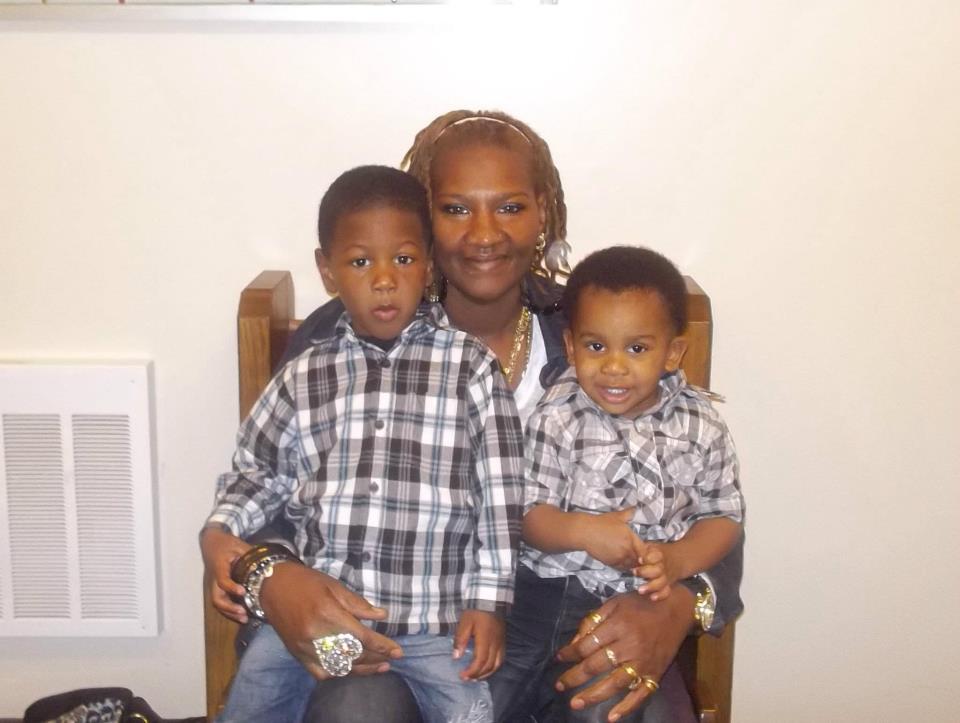
Toya FrazierIf you were to believe those like Champaign County Board Chair Pattsi Petrie, who spoke recently at a meeting of Champaign County’s Racial Justice Task Force, those in the local jail are dangerous people that shouldn’t be let out on the streets.

Yet the tragic story of Toya Frazier, who recently died in the jail, is the more common case of someone who was no violent criminal, but struggled for years with drug addiction and needed treatment. What she got instead was a death sentence by the Champaign County court system.

Toya Frazier was found dead December 1, 2015 at 5:11 p.m., alone in a cell at the Champaign County Satellite Jail. Guards were supposed to conduct checks every 15 minutes for those on medical watch like Frazier. She was screaming in pain throughout the previous night from what was apparently heroin withdrawal. According to video viewed afterwards, Frazier lay dead in her jail cell for nearly an hour and a half before she was discovered.

Her death would be blamed on the pills she snuck into the jail. But Frazier should not have been there in the first place. There is a lengthy waiting list at the Prairie Center, one of the few options for drug treatment in Champaign County. Those with private insurance can check in at Pavilion. For people who can’t get into either, there is the emergency room. For Frazier, it was a prison sentence.

This is one of two jail deaths within a four month period. On March 27, 2016, Paul Clifton was found dead after an asthma attack. He was in for a traffic offence. Both are African American. While they make up only 13% of the county population, Blacks are at least 60% of those in the jail. Anti-Black racism, whether in the veiled language of those like Petrie or the cruelty of jail guards, continues to snuff out Black lives.

Toya loved cooking and spending time with her nieces and nephews. No longer will the children be able to enjoy her home-cooked meals.

A Cry for Help

In July 2015, Frazier was sentenced to 42 months in the Illinois Department of Corrections for a guilty plea of felony theft. In exchange for dismissal of another theft and a burglary, Frazier pleaded guilty.

Frazier’s sentencing was delayed three times due to her poor health―she had a mild stroke in July, and knee surgery in August. She didn’t run, but turned herself in the morning of November 30, 2015. She was found dead the next day.

Champaign County Coroner Duane Northrup concluded Frazier’s death was “accidental.” The Illinois State Police conducted an investigation, interviewing guards, nurses, and other people in the jail that witnessed Frazier in pain. The state police produced a 300-page report, which I obtained through a public records request. I reconstruct Frazier’s unnecessary death below.

Correct Care?

When Frazier went through booking, she was screened by Beth Novak, a nurse that works for Correct Care Solutions, the Nashville-based private company that recently won the contract for medical services at the jail. Upon entering the jail, Frazier reported being a heroin user and having high blood pressure. In the police investigation, Novak recalled, “During the screening, Toya appeared to be sad and had a watery tear on her face.” She was given medication for heroin withdrawal and kept in the medical area of the jail.

At midnight, Benjamin,* who was in a cell next to Toya, was “awoken by a cry for help.” He told police she was “screaming” and complaining that her stomach hurt. After a few hours, a guard came in and asked Toya “what she wanted them to do for her.” She was told that the nurse would be in in the morning. After breakfast, Benjamin heard Toya screaming again and kicking on her door. There was such a commotion he thought someone was assaulting her, and he asked one of the guards to check on her.

She Was Just in a Lot of Pain

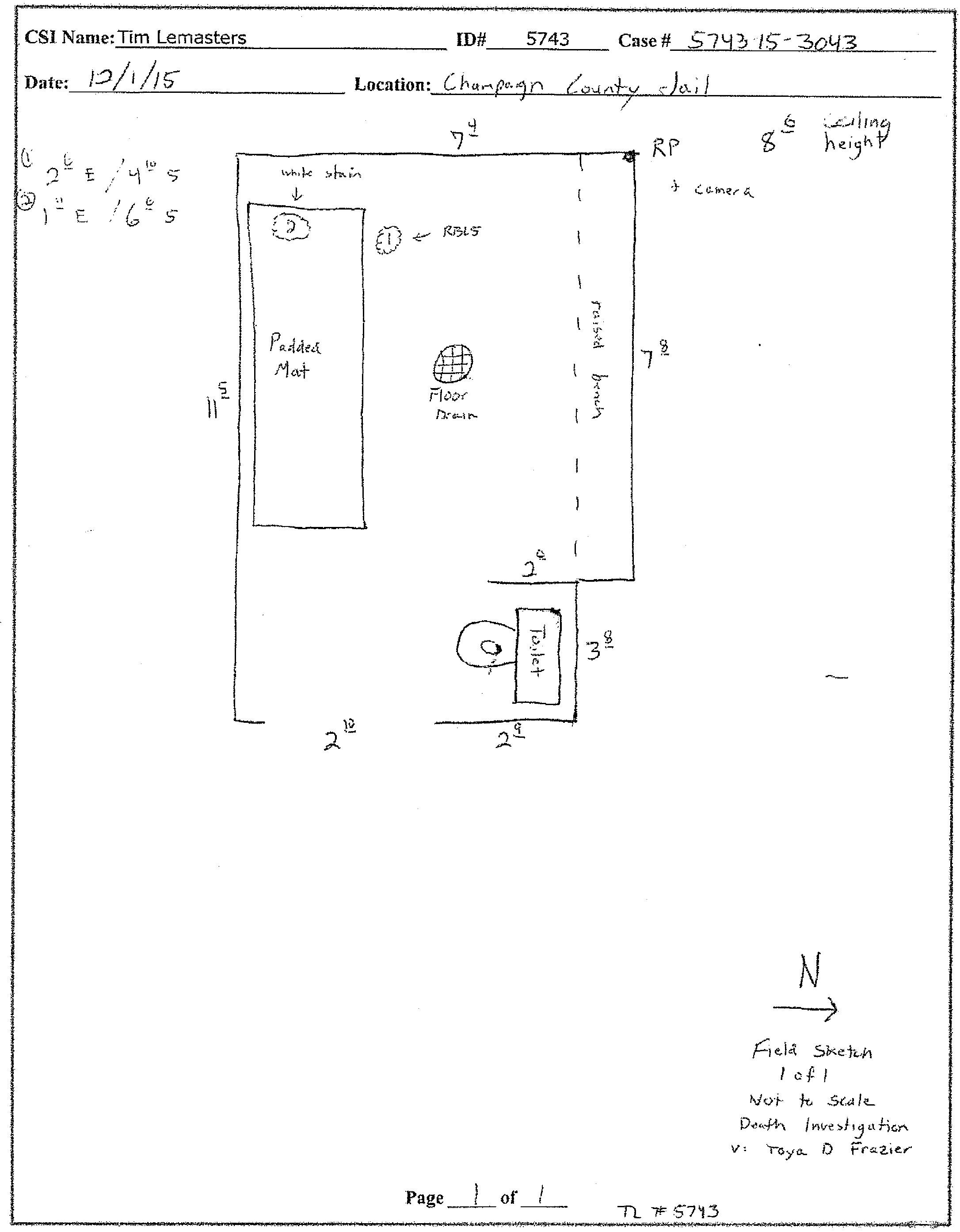
A woman who was Toya’s cellmate, Shawn, was also interviewed by police. She was woken up by Toya’s yelling, “Oh Lord takes this pain, the beast, the beast, oh Lord takes this pain.” Toya said she was experiencing heroin withdrawal. She apologized and asked her to “bear with me.” Shawn said the guards threatened Toya that “if she keeps it up,” the nurse would not give her medicine. Around 3 a.m., guards moved Toya to a 7-foot by 11-foot solitary confinement cell. The screaming still continued all morning until the “officers were getting pretty tired of it,” Shawn told investigators. “She was just in a lot of pain.”

This account was confirmed by Sgt. Arnold Mathews, a 14-year Sheriff’s veteran, who also reported that around 3 a.m., Frazier was “yelling, moaning, and groaning really loudly.” Sgt. Mathews ordered that Frazier be moved to a medical holding cell for women where she was kept by herself. A guard was to check on her every 15 minutes, and there was a video camera monitoring her in the cell.

Toya Frazier cellThe morning of December 1, nurse Beth Novak didn’t get to the satellite jail until 9 a.m. Shortly after, Frazier received medication for her withdrawal symptoms. At 2:15 p.m., Novak spoke with Frazier who she said had a “happier” appearance than the previous day. Frazier asked “if she was getting her withdrawal medication,” but her request was denied. Novak said she was about to give her another dose when Frazier was found dead two hours later.

The Highest Highs Bring the Lowest Lows

In the police investigation that followed, video from the cell was reviewed by an “independent” multi-jurisdictional team. Champaign Police Sgt. David Griffet completed a report at 10 p.m. the night it happened. According to the report, Champaign County Sheriff’s Deputy Lieut. Robert Cravens had observed video from the cell and noted that the “last movement observed for Toya was at 1550 hours (3:50 p.m.).”

Illinois State Police Sgt. Windy Westfall also watched the video and recorded her findings. According to a report filed by Windfall, at 3:23 p.m., Frazier pulled out a tissue apparently with pills, put them into her mouth, and put the tissue into her sock.

At 3:50 p.m., Westfall wrote in her report, “Frazier is laying on her mat, and she made some small movements that appeared to possibly be a seizure. Frazier never moved again after that.”

Dinner was delivered at 4:43 p.m. by a guard who left a food tray on the sink.

A guard returned at 5:11 p.m. to pick up the tray and found Frazier “unresponsive.” CPR was performed, but Frazier had been lying there for nearly an hour and a half, and was already dead.

A toxicology report found that Frazier had died due to excess levels of Diphenhydramine, an ingredient contained in over-the-counter Aleve PM. Sheriff Dan Walsh claims she had hidden them in a walking cane she brought with her into the jail for her bad knee. The Coroner said that Frazier was likely self-medicating for the pains of withdrawal.

For anybody who has experienced, or witnessed someone who has experienced, heroin withdrawal, it is an excruciating sickness. The highest highs bring the lowest lows.

Toya Frazier didn’t need a jail cell to break her addiction. She needed community-based treatment, and the support of family and friends.

What are we willing to do for people like Toya who need to overcome a drug addiction? Can we provide treatment? Or will we send them to jail, and wait for a million-dollar lawsuit for neglect to convince us we need another solution?

*Full names have been withheld to protect the privacy of individuals involved.

Posted in Prisoners | Comments Off on Jail is Not Drug Treatment

Racism and Mass Incarceration in the US Heartland: Historical Roots of the New Jim Crow

If asked what state had the highest rate of incarceration rate of black men, most people would likely cite somewhere in the old Confederacy, perhaps Mississippi or Louisiana. They would be about 1000 miles too far South. According to labor analysts John Pawasarat and Lois M. Quinn, the answer is Wisconsin, which has the nation’s highest per capita incarceration rate of black men and juveniles. Neighboring Iowa has the country’s highest ratio of black to white incarceration. Illinois, from available statistics, has the greatest disparity between blacks in the general population (15%) and blacks in the state prison population (58%). Across the region blacks are incarcerated up to 13 times the rate of whites and three to five times the rate of those labelled “Hispanics.”

No single factor seems to explain this intensely punitive anti-black thread in Midwestern criminal legal circles. Rather, racially skewed outcomes result from a unique set of historical forces and structural changes in the regional political economy coupled with what happens in courts, prisons and in the streets.

Historical Forces: Sundown Towns

While the history of segregation in the South is well-known, the Midwest had its own version of Jim Crow: sundown towns. A sundown town operated under one basic rule of thumb: no blacks were allowed inside the city limits once the sun went down. Jim Loewen has researched sundown towns for many years. His work unearthed more than 300 likely sundown towns  in Illinois, more than 200 in Indiana, and over a hundred in Wisconsin and Ohio. By contrast Loewen told this reporter he could only confirm three in Mississippi. These urban exclusion zones spread extensively from 1890 to 1940, though many endured past World War II. Residents of one such town, Anna, Illinois, claimed the anagram of their town name stood for “Ain’t No Niggers Allowed.”

In many Midwest towns, the imposition of a Sundown regime required the removal of existing black populations, a process Loewen refers to as “ethnic cleansing.” Major “white riots” aimed at removing blacks occurred in medium-sized cities such as Akron, Ohio, Lincoln, Nebraska, and Springfield, Illinois. Numerous small Illinois towns with few black residents, places like East Alton, Auburn, Thayer,  Girard, and Pawnee, as well as Evansville, Indiana made major efforts to rid themselves of their African American population. These purges did not always come easily. Decatur, Indiana accomplished the task by forming an “Anti-Negro Society” at the turn of the 20th century. A Ku Klux Klan rally which attracted nearly 10,000 to West Frankfort, Illinois in 1923 put the stamp on that town’s sundown status. In 1931, it took a lynching in Maryville, Missouri to spark the flight of the town’s entire black population.

While sundown towns were proliferating in the rural areas of the Midwest, big cities followed suit by creating sundown suburbs. Wilmette, an upmarket North Shore suburb of Chicago requested residents to fire all black domestic workers who did not have housing on their employer’s premises. Apparently their presence as pedestrians in the area contributed to a fall in “real estate values.” Edina, now one of the wealthiest suburbs in Minneapolis, chose to expunge its black population in the 1930s to fully establish an elite space. Remnants of this exclusion policy remained until the 1970s

The Midwest–Heartland of Anti-Black Racism

If sundown segregation laid the ideological groundwork for racialized mass incarceration, the deindustrialization of inner cities created an urban geography that facilitated the capture of bodies for the prison industrial complex. University of Illinois historian Lou Turner told me that deindustrialization came in two waves. The first began in the late ‘60s in response to urban black rebellions in places like Detroit, Cleveland and Chicago. The second phase of relocating production heated up in the late ‘70s as part of the global economic restructuring which sent manufacturing to low-wage countries overseas. The disappearance of factories robbed African American workers of some of the few well-paying, secure employment opportunities available.

The scale of this deindustrialization process in other Midwestern cities is staggering. While the decline of Detroit’s auto industry is well-known, the entire region endured a similar process. Between 1961 and 2001, the city of Milwaukee lost 69 percent of its manufacturing positions. Overall, seven counties in southeastern Wisconsin saw a loss of 83,000 positions. Chicago suffered a similar fate, losing 29% of all manufacturing employment in the 1970s. From 1969 to 1989 Cleveland’s manufacturing sector workforce declined by 40%. Even smaller industrial sites like one-time steel production center Youngstown, Ohio felt the brunt of restructuring. Steel plant shutdowns in the late ‘70s, precipitated the loss of 40,000 manufacturing jobs, and 400 satellite businesses in Youngstown.

The absence of manufacturing jobs also contributed to white flight from the inner cities. In the 1970s, Wayne  County (Detroit) lost 26.6% of its white population, with Cleveland (20.1%) and Chicago’s Cook County (15.5%) experiencing similar out migration.

Not surprisingly, the spatial result has been increasingly segregated cities. In a 2010 survey, five of the ten most racially segregated cities in the U.S. were located in the Midwest: Chicago, St. Louis, Detroit, Milwaukee and Cincinnati. This segregation converted economically barren African American communities into ideal targets for high-tech, militarized policing. Detroit was the first to go down this path with the formation of the STRESS (Stop Robberies, Enjoy Safe Streets) unit in 1970. While STRESS was abandoned after four years and 20 civilian deaths at the hands of police, the spirit of militarized policing lived on―influencing law enforcement methods throughout the region as the War on Drugs.

The War on Drugs and Million Dollar Blocks

The War on Drugs transformed inner city black communities in the region. African American men in Milwaukee County went from having four times as many annual admissions for drug-related offenses as white men in the early 1990s to having 11 to 12 times as many from 2002 to 2005. Two thirds of those incarcerated came from just six zip codes in the inner city. Chicago’s West and South Sides, once home to substantial manufacturing production and the fabled stockyards, became ground zero for massive offensives by an increasingly militarized police department. A 2011 study revealed 851 “million dollar blocks” in Chicago. A million dollar block is one where the criminal justice system spend more than a million dollars a year incarcerating its residents. The vast majority of these blocks were areas with an overwhelmingly black population.

Alan Mills, Executive Director of Uptown People’s Law Center in  Chicago, told me that this created a “perfect feedback loop. We arrest people in poor black communities, these arrests destabilize the communities, leading to more violence. We then send more police into those communities [and] increase arrests even further, thus further destabilizing the community.” The feedback loop continues even after people are released from prison. In Illinois, 60% of those on parole in 2014 were black. .

Fighting Back: Racial Justice Task Force

Given this history, perhaps it is no surprise that in Champaign County the jail population is consistently more than 50% Black, in a county with a 13% Black population. These racial dynamics sparked a year-long struggle led by Black Lives Matter and Build Programs, Not Jails to establish a racial justice task force. The Task Force began its work in February and hopefully will be a catalyst to reverse decades of Midwestern style, anti-Black racism in our county.

(This article originally appeared at Truthout. Reprinted with Permission.)

James KilgoreJames Kilgore is a writer, activist and educator based at the University of Illinois (Urbana-Champaign). His most recent book is Understanding Mass Incarceration: A People’s Guide to the Key Civil Rights Struggle of Our Time (The New Press, 2015). He is also the author of three novels, all of which were drafted during his six and a half years in state and federal prisons in California. Follow him on Twitter @waazn1.

Posted in African Americans, Justice, Latino/a, Prisoners | Comments Off on Racism and Mass Incarceration in the US Heartland: Historical Roots of the New Jim Crow

From the Arab Spring to the Syrian Civil War: Looking Again at the Modern Middle East

It’s tempting to put the Arab Spring and the Syrian Civil War in separate boxes, but like other forms of compartmentalization, that only hides but doesn’t resolve the underlying problems. The dynamics that helped the Syrian War erupt into one of the greatest humanitarian catastrophes since World War II are the same dynamics that filled the streets with jubilant activists demanding access to closed political systems. Looking at the two together does a better job of highlighting the global changes that are affecting not just the Middle East, but the world we all live in.

Looking Past the Arab Spring to the Years of Discontent

2016 05 13 Jayes 4

Queuing for limited supplies of subsidized bread in Cairo

In 2011 Americans watched spellbound as the streets in Middle Eastern capitals filled with young demonstrators demanding political change, and who, we should admit, reminded us of our younger selves with their marches, sit-ins, and impassioned, impromptu speeches before euphoric crowds. In the U.S. we focused on the “Facebook activists” at the center of the evening news videos and told ourselves a comforting story of the spread of Western values. We cheered the young, tech-savvy protesters with their English-language signs and interpreted the uprisings in Tunisia, Egypt, and elsewhere as a vote for the American Way and a testimonial to our role in bringing democracy to the region. We wanted to place them, and ourselves, on the winning side of history and wipe out the stain of Abu Ghreib.

If we hadn’t been so invested in seeing the protests as a flattering endorsement of ourselves we might have been better prepared to understand the enormity of the challenges of 2011 and less likely to dismiss the sorry sequel of wars, crackdowns, and terrorism as a detour on the path to democracy. The current condition of the post-Arab Spring region certainly is not one in which humans can pursue their lives, liberty and happiness, but it is perhaps a logical outcome to the forces that drove the Arab Spring protesters into the streets in the first place. Looking back at the context of the Arab Spring helps to explain the regional strife we see today.

2016 05 13 Jayes3

Egyptian Textile Workers Strike in el-Mahalla, 2008

There were a lot of people discontented with Middle Eastern regimes in 2011, and they had been for a long time. In the previous decades growing populations and shrinking state budgets had been causing a drop in services like education, health, and food subsidies, services that had once bought the region’s states needed legitimacy. The end of the Cold War accentuated the problem, as development aid was redirected from the region to Eastern Europe and Russia, and neoliberal convictions tied remaining aid to privatization and budget cuts. Outside investors loved the restructured economies, but within the Middle East normal people saw a corrupt sell-off that benefited only the well-connected. The Cold War was no picnic for the Middle East, but the post-Cold War was a free market free-for-all. Then came 9-11, and the ensuing War on Terror provided a new name for Western support for unsavory allies. The West made a little noise about promoting democracy, but what drove military and financial support for regimes was their cooperation with U.S. goals, not their treatment of their own citizens.  The War on Terror provided a handy excuse for governments across the region to imprison, threaten, or even eradicate citizens and organizations that dissented from the official story.

2016 05 13 Jayes 1

Sefrou, Morocco, 2007

2011 was the year the world noticed Middle Eastern anger, but long before the marchers filled the streets of Tunis there were other protests, such as the waves of wildcat strikes in the Egyptian industrial sector in 2006-2008. In one strike in 2008 at Mahalla in the Nile Delta, 27,000 Egyptian textile workers swarmed into the streets to demand increased pay. In Morocco, Jordan and other countries the reduction of subsidies for bread led to violent confrontations with the State in 2004, 2007 and 2008, even before the Global Economic Crisis of 2008 hit the Middle East and worsened state budgets. Perhaps the saddest protest movement of all, however, is the unseen refugee crisis of the modern age–impoverished migration (both within and between countries), which multiplied when the drought of the early 2000s came like a biblical punishment. According to the D.C.-based Center for Climate and Security, the 2006-2010 drought in Syria caused 75% of farmers to suffer total crop failure and wiped out 80% of livestock.  People who cannot feed their children in their home towns have little reason left to support the state.

2016 05 13 Jayes2

The Other Refugees: Immigrant Workers in the Gulf

The 2005 “Kefaya” movement in Egypt said it all—“Enough”

Among the urban middle class of the Middle East tension was brewing as well over the gap between the international rhetoric of rights and the reality of governments that operated shadowy interior ministries. Election workers were beaten or disappeared. Bloggers were tortured. Everyone suffered the indignities of whimsical and arbitrary decisions about the lines that could not be crossed in speech, justice or association. And the anger at governments which acquiesced to a violent U.S. occupation of Iraq and seemed more responsive to international investors than its own people  became untenable. The 2005 “Kefaya” movement in Egypt said it all—“Enough.”

The rural migrants, the strikers, the hungry, the civil rights protesters, were all there long before 2011, but local governments were largely successful at controlling media coverage and even internet access until recently. And then the iPhone, YouTube, and Facebook tipped the balance. In the Spring of 2011 protesters shared stories and videos of police brutality as readily as maps of police blockades and methods for washing tear gas out of one’s eyes. The new opportunities for publicity also provided some protection from state retaliation, and the English-language signs of the protesters revealed that they knew the drama was playing out for international audiences as well as local and regional eyes. Middle Eastern regimes were caught in an unflattering spotlight as the older methods of controlling dissent failed. The protests went viral on social media and on the street, and the region was suddenly deafened by cries for change.

The Arab Spring was no sudden political awakening, it was discontent made visible to the rest of the world

It’s not surprising that the international media sought out interviews with English-speaking participants in the marches, or even that journalists clustered in capitals and filmed the English-language signs for their English-speaking audiences, but in limiting ourselves to watching one fragment of the ways in which the state-citizen bargain was falling apart we in the West largely ignored the many other ways in which humans had lost faith in the ability of the state to meet the needs of its residents. This both blinds us to the enormity of the challenges facing the region, but also to the complexity of the issues. These are not problems that are the fault of any single state – drought and food security, globalized labor and capital markets, unfettered technologies of communication, and even the limiting parameters of the War on Terror…and yet we prefer to see the failures of the Arab Spring as separate national stories that fit a familiar narrative of underdeveloped state bureaucracies and inconveniently-drawn borders imposed by outsiders. Even given perfection in these areas — brand new rule-of-law governments, transparent policymaking and organic borders (not that there are such things) — it would be impossible to quickly address the causes that led so many to take to the streets in the past years. This isn’t really a story about tinkering with the state for improved efficiency; it’s a story about the state, and the state-centered world system, coming apart. The Arab Spring was no sudden political awakening, it was discontent made visible to the rest of the world.

First in a series

2016 05 13 Janice Jayes

Janice Lee Jayes, Ph.D. teaches Modern Middle East history at Illinois State University. She has worked in Morocco, Latvia, Kyrgyzstan, and was a Fulbright scholar in Egypt.

[Caption 1: Queuing for limited supplies of subsidized bread in Cairo

[Caption 2: Egyptian Textile Workers Strike in el-Mahalla, 2008]

[Caption 3: Sefrou, Morocco, 2007]

[Caption 4: The Other Refugees: Immigrant Workers in the Gulf]

Posted in Arab Spring, International, Politics, Syria | Comments Off on From the Arab Spring to the Syrian Civil War: Looking Again at the Modern Middle East

African Liberation, Socialism, and Ghana Today

What do most Americans know or think they know about Africa? A number of stereotypes come to mind. African countries are unsafe and unhealthy, always at war, unstable, and poor. People are uneducated and lazy, and live in rural villages among wild animals. But there are 54 countries with an incredible variety of conditions. There are civil wars and coups, but many countries are very stable. Only about half the population lives in rural areas. Wild animals are now mostly confined to parks and reserves. Many countries have significant middle classes. I spent most of my academic career helping people become more knowledgeable. This article attempts to provide some perspective about African history, politics, and current affairs, with some attention to Ghana.

The mechanisms of neo-colonialism. In order to halt foreign interference in the affairs of developing countries it is necessary to study, understand, expose and actively combat neo-colonialism in whatever guise it may appear. For the methods of neo-colonialists are subtle and varied. They operate not only in the economic field, but also in the political, religious, ideological and cultural spheres. Faced with the militant peoples of the ex-colonial territories in Asia, Africa, the Caribbean and Latin America, imperialism simply switches tactics. Without a qualm it dispenses with its flags, and even with certain of its more hated expatriate officials. This means, so it claims, that it is ‘giving’ independence to its former subjects, to be followed by ‘aid’ for their development. Under cover of such phrases, however, it devises innumerable ways to accomplish objectives formerly achieved by naked colonialism. It is this sum total of these modern attempts to perpetuate colonialism while at the same time talking about ‘freedom’, which has come to be known as neo-colonialism. Foremost among the neo-colonialists is the United States, which has long exercised its power in Latin America. Fumblingly at first she turned towards Europe, and then with more certainty after world war two when most countries of that continent were indebted to her. Since then, with methodical thoroughness and touching attention to detail, the Pentagon set about consolidating its ascendancy, evidence of which can be seen all around the world. From Kwame Nkrumah, Neo-Colonialism, the Last Stage of imperialism, 1965.

Restaurant Mural

Decolonization and Socialism

With some exceptions (Egypt, Ethiopia, and Liberia), most African countries won their independence from the French and British colonial empires in the 1950s and the first half of the 1960s. Some fought liberation wars, and others benefited by a peaceful transfer of power because of their neighbors’ sacrifices. The Portuguese colonies of Angola, Mozambique, Guinea-Bissau, Cape Verde, and São Tomé and Príncipe won independence in 1975. Zimbabwe followed in 1980, Namibia in 1990, and South Africa won majority rule only in 1994. Perhaps half of these states adopted ideologies and government structures based on some form of “socialism,” a term with a wide variety of meanings in various places and contexts throughout the world. The term “African Socialism” encompassed, for example: Kenneth Kaunda’s vague “humanism” in Zambia, Muammar al-Qadhafi’s Jamahiriya (“state of the masses”) in Libya, Julius Nyerere’s Ujamaa (“familyhood”) in Tanzania, and Leopold Senghor’s Négritude in Senegal. Other countries adopted a more Marxist or Marxist-Leninist orientation, such as Kwame Nkrumah’s Consciencism in Ghana, and revolutionary governments in Angola, Mozambique and Zimbabwe. Many included a strong emphasis on Pan-Africanism, the idea that Africa must unite to reach its true potential. Pan-Africanism includes people of African descent, especially people in North America, the Caribbean, and parts of South America descended from enslaved Africans.

Political Experiments

As an undergraduate student in the late 1960s, I became fascinated with the independence struggles and political experimentation in the new states. It was a time of political ferment in the US, and young people like myself were looking for alternative ideas and models. We saw that capitalism fostered racism and war. Similarly, many African countries rejected the political systems of their capitalist colonizers, and adopted alternatives based on some notion of socialism. The Cold War between the West, Soviet Union, and China also played a role. Most African countries joined the Nonaligned Movement, but all took aid and assistance from one side or the other, and in some cases all sides at the same time in order to balance these influences. For example, Tanzania managed to get the US to build its main north-south road while China built a parallel railroad. The Scandinavian countries also provided much material assistance. Liberation movements in countries still fighting for their independence often received material aid and weapons from the Soviet Union or China, the most logical places to find assistance against the Western imperial powers. In some cases as in Zimbabwe, rival liberation movements were aided by either China or the Soviet Union within the same country.

The Failure of Socialist Models

But declaring socialist models and successfully implementing such development were two different things. African countries were “underdeveloped,” meaning that the imperial powers had systematically exploited African people and resources in order to make themselves rich. Africans did not have the means to accomplish their goals, and new elites were often more concerned with enriching themselves than national development. Countries had to turn to benefactors in the East or West, as well as the International Monetary Fund and the World Bank. The disintegration of the Soviet Union left countries and movements no alternative to capitalism. Fine rhetoric about democracy and equality often turned into corruption and despotic rule, as well as dependence on former colonial powers. Furthermore, the World Bank mandated Economic Structural Adjustment Programs that only made conditions worse. In effect, all these countries eventually became thoroughly integrated into the world capitalist system.

“I would like to show how we are changing lives.” Ghanaian President John Dramani Mahana, State of the Union Address, February 25, 2016

Ghana

Gold Coast colony became Ghana with its independence from Britain in 1957, the first in the wave of decolonization south of the Sahara after World War II. Its first President was Kwame Nkrumah, a prominent visionary socialist with a Pan-Africanist agenda. He envisioned a democratic and prosperous United States of Africa. Although his government accomplished much, socialist development was overturned by a coup in 1966.

Nkrumah Statue after Coup with Recently Returned Head

I recently travelled to the country to learn more about the history of the transatlantic slave trade and see for myself how things are going. The slave trade was organized from numerous European castles along the West African coast. These castles represent the first European-built and -occupied spaces on the continent. They were originally fortresses and trading posts, but soon included dungeons to house captive Africans, churches, and the offices and living quarters of colonial rulers. About 6.5 million enslaved people were forcefully transferred in the most horrific conditions from just the Gold Coast slave castles to the Western Hemisphere. Many African Americans traveled to Ghana after independence, and some stayed. W. E. B. DuBois is perhaps the most famous African-American scholar who settled in Ghana (at age 93!). As an activist and socialist, DuBois was a pioneer in researching African history. Nkrumah had invited him to attend the independence celebrations in 1957, but the US had confiscated his passport at that time. About 65,000 Americans visited Ghana last year, and about one-third of them were African Americans on an emotional quest to reconnect to an unknown ancestral homeland. There are several thousand African Americans living in the country today.

Elmina Castle

Ghana is now a multi-party democracy, with a high degree of freedom of speech and press. It is classified as medium in the UN Human Development Index. It is designated as medium for inequality, has a fast-growing middle class, and is ranked as a “lower middle income” country by the World Bank. The party in power, the National Democratic Congress (NDC), defines itself as social democratic. The New Patriotic Party (NPP), the main opposition, has a liberal capitalist orientation. Interestingly, one Ghanaian told me he thought that the policies of the NPP when they were in power were actually more social democratic than the policies of the current government. The socialist Convention People’s Party, Nkrumah’s party, was revived in 1996, but has only one seat in the current Parliament. The next presidential and parliamentary elections will take place on November 7, 2016.

Shop at Elmina Castle

Travelling in Ghana is fascinating and fun. It is sobering to tour the slave castles, interesting to see DuBois’ house and library, and educational to visit museums explaining various ethnic groups. The food is tasty and delicious, and Ghana is known for its beautiful Adinkra and Kente cloth, and expressive woodcarvings. Contemporary Ghana shatters all the stereotypes noted above.

Amazingly for grey-haired folks like myself, recent US polls show that around half of people under 40 now have a positive view of socialism. Perhaps we need to experiment more, just as African countries tried to do half a century ago. And significant progressive change in the US might provide new possibilities for countries around the world.

Al Kagan is African Studies Bibliographer and Professor of Library Administration Emeritus from the University of Illinois.


Posted in Africa, Ghana, International, Politics | Comments Off on African Liberation, Socialism, and Ghana Today

Black Lives Matter C-U Summer Activities

BLMCUSocial justice collective, Black Lives Matter, the Champaign-Urbana chapter, has been gaining further traction within their outreach. From demonstrations and panel meetings, to youth involvement and local radio shows, Black Lives Matter’s efforts continue to make striving progress throughout the local area. Approaching the summer, Black Lives Matter will continue to volunteer at the Douglass Community Center once a month, take part in community neighborhood canvassing, and participate in Champaign-Urbana Day. You can stay posted on the Black Lives Matter Champaign-Urbana Facebook page or website for more events in the future.

Posted in African Americans, Human Rights, Justice | Comments Off on Black Lives Matter C-U Summer Activities

Incarceration figures

Some figures compiled in the Coalition for Prisoners’ Rights Newsletter (April 2016). Reprinted with Permission.

I. Number Incarcerated in U.S., 2014

1.5 million people at an annual per person cost of $80 billion–approximately $51,250 each. (A “free world” minimum wage of $15/hr would come to $30,000.)

II. Number Affected by ”Felony Drug Ban”

Approximately 180,000 women in the 12 most impacted states have been banned from welfare benefits for life.

III. Number Disproportionately Imprisoned

In 2014, 6% of all African American men aged 30-39, 2% of Latino men and 1% of “white” men, were imprisoned.

IV. Disproportionate Numbers of Youth

In 2013, the commitment rate for African American youth was four times higher than for “white” youth, an increase of 10% over ten years.

V. Amounts of Prison Guards Salaries

The 29,000 members of the California Correctional Peace Officers Association will receive a 9% salary increase over the next three years. The base salary currently starts at $63,000 annually and can range to nearly $80,000. Guards can earn over $100,000 a year with overtime at the state’s 34 prisons.

Posted in African Americans, Justice, Latino/a, Prisoners, Women, Youth | Comments Off on Incarceration figures

IMC Gallery: Art Under Pressure

IMG_4552

The IMC Gallery is excited to announce Art Under Pressure featuring works from student artists from Centennial High School:

Nellie Haug
Amy Janson
Brenda Gonzalez Salinas
Avalon Ruby
Adriana Ortiz
Carolyn Cai
Hannah Schriefer
Pascale Grant
Veronica Miller

Opening Reception: Sunday May 15th 4-6pm

Exhibition Duration May 15th-May 22th


Posted in Arts, IMC | Comments Off on IMC Gallery: Art Under Pressure

City and IMC Announce $50,000 grant for creative placemaking from the NEA


IMC+Sign+Photo.thumbnailDowntown Urbana is about to become a lot more creative – thanks to the vision of local youth, the City of Urbana, the Urbana-Champaign Independent Media Center (IMC), and the National Endowment of the Arts. The NEA has announced
awards totaling $4.3 million supporting projects across the nation through it’s Our Town program, which supports “creative placemaking projects that help to transform communities into lively, beautiful, and resilient places with the arts at their core.” Out of 240 applications, the City of Urbana and IMC, is one of the 64 partnerships recommended for funding.  

“The IMC just had its 15th birthday; this support will help create a vision for the next 15 years – putting youth voices at the center of that vision,” said Danielle Chynoweth, who, along with local artist Latrelle Bright, led the IMC’s submission. “Through this project, local youth, artists, and stakeholders will convene the community to imagine what is possible as we continue to reclaim and recycle the historic downtown post office into a community media and arts center.”

$50,000 will help support Open Scene: Debuts of Youth’s Views in Downtown Urbana – a partnership to create a plan for reclaiming the city’s center through arts-based dialogues that directly incorporate the experiences of youth. Working with artists from varied disciplines, youth project leaders will interface with stakeholders to explore and express around questions related to key information and cultural needs of Urbana residents — including youth, cultural workers and artists, people of color, new Americans, the unemployed, elders, and the disabled. In turn, youth project leaders and stakeholders will co-facilitate community-wide arts-based civic dialogue workshops. Showcases of creative work rendered will be open to the public throughout the process and be used to develop a long term vision for growth of the IMC.

“The IMC is currently fundraising to raise the $5,000 in grassroots support needed for the project. We encourage local residents to support this exciting endeavor to engage our youth in designing the future of a core part of our city,” said Angela King, the chair of the IMC’s Fundraising Committee.

The IMC will be seeking to contract with an artist as the Project Coordinator, several Project Apprentices who will staff events and execute logistics, 4 guest artists to guide the work as well as provide stipends to 12 participating youth. Interested individuals should sign up on the IMC’s website.

“We heartily thank the City of Urbana, the NEA and our community supporters who gave letters of confidence to this grant, including Krannert Center for the Performing Arts, the Urbana Business Association, Urbana Public TV, SmilePolitely, WEFT 90.1FM, CU Citizens for Peace and Justice, and the School for Designing a Society. We continue to invite community supporters to join in this endeavor and support outreach for the project,” shared Tracy Dace, President of the Board of Directors.

“For six years, Our Town has made a difference for people and the places where they live, work, and play,” said NEA Chairman Jane Chu. “Projects such as the one led by the City of Urbana and the Urbana-Champaign Independent Media Center help residents engage the arts to spark vitality in their communities.”

The IMC is a nationally recognized leader in media, technology and arts programming centered on underrepresented voices and perspectives.  Home to Makerspace Urbana, the Public i newspaper, WRFU 104.5 FM, UC Books to Prisoners, and the performance Lab, the IMC is powered by hundreds of volunteers. Founded in 2000, the IMC is a center where collaboration, cross pollination, and serendipitous interaction are encouraged; where youth can have a creative “third space” as an alternative to home or school; where consumers are invited to be producers; and where the power of art and media to transform our community can be realized.

The Our Town grant program supports creative placemaking projects that help to transform communities into lively, beautiful, and resilient places with the arts at their core. Creative placemaking is when artists, arts organizations, and community development practitioners deliberately integrate arts and culture into community revitalization work – placing arts at the table. This funding supports local efforts to enhance quality of life and opportunity for existing residents, increase creative activity, and create a distinct sense of place.

Posted in Arts, UC-IMC, Voices of Color, Youth | Comments Off on City and IMC Announce $50,000 grant for creative placemaking from the NEA

The Beheading of a Saint: Junipero Serra and the California Monument Wars

The headless Serra monument in Monterey, California.

The headless Serra monument in Monterey, California.

During his visit to Mexico in February, Pope Francis apologized for the “systematic and organized” exclusion of indigenous Americans over the centuries. This took place in San Cristobal de las Casas, the epicenter of the indigenous-identified Zapatista uprising in 1994, and a town named for the 16th century defender of the Indios against the depradations of the Spanish Conquest. But in September, when the Pope visited the US, a focal point was the announcement and celebration of the canonization of Junipero Serra, the founder of the California mission system, who many indigenous people’s advocates charge with genocide against California’s tribes. In the midst of protests and calls to halt the elevation of Serra to sainthood, the statue of Serra at Mission San Carlos Borromeo de Carmelo in Carmel-by-the-Sea was covered with green paint, toppled, and tagged with the moniker “Saint of Genocide.” The next month, another statue of Serra, in nearby Monterey, was decapitated. These attacks and the surrounding controversy, which continues at a slow burn, show the power of symbols to provoke and the multiple meanings attributed to complicated historical figures.

Serra, born on the island of Mallorca, Spain in 1713, decided to become a missionary and sailed for the New World only when already of middle age. As his fellows rode, he insisted on walking across colonial Mexico, out of piety, despite an insect bite that became infected, plaguing him for the last half of his life. After two decades reorganizing the Mexican missions, including an occasion when he defended the Pame people against Spanish soldiers and colonists who were trying to take their lands, he was sent to establish a mission system in alto (“upper”) California. Starting in 1769, he founded the first nine of what would grow to 21 missions from San Diego up the central California coast. Over 50,000 natives were baptized and incorporated over the next 65 years that the system existed; various degrees of force and violence were used to harness their beliefs and labor, and many died of disease and even starvation.

The erection of monuments and memorials to Serra up and down the state through the twentieth century paralleled the process of declaring Serra a saint, with Pope John Paul II presiding over the beatification ceremony in 1988. But as the case wound its way forward, a spreading awareness of the cultural and physical decimation of Native Americans brought a shift in Serra’s legacy. California tribes and advocacy groups, indigenous rights activists and anti-colonialist historians fashioned an alternate view of the “Father of California,” featuring beatings, starvation and destruction of language and heritage instead of the moral improvement and practical education boasted of by Serra’s defenders.

In the months leading up to the canonization, criticism grew. The Mexica Movement, a radical indigenous rights group based in Los Angeles, held weekly rallies outside the cathedral there against the “white supremacist” Serra. The leadership of the Amah Mutsun Tribal Band organized a protest in San Juan Bautista, gathered over 10,000 signatures on an online petition, and cited 55 other tribes who had also written letters in opposition. A “Walk for the Ancestors” traced the El Camino Real, the route connecting the missions, to publicize this position.

But the first canonization to take place on US soil inspired enthusiasm from many Hispanic Catholics, who saw the action by the first Latin American Pope as validation of their own culture and identity. Serra, dubbed the “first Hispanic Saint” in numerous media reports, has been supported by Somos Primos (“We are cousins”), a Hispanic heritage website and publication. Though larger Hispanic rights’ organizations like the National Council of La Raza and the League of Latin American Citizens have mostly steered clear of the controversy, they consistently praise the Pope, in particular because of his support of immigrants and a more humane immigration policy. In addition, the Juaneño people of southern California, a tribe officially recognized by the state, have been cited as in support of sainthood for Serra; and the website of the Costanoan Rumsen (Ohlone) Carmel Tribe states that “We wholeheartedly support the canonization of Saint Junipero Serra because he protected our people and supported their full human rights against the politicians and the military with total disregard for his own life and safety.”

Serra's cenotaph at Carmel Mission.

Serra’s cenotaph at Carmel Mission.

In California over the winter holidays, I visited the mission at San Juan Capistrano, site of “Father Serra’s Church;” as well as the aforementioned Carmel Mission, Serra’s headquarters and burial place. Both sites have extensive exhibits about and homages to their founder, with nary a negative word about his or the system’s effects on their native subjects. On the Saturday I went to Carmel, a wedding was taking place in the mission church, and the several spaces and exhibits devoted to Serra’s legacy were crowded with visitors, including many families with children.

Visitors at the Carmel Mission statue that had been vandalized.

Visitors at the Carmel Mission statue that had been vandalized.

The slightly larger-than-life-sized Serra figure in the courtyard was standing and seemingly unfazed, though the cross he held had been broken off. In the gift shop, mission employees told me that, although the statue is owned by the city, the parishioners of the mission congregation brought a power washer, and cleaned and re-erected the figure themselves, so that by the following morning there was hardly any sign of the act. They also claimed that Serra is misunderstood: he actually protected the natives against the Spanish Army, moving the mission from its original site, now in Monterey, on land the army controlled. They blamed the media for “stirring up controversy,” and said that most locals were in full support of the canonization. When I asked if they were worried about further such acts of protest, they said they “had security,” though allowing that “probably” someone would try again.

Orientational sign at Carmel Mission

Orientational sign at Carmel Mission

Another statue of Serra is one of two representing California at the National Statuary Hall Collection in the US Capitol (the other is Ronald Reagan). In February 2015, as the controversy was heating up, California State Senator Ricardo Lara introduced a bill in the state legislature to replace Serra’s with one of astronaut Sally Ride, to pay tribute to the contributions of LGBT Californians. During a July visit to the Vatican, California Governor Jerry Brown, who as a young man studied for the priesthood, promised the Pope that the Serra statue would remain untouched “until the end of time.” (Lara withdrew his bill, as a gesture of respect to the Pope and Catholics, saying he would reintroduce it in 2016). The controversy mirrors others brewing across the country and around the world about monuments and the symbolic value of history, including vandalism of statues of super-imperialist Cecil Rhodes at the University of Cape Town in South Africa (see Teresa Barnes, “Public historians, this is your moment!” in the May 2015 Public i) and Oxford, and conflicts over the Confederate flag and monuments to Confederate figures and slaveowners in this country.

At a time when the verdict of genocide applied to the European colonial project—at least when we talk about centuries past—seems to be firmly established in the public square, it is remarkable to see such a vigorous contestation. Identity politics, which only seems to intensify, explains a lot. But the powers that be, despite occasional expressions of regret about crimes against native peoples, are hardly neutral: while the University of Cape Town took the side of protesting students and removed the Rhodes monument, the northern California actions are being investigated as hate crimes. The Catholic Church has undoubtedly provided succor to Hispanics, indigenous and non-; but is also a fount of discipline and repression in the present, beyond its historical sins—this institutional power taints the pro-Serra movement.

The sign for the active school at Carmel Mission, named after the new Saint.

The sign for the active school at Carmel Mission, named after the new Saint.

The headless Junipero Serra in Lower Presidio Historic Park, a few miles from the Carmel mission, towers over the gorgeous ocean vista beyond, constituting a weirdly appropriate gesture of historical remembrance—a damaged, and damaging, figure in California and US history. As I was completing this article, the news appeared that the statue’s head had been found by a local girl, in a nearby tidepool at low tide. The Old Monterey Foundation, which had collected $77,000 towards resculpting the head, announced that restoration would now be much easier and cheaper. Would that our historical ruptures and divides could be repaired so straightforwardly.

Posted in Indigenous, Latino/a, Politics | Comments Off on The Beheading of a Saint: Junipero Serra and the California Monument Wars

Students Rally for Coal Divestment

CoalDivest1 CoalDivest2 CoalDivest3 CoalDivest4 CoalDivest5

On April 4, the student group UIUC Beyond Coal rallied on the Quad to push the Academic Senate to pass a resolution urging the University divest $5.1 million held in the coal industry through stock index funds, in order to slow climate change. The Senate voted in favor of the resolution at its meeting that afternoon. Students had already voted by a six-to-one margin for divestment in a 2013 referendum. The University stated that it has no plans to change its investment policies, claiming that a changeover would be “complex” and would cost too much money.

Posted in Environment, Politics | Comments Off on Students Rally for Coal Divestment

Reframing Refugees: Looking Beyond Borders in Champaign-Urbana

The St. Louis

Perhaps you have heard of the Voyage of the St. Louis. On May 13th, 1939, a ship with 937 passengers aboard, predominantly Jewish, set sail from Hamburg en route to Havana. Among the 937 men, women, and children aboard, only a handful had a legal status that would permit them automatic entry upon arrival in Cuba; the rest were European citizens now stateless. They were refugees. The ship docked in Havana on May 27th and 28 passengers disembarked, while the rest were turned away immediately. The ship returned to sea shortly after and turned its rudders toward Florida in hopes that the borders would be more forgiving in the U.S. While hugging the coastline near Miami, eager to dock, the passengers radioed President Roosevelt for permission to enter the U.S., lest they be sent back to the ghettos and rounded up for deportation in Germany and Eastern Europe. Again, they were turned away, and left no choice but to return to Europe. As Jewish organizations became aware of this situation, the Jewish Joint Distribution Committee contacted the governments in Great Britain, Belgium, the Netherlands, and France, who intercepted the St. Louis headed for Hamburg and permitted the entry of every refugee aboard. While the Jews that had arrived in Belgium, the Netherlands, and France faced German occupation and persecution in the following years, 287 of the 288 refugees that sought asylum in Great Britain survived the war. [Information made available by the United States Holocaust Memorial Museum]

Refusing Refugees

The politics of immigration are contentious, and this short narrative is an abbreviated version of a complex and convoluted history of policies, financial crises, and social unrest. That is to say, the politics of the story of the St. Louis are not so easily distilled and are terribly resonant in the current situation in the U.S., Europe, and Syria. It was undoubtedly a fact that both Cuba and the U.S. were reeling from the recent and devastating effects of the Great Depression, but the refusal to accept incoming refugees was most certainly also a symptom of a larger ailment of xenophobia breeding among citizens. This same brand of prejudice and intolerance, I fear, has permeated borders on state, national, and international levels today and has been permitted to run rampant in governmental structures and local communities in regards to the refugee crisis in Syria. The remedy for these symptoms will not be found in violence or vicious rhetoric, but in education and on platforms for discussion. This conversation is riddled with divisive questions and echoes with difficult answers, but there are no wrong questions. Why should we help? Don’t Americans have enough issues with unemployment and poverty already? How is employing emergency measures to accept refugees fair to other prospective immigrants on the waiting list? How would we bridge the language gap, find work for refugees, feed families, etc.? The truth is that there is no simple solution, but there is no productivity to be found in stagnation. We must begin by resisting the temptation to put price tags on human lives, by separating the disciplines of biology and economy, by returning to our humanity.

ThreeSpinnersLogo

Rescue and Relief in Champaign-Urbana

Three Spinners Inc. is attempting to answer the pressing questions that have halted the U.S.’s development in accepting asylum-seekers and providing monetary aid to those living in unsustainable conditions. Far too many of us found ourselves on the wrong side of history in refusing asylum to those that would otherwise perish in ghettos, gas chambers, and camps in the case of the St. Louis. The right side of history is always the one that requires us to share our humanity with one another, regardless of the circumstances. Founded in January, 2016, Three Spinners Inc. is a charitable organization dedicated to providing rescue and relief efforts for Syrian refugees in addition to facilitating educational opportunities and vocational training. Our team is working to establish a self-sustaining community in Champaign-Urbana, independent of governmental funding, capable of providing housing, food, clothing, language training, and employment opportunities for incoming individuals and families. By hosting a series of food, clothing, and item drives and working alongside local businesses, residents, educational facilities, and other non-profit organizations, Three Spinners Inc. is creating an abundance of resources, both material and monetary, in the C-U area, which will be directed towards rescue and relief efforts. With nearly ten resident families who have applied to host a refugee family or individual in their homes, we are well on our way to achieving our goal of presenting Three Spinners Inc. and C-U to the U.S. Department of State, U.S. Department of Immigration, and the nine voluntary agencies (VOLAGS) who place admitted refugees as a community prepared to accept as many refugees as we are able to support. More detailed explanations of our mission, the ongoing civil war in Syria, the U.S. Department of Homeland Security and refugee admission, housing processes, and volunteering opportunities are readily available on our website at threespinners.org.

Get Involved

There are a number of ways to get involved in the refugee crisis, and we welcome any and all volunteers that are willing to lend their efforts in any capacity. Here are a few ways to help refugees right now:

  • Donate food, clothing, items, and/or furniture at a drop-off location in C-U
  • Donate funds to aid refugees
  • Volunteer to work /host a food or clothing & item drop-off location in C-U
  • Volunteer to host a food barrel for ongoing food drives
  • Volunteer to host an individual or family in your home for 3-12 months
  • Volunteer to teach special skills at a vocational training workshop
  • Volunteer to help sort, wash, and store clothing and goods collected at drives
  • Attend movie screenings and talk-backs hosted by Three Spinners Inc. to start a dialogue
  • Subscribe to our newsletter
  • Spread the word about the Three Spinners Inc. mission!

Screening of Red Lines

April 25th, 7pm @ Big Grove Tavern

Three Spinners Inc. will be hosting a screening of Red Lines, an award winning documentary that delves into the roots of the civil war in Syria and the plight of the refugee crisis that followed. Our screenings will continue to be held with the purpose of staying informed about the nature of the Syrian conflict and starting a productive conversation in our community so that we can better lend our efforts to providing assistance.

This screening will be followed by a talk-back with our board of directors and will be one of a series beginning this month and continuing on through the summer.  Light appetizers will be provided and wine, beer, and cocktails will be available for purchase. 

AlexvDPic

Alexandra van Doren is Ph.D. Candidate in Comparative Literature at UIUC as well as the Co-founder/CEO of Three Spinners Inc., a charitable organization dedicated to providing rescue and relief efforts for Syrian refugees.

Posted in Human Rights, Immigration, International | Comments Off on Reframing Refugees: Looking Beyond Borders in Champaign-Urbana

Crime at the News-Gazette

There has been considerable recent discussion – and argument – over racial disparities in traffic stops. In Urbana, the findings of a “Traffic Stop Data Task Force Report” are being discussed at City Council meetings. In Champaign, a different report with similar findings has been contentious.

For some, the data is transparent, objective. Jail architect Donald Kimme argues that if African-Americans are stopped more frequently, that is because they are more often doing something wrong. For some on the opposite end of the political spectrum, cops look for Blacks to stop more frequently.

But disparities do not, ipso facto, prove discrimination.

This is why a 28-page, fall 2015 study is important. “Representation of Race and Gender in News-Gazette Crime Coverage” systematically compared all arrests and jail bookings with all crime stories between June and September, 2015. It is the first study ever to compare “the demographics of suspects in the news to the demographics of suspects arrested or jailed” for any Champaign County news outlet. Eight students supervised by a faculty member used meticulous, painstaking social science quantitative techniques to analyze three months’ data. What were the findings?

First, there were 1497 jail bookings that resulted from 5,016 arrests. Many will be surprised that over half – 57 percent — of all arrests were for traffic violations.

2016 03 26 crime fig 1

Second, violent crimes were reported in the News-Gazette seven times more often (49.2 percent) than those arrested (7.3 percent) for such crimes. Conversely, nonviolent crimes were only half as likely to be written up (50.8 percent), compared to the 92.7 percent arrested for such crimes.

The third finding is where it gets interesting. More whites were arrested (48.5 percent) than Blacks (39.9 percent), but more Blacks (55.6 percent) wound up booked than whites (37.7 percent).  Yet you would never know it from the News-Gazette, which was more than two-and-a-half times likely to write on Black crime suspects (48.9 percent) than white suspects (18.7 percent).

2016 03 26 crime fig. 6

This last finding is reinforced by the differential use by race of news photos, typically mug shots. “We see a clear trend in the suspect image data,” concludes the “News-Gazette Crime Coverage” study. “[W]hile the typical local crime suspect pictured in the newspaper is Black, the typical crime suspect arrested in Champaign County is white.” African-Americans made up a full 67.5 percent of suspects pictured in the news, but 55.6 percent of those booked and only 39.9 percent of those arrested. Conversely, only 30.1 percent of those pictured in news stories are white, but whites made up 37.7 percent of bookings and 48.5 percent of arrests.

The “News-Gazette Crime Coverage” study clearly demonstrates striking, statistically significant racial disparities in crime reporting. However, “the reasons for such disparities are beyond the scope of this report.” For that, remarks made recently by crime reporter Mary Schenk, one of the paper’s “stars,” to an Osher Lifelong Learning Institute (OLLI) class are revealing.

Schenk’s day begins early. First thing, she checks with her sources in local law enforcement: what’s happened in the past 12 hours? They know the kinds of stories she’s interested in. “Serious” crimes – residential crime, rape and sexual assault, gun violence. Although rare, murder, for sure. Drugs, DUIs, so long as they are out of the ordinary, such as the 30 pounds  of cannabis in a courtroom that “had jurors and spectators sniffing, sneezing and coughing.” She “skips the domestic abuse usually,” considering it a private affair. Best are the too-weird-to-be-true stories. The puppy cooked alive in the oven. The guy who tortured his girlfriend’s cat.

What about the mug shots? They are the “most popular” item online. According to Schenk, the News-Gazette pays a commercial company to scrub bookings records such as the sheriff’s public website, adds ads, and leaves the mugshots up longer than the sheriff’s website. “But what about the presumption of innocence – these people have been arrested, not convicted.” Schenk’s response: “I don’t care.”

To be fair, the context here is that the News-Gazette, along with most every paper in the nation, is not doing all that well in the brave new world of digital media. For several years after the Great Recession beginning in 2008, the paper operated at a loss. It only got back in the black after some five years of belt-tightening, expanded online presence, and leadership changes. A 30-year employee, Schenk, for example, cut back her paid hours from 40 to 35 per week. She puts in considerably more time than that.

“Isn’t the paper’s approach ‘if it bleeds, it leads’?” she is asked. “What about the lurid details?” She does not reply directly. “What about the paper’s conservative political slant?”  Her response, “Buy the newspaper. I don’t care if you read it.”

Economics trumps ethics. When the choice is running in the red or in the black, ethics become expendable. After all, that’s what commercial media are all about.

In reporting crime, the News-Gazette makes other troubling choices. Placement. A murder trial gets detailed front-page coverage. The story the day after when the suspect is found not guilty runs in the second section. This happened twice in less than a month in late 2015. Moreover, the paper’s definition of “crime” does not include white-collar crime. Yes, such crime is generally more difficult to investigate, yet it is arguably much more costly in dollars and cents than the usual drug deal.

The News-Gazette generally presents to its readers a feel-good image of the community, such as weekly do-gooder profiles. At the same time, however, it invites readers to troll the mug shots, voyeuristically stalk those too weird to be true, and to fear criminals. The paper unquestionably features stories on distinguished, upstanding African-Americans. But such stories are trumped by the many more stories that produce and reproduce the stereotypical Black criminal. “By stimulating and sustaining stereotyped beliefs about the connections between race and crime, this type of news coverage can also help perpetuate systemic forms of racial injustice that take root in other societal institutions,” concludes the “News-Gazette Crime Coverage” study.

Representations are social facts. I have heard more than one member of Champaign/Urbana’s privileged white elite refer to “the bad guys.” Who are the “bad guys”? I think I have answered that question.

Would we be better off without the News-Gazette? Many readers hold their nose, and read the paper for the local news, “to keep up on what is going on.” The paper, and its supporters, argue that if a national chain operated the paper, then local news would be cut substantially, and covered by less experienced and knowledgeable reporters.

But this either/or choice – a local variation of the stock neoliberal argument, “there is no other way” – comes at a price, and the price is the paper’s skewed worldview. If it bleeds, it leads. Criminal minorities. Politically-slanted news coverage.

Back to ethics. As individuals in a capitalist society, we have the choice of buying or not buying the paper, of consuming or not consuming the News-Gazette’s worldview. But is the kind of community we want to live in, the sense of community we strive to build, the same as the News-Gazette’s?

Imagine. Wake up to a paper that gives the police blotter reporting a rest. A couple of longer stories that take a step back, a longer view. A thorough analysis of the evidence for the racial disparity in traffic stops (such a story would get enough online comments to thrill ad sponsors and editors alike). A story profiling the Police Training Institute. A comparison and contrast of Champaign, Urbana, and University police department cultures. A story on cop culture, featuring the lingo, like “power rings” (donuts).

2014 05 21 cell meeting for Roediger 3

David Prochaska formerly taught colonialism and visual culture in the UI History Department


Posted in Uncategorized | Comments Off on Crime at the News-Gazette

Nigerian Man Connects with African American and Caribbean Cousins Through AncestryDNA

Figure 1: African American Tracy Scott meeting with her Nigerian cousin, Ade Omole

Figure 1: African American Tracy Scott meeting with her Nigerian cousin, Ade Omole

“My maternal grandmother told me … that way back in time, we had family members who went to the stream to fetch water and never returned. This stuck in my psyche for all those years,” said Ade. As a young boy of six or seven, Ade and his older brother normally visited with their grandmother Alice after school until their parents returned from work. On one particular day, they decided to play instead of going straight to their grandmother’s home. Their grandmother searched their community in Ijeshaland, Nigeria, but could not find them. When Ade and his brother finally ended their play and went to their grandmother’s home, she “sternly scolded” them, Ade said. His grandmother firmly warned them about their missing ancestors.

“I am 54 years old now, but I remember it like yesterday. I remember wondering that, okay, if they did not return, where are they,” said Ade. Ade later realized that this is the story of his ancestors who were captured in the Transatlantic Slave Trade. He wondered where their descendants might be. They were family, after all.

After some time, he was reminded of the missing stories in his family history when he began to ponder on why family members on his mother’s side had foreign surnames such as Da Rocha, Haastrup, and Doherty.

“I remember asking my mother why they had such names. Much later, though, I found out that Ilesha (the capital city of my home region in Nigeria) was significantly impacted by the slave trade, especially in the late 1700s and early 1800s. I remember her saying that they were Saro and that we had Saro families. I didn’t know much about what that meant until much later. Saro is Yoruba for Sierra Leone. They must have been returning family members who were captives released by the British via Sierra Leone,” said Ade.

When a friend in Madrid, Spain told him about the direct-to-consumer DNA testing company 23andMe a few years ago, he decided to test. “I had always had my grandmother’s story in my psyche, but I didn’t make a conscious connection that the relatives might have been taken to the Americas. I tested [with 23andMe] mainly because I wanted to confirm the story that my maternal grandmother told me when I was little kid,” said Ade.

Ade has since tested with 23andMe and AncestryDNA. Through the website features that allowed members to send messages to DNA-matched relatives, Ade has made contact with several African American and Caribbean distant cousins. Finding these relatives has been a source of great relief for Ade. “It was a huge relief!!!,” said Ade, “and I cried and wished that Grandma Alice was still alive!”

As Ade reconnects with family members, he gives them a warm welcome and introduction on Facebook. Facebook has been a helpful tool in keeping him connected to reunited family members.

Ade Omole. Facebook. October 18, 2014:

“To my aunties, uncles, sisters, brothers, cousins, nephews, nieces, and more: Please watch this, as it shows what our taken ancestors (the ancestors of our newly re-connected cousins from the other side of the Atlantic – by the way there is no doubt as we are DNA/ genes connected) typically went through … Now more importantly, please make a special effort and go out of your way if you need to, to welcome our newly re-connected cousins back home and into the family. They were taken from us, but they were never far from our hearts. Most of our newly re-connected cousins are now my Facebook friends. So keep an eye out for posts and threads on my page. You will have plenty of chances to say heartfelt welcomes. Ijesha ni a re!”

This post was accompanied by a link to the article “CNN’s Don Lemon Discovers His Roots in Emotional Journey with His Mother.”

Several distant cousins discovered through AncestryDNA responded to his post.

LaKisha2An African American cousin, Jennifer Chambers Purefoy, responded, “Hello my new found cousin and family! I was so happy to hear from you and hope I can learn more about my family overseas. I am still trying to find out which side we are related. My mother or father’s side. I look forward to meeting you all either in person or on Facebook.”

A Caribbean cousin, José Muñoz, also responded, “Thanks cousin Ade for the post. You were the first to contact me after finding out we were cousins through DNA. It felt good to connect to a part of my African roots. I could only trace my family back to Trinidad and Puerto Rico, but through DNA I now know I have ancestors from six regions in Africa.”

Jennifer had only recently engaged in her family’s African American genealogy search before being contacted by Ade, saying that they were related. “Needless to say, I was very excited,” said Jennifer. After some searching, she discovered that she was related to Ade through her maternal great-great-grandmother, Lydia Doyd Asberry. Ade and Jennifer maintain communication through phone and Facebook. “Finding one’s roots is great but also knowing where you come from is exciting,” Jennifer explained.

Jose Munoz

Jose Munoz

Ade’s cousin, José, grew up with a black family in a predominately black neighborhood in New York City. Although José knew about his Trinidadian and Puerto Rican ancestry, he did not consider how the Transatlantic Slave Trade influenced his family’s historical experiences. He used AncestryDNA to go beyond his Caribbean ancestry and discovered that approximately half of his ancestry was from Africa. “I never realized how much slavery and colonization impacted my ancestry,” said José. Shortly after receiving his results, he received an email from Ade. “I received a message from Ade welcoming his cousin and sharing that we have an African King and Prince in our bloodline … Ade said that even though we may never trace our common ancestors, we will always be cousins. Ade welcomed me to his family,” said José.

When I asked Ade how this experience has changed him, Ade responded, “My life before and after are not even close! I have a huge sense of relief and almost completeness. I am a big fan of DNA testing! If you notice, most of my cousins are people who are not looking for much, really, but the sense of belonging and completeness. To be a part of this is priceless, really, and the sense of family that I have with my cousins is as strong as I have for my brother.”

I asked, “You’re saying that this has given you a sense of completeness, too?”

Ade replied, “Yes indeed! I always wondered why did they not return.”

LaKisha headshotLaKisha David is the director of The African Kinship Reunion (TAKiR). The overall mission of TAKiR is to reunite African families separated by the Transatlantic Slave Trade and to encourage the psychological well-being and social cohesion among reunited family members. TAKiR is a fiscally sponsored project of the Urbana Champaign Independent Media Center (UCIMC). LaKisha David is also a PhD student in the Human Development and Family Studies (HDFS) department of the University of Illinois at Urbana Champaign (UIUC). http://takir.org


Posted in African Americans, DNA Testing, International | Comments Off on Nigerian Man Connects with African American and Caribbean Cousins Through AncestryDNA

Youth Poetry

MY CURLY HAIR
by Amina Alamin

My curly hair can do anything it can be in big braids and in little braids
and curled in to ringlets
and many more things.

Some people don’t like my hair and some people do.

I used to hate my
hair.

Isn’t a shock? I am talking about how much I love my hair now. I used to think it was too
long and too thick.

Isn’t too bad? Everybody should love every strand of their hair.

AminaAmina is a home-schooled third grader who enjoys gymnastics, tennis, and swimming. She has a 7-month-old cat who she adores. She plans to grow up and become an EMT.


BLACK LIVES MATTER
by Selma Alamin

When I switch on the news this is what I see
A black man laying right in front of me
He is laying on the floor
and says no more
The bullets I try to ignore
As I watch the blood gushing
out I have tears rushing
down my cheek
As I watch I see police surrounding him with tasers and guns
as other people run
I feel this is wrong
because they are innocent
but we will stay strong

SelmaSelma is a 10-year-old fourth grader. She enjoys swimming, ice skating, and running 5K’s. She loves to laugh and make others laugh. She hopes to run a marathon in the future.

Posted in African Americans, Arts, Community Forum, Education, Policing, Youth | Comments Off on Youth Poetry

Radical Women-An Historical Perspective

“Women have to find a script, a narrative to live by, because all other scripts are likely to depict them in roles that fit the conventional stereotypes.” Mamphela Ramphele

Last month in these pages I wrote about my personal journey as a woman and a feminist moving through a world that has failed to accomplish the gender equity I dreamt of as a child. I reflected on the bitter reality that no matter how strongly one believes in the ideal of radical equality, we all live immersed in social and cultural structures that can work against our best interests in favor of patriarchy, racist ideologies, and socio­economic inequality. As much as I work for justice in my personal life and have found hope in contemporary movements, I have also found inspiration and continued hope for a more equitable future in my professional life as a feminist historian. Throughout my career, I have been fascinated with women who defied the expectations of their time and cultural milieu, and who through their work made a difference in their own lives and their broader society.

The power of learning about radical women in history came right to my doorstep last week, when one of my favorite grown-­up friends sent my twelve­-year-old daughter the perfect gift in celebration of Women’s History Month: Kate Schatz’s Rad American Women A-­Z. Schatz writes in her introduction to the book that she hopes the brief stories of the 25 “rad”-­ical women artists and activists, rock stars and scientists included serve to inspire readers to learn about United States history and seek to make a difference through their own lives as well. My daughter has embraced the book, taking great pleasure in learning about a diverse group of people she’d never heard of before, including the dancer Isadora Duncan, the journalist Nellie Bly, and the Native American activist Wilma Mankiller. In my daughter’s words, “women just aren’t recognized enough and you don’t see many books that are about all these cool women in history . . . [The book includes] all different kinds of women from all different kinds of backgrounds, which is an amazing thing.” Amazing indeed.

To continue the spirit of Women’s History Month and to find inspiration, I invite you to read about a few radical women I admire who have worked for women’s rights and human rights around the world in the last century:

C is for Claudia Paz y Paz:

The human rights lawyer Paz y Paz (b. 1967) grew up during the 36 -year Guatemalan Civil War (1960­-1996), and has dedicated her career to winning justice for women and marginalized peoples. During her tenure as Guatemala’s first woman attorney general, from 2010 to 2014, she actively pursued prosecutions against the perpetrators of atrocities including genocide and mass rapes, who had evaded justice since the end of the war. The verdict she won against former dictator Efraín Ríos Montt was the first of its kind in Guatemala’s national courts. No longer safe in Guatemala, Paz y Paz continues her work on behalf of human rights from Spain and the United States.

K is for Kamaladevi Chattopadhyaya:

The Indian anti­-colonial, socialist, and women’s right activist Chattopadhyaya’s (1903­1988) life is a testament to what women of her generation in India sacrificed for the cause of liberation. Widowed at age 12, she went on to remarry outside her caste, and later divorced her unfaithful husband, despite strong cultural taboos against divorce and Mahatma Gandhi’s disapproval. She continued to break boundaries throughout her life to become a leader in the movement for Indian independence and an outspoken advocate for women’s economic and political rights. Amongst her many causes, she lobbied for the Age of Consent Bill and the Child Marriage Restraint Bill in the late 1920s. Throughout her life she worked to expand the women’s movement in India to include recognition of the role socio­economics play in limiting women’s freedoms and relegating them to a lower status.

L is for Li Xiaojiang:

Now a leading academic in the women’s studies movement in China, Li (b. 1951) received only eight years of formal education before being sent to a work camp during the Cultural Revolution. But her determination to be an academic later led her to graduate school, where she dedicated herself (against the advice of male advisors and classmates) to deconstructing the discrepancy between the dominant Marxist rhetoric on the equality between men and women and what she observed in academics and in women’s lives. She went on to write the first scholarly women’s studies paper in China, organized the first Women’s Association, and established the first Women’s Studies Center in the 1980s. Li continues to work for true transformation in women’s lives by educating Chinese women to self­-recognition, subjective awareness, and collective consciousness.

M is for Mamphele Ramphele:

The South African physician, politician, and academic Ramphele (b. 1947) came to feminist consciousness later in her political life. A founding member of the 1970s’ Black Consciousness Movement (BCM) led by Steve Biko, Ramphele only later realized that women’s rights were not a part of that movement’s political landscape, where, in order to be fully accepted, women had to either conform to traditional behavior, or, as in the case of Ramphele, become “honorary men.” But by the late 1980s, after working in migrant labor hostels, she began to focus on the role of gender. She came to believe that real transformation in South Africa would not happen without attention to gender, and true freedom would only come when women had equal access to political organizations and participation in society.

S is for Shirin Ebadi:

The Iranian lawyer and writer Ebadi (b. 1947) trained as a lawyer in the 1960s, and in 1975 became the first woman appointed president of the Tehran city court. After women were forced to resign their judgeships following the 1979 Islamic Revolution, Ebadi dedicated her life to writing on the subject of human rights and to defending political prisoners, women’s rights activists, and others who challenged the Iranian authorities. In 2003, she became the first Iranian and the first Muslim woman to win the Nobel Peace Prize, in recognition of her decades of activism for human rights and particularly the rights of women, children, and refugees. Though in exile in London since 2009 due to increased persecution of opponents of the Iranian government, Ebadi continues to work on behalf of human rights in Iran.

X is for ??: Who would you add to the list?

Kate Schatz dedicated the letter “X” in Rad American Women to all “the women we haven’t learned about yet, and the women whose stories we will never read.” She continues, “X is for all we don’t know about the past, but X is also for the future.” I believe the space of X is infinite, creating room not only for us to learn about prominent activists, but also to recognize what work we can do individually on a day-to-day basis to bring about change. From these histories, we can learn important lessons about both the sacrifices and the rewards that come from brave speech and brave action on any scale that will move us toward greater equality.

Julie Laut lives in a drafty old house in Urbana with her husband, two kids, and two dogs. After earning her PhD this spring, she will be embarking on her third career since leaving college two decades ago.

Posted in Human Rights, Voices of Color, Women | Comments Off on Radical Women-An Historical Perspective

Citizens Divided: the Presidential Campaign and Film

Trading Places-1You've Been Trumped-1Annie 2014Audrey Wells

(Audrey Wells is a retired educator, freelance writer, and co-author of The Art of Theater: Playing Movies for 100 Years.)

In an important film from the 2008 presidential race, Ann Coulter warns of Hillary Clinton: “She’s far more liberal than she’s going to let on.” And Dick Morris bemoans, “Hillary Clinton is really the closest thing we have in America to a European Socialist.” I’m talking about Hillary: The Movie, produced by the Koch-funded conservative group Citizens United. A fancy piece of propaganda, complete with ominous music, stark lighting, and reenactments of allegedly shady dealings, the film tops off years of right-wing accusations meant to undermine Hillary Clinton, who in their words has “mastery of the black arts of attack politics.” Irony included.

Poisoning the reputation of Hillary Clinton has sopped up large chunks of private money from the right wing – and way over $50 million in tax dollars. These efforts led to the 2010 Supreme Court decision many want to overturn, known as Citizens United. (If you find yourself wanting to blame Hillary for these attacks, it may be a sign the poison has worked.)

Let’s back up. In 2002 Congress established the Bipartisan Campaign Reform Act (BCRA) also known as McCain-Feingold. Section 203 in the BCRA prohibited unions and corporations from paying for broadcast, cable, or satellite media that mentions any candidate within 60 days before a general election and 30 days before a primary. In other words, no pooling large amounts of corporate or union money to air political advertisements — attack or promotional — close to an election.

Then two years later, in 2004, the group Citizens United filed a complaint with the Federal Election Commission (FEC), claiming television advertisements for Michael Moore’s Fahrenheit 9/11 violated the BCRA because the film was openly critical of President George W. Bush. The FEC dismissed their complaint, saying funding for the advertisements was commercial activity, not electioneering. Inspired, Citizens United branched into the documentary film business. If Michael Moore could make documentaries that influence political opinion without restraint, well, they could too.

Check out the Citizens United website to watch previews of some of their 24 films. Try Occupy Unmasked to get their version of the Occupy Movement, Rocky Mountain Heist on how the liberal agenda has taken over Colorado, or Battle for America to hear how an Obama presidency would ruin our country.

Back to 2008: in their effort to advertise Hillary: The Movie close to a primary, Citizens United brought suit against the FEC. The case made its way to the Supreme Court, and in 2010, the group Citizens United, in a 5-4 decision, won and won big. Any restrictions on money spent on political speech by corporations, unions, or associations were lifted. Why? In the majority view, to protect First Amendment rights.

On to another presidential candidate this year. Did you know that, as it says on his website, Bernie Sanders worked as a documentary filmmaker? He wrote and produced his major project in 1979, two years before being elected mayor of Burlington, and you can see it on YouTube. It’s a 29-minute biography titled Eugene Victor Debs: Trade Unionist, Socialist, Revolutionary 1855 – 1926.

The narration begins with a dose of Sanders’ sarcasm, saying, “If you are the average American who watches television forty hours a week, you have probably heard of such important people as Kojak and Wonder Woman, have heard about dozens of different kinds of underarm spray deodorants, every hack politician in your state, and the latest game between the Boston Red Sox and the New York Yankees. Strangely enough, however, nobody has told you about Gene Debs, one of the most important Americans of the 20th century.” Debs ran for President of the United States five times as the candidate of the Socialist Party of America, conducting his last campaign, in 1920, from prison for defying the draconian 1918 Sedition Act by speaking out against American involvement in World War I.

The film’s simple soundtrack has two narrators and features Sanders reading Debs’ own words. The imagery is limited to still shots of stock photos (including a lynching), campaign paraphernalia, and political cartoons that each stay on the screen for about 30 seconds. The production values may not impress, but the content is worthwhile as a primer. Debs is a key historical figure of the American labor movement, and for people who want to know Sanders better, this film makes clear why Debs was a hero to him.

For some laughs on the subject of American social class and racial divide, I recommend John Landis’s 1983 Trading Places with Eddie Murphy and Dan Aykroyd. Remarkably, this film plays well today, and it is fun to see Minnesota Senator Al Franken in a bit part as a clownish baggage handler. Bo Diddley has a role, and Jamie Lee Curtis too. Yes, today’s viewer will have to forgive some of the dated attitudes and depictions (especially around sex), but if you take it easy, there are laughs to be had.

The plot is launched by two brothers, commodity brokers Randolph and Mortimer Duke – one percenters, in today’s parlance – played by Ralph Bellamy and Don Ameche, who in this film both bear resemblance to the banker icon from the Monopoly game. In an effort to resolve their ongoing nature versus nurture argument, they manipulate the lives of street hustler Billy Ray Valentine (Eddie Murphy) and ambitious executive Louis Winthorpe III (Dan Aykroyd) by reversing their fortunes and callously betting on the results.

Landis fills the film with gags. The Dukes frequent the Heritage Club, where the sign over the door reads: “The Heritage Club, With Liberty and Justice for All, Members Only.” When Mortimer says to Randolph, “Mother always said you were greedy” his brother retorts “She meant it as a compliment.” But serious themes run throughout this comedy, and underlying racist attitudes are exposed. Funny as it is, the film still has the power to make us uncomfortable – in a good way.

A current popular culture depiction of super wealth can be seen in a 2014 version of Annie (the character who was born during the Great Depression). When Jamie Foxx, in the role of Will Stacks, a cell phone tycoon who runs for mayor of New York City, bellows “Politicians are all liars” and “You’re fired,” we get a whiff of Donald S. Trump. As a publicity stunt, Stacks takes in foster child Annie (Quvenzhané Wallis), and her life is transformed, not with servants, not with robots, but with a smart home that can read her mind and fulfill every wish.

Round out your viewing experience with Anthony Baxter’s 2011 documentary You’ve Been Trumped, and watch Trump in action as he bullies and bulldozes his way to establish a luxury golf course on wild sand dunes in Scotland. Now, Trump is on the political course and swinging. “FORE!”


Posted in Arts | Comments Off on Citizens Divided: the Presidential Campaign and Film

UIUC is Balancing a False Budget “Crisis” on the Backs of Students and Faculty

Illinois has not yet passed a state budget for higher education, and schools like Chicago State have been left in the lurch. According to the Chicago Tribune, Chicago State will not be able to pay employees after April. Similarly, the University of Illinois, Urbana-Champaign, is pleading poverty. Unlike Chicago State, the University has the money to withstand this crisis. Instead, it is trying to balance the budget on the backs of graduate employees, non-tenure track faculty, and undergraduates. As Grievance Officer for the Graduate Employees’ Organization (GEO), I have heard from graduate employees across campus who have been told to look outside their department for funding or that the funding will simply be unavailable next year. Those graduate employees left will be left with more work as class sizes increase, meaning that educational quality will go down. But it doesn’t have to be this way.

In February 2015, the Daily Illini published a story about the impact of Governor Rauner’s proposed budget on UIUC. The story featured a graph that showed a stark decline in University funding. From this graph, one would assume that the budget has been devastated by cuts to state appropriations. However, this graph, like many University financial statements, is misleading.

HebertGraph

State appropriations, if they are passed soon, would be lower than in past years, but the difference is not as stark as the University claims. Using 2015 numbers, state appropriations account for about 1/3 of the budget. However, the University also has income from another source: tuition. While state appropriations have dropped, tuition has steadily risen. Between the 2006- 2007 and 2013-2014 Academic Years, in-state tuition rose from $7,708 for incoming freshmen to $11,834, according to the University’s own reports. Tuition for non-resident students rose at similar rate, from $21,794 to an alarming $26,216 during the same period. For the 2015-2016 Academic year, the resident base tuition is $12,036 and non-resident base tuition is $27,196; the international student base is $28,026. Tuition for international and out-of-state students is so high that even though non-resident students make up about 26% of the student population, they contribute about 43% of the tuition income from undergrads.

In fact, the University makes more from tuition than it gets from appropriations. According to the Daily Illini, the proposed state appropriation for the Urbana campus for the 2015-2016 academic year was $387 million; I estimate the income from undergraduate tuition as $529,127,608. This does exclude financial aid; but most forms of aid, like grants, outside scholarships, and loans, will produce tuition income; and the University reports an expenditure of only $241,000 in student financial aid for the 2015 fiscal year (not including financial aid administration). And my calculation, based on the resident and non-resident ­base tuition and the student population data for undergraduates, excludes tuition from professional students and does not account for departments that charge more than the base. Thus, the total amount may be even higher.

tuition vs appropriations

Yet, despite the amount brought in via tuition, UIUC is pleading poverty. It is hard to tell where exactly the money is going. The University audits report combined financial data for all three campuses (Chicago, Urbana, and Springfield), making the data useless for determining how much was spent on any individual campus. The budgets are divided by campus, making it a bit easier. However, the budgets report what the University plans to spend, not what was actually spent, saved, or in excess. And some categories, like “auxiliary expenditures” are loosely defined, so it is unclear what money goes where beyond the broad categories. The budget for the UIUC campus in 2015 was about $2 billion.

However, Governor Rauner and the State Senate are only part of the story. The University has also made a series of bad financial decisions. The University signed incoming football coach Lovie Smith for $21 million over the next six years, plus $4 million per year for his staff. In 2014, UIUC was paying just over $3 million to former athletic employees, meaning that the Athletic Department was running at a deficit of $6 million at that time, according to the Washington Post. According to a USA Today study of NCAA athletic departments, UIUC athletics is running at a deficit of $3 million currently. UIUC ranked fourth in the nation in terms of severance pay to former athletic employees, according to the Washington Post. In addition to bad decisions in the Athletics Department, UIUC has had a series of mishaps with administrators, who may also receive severance pay. The University should be ashamed of forcing their budgetary problems onto undergraduates, graduate students, and instructors. The lifeblood of the University should not bear the burden of the poor decision-making of UIUC administration and athletics.

Despite the University’s claims that there is no money to go around, there is. The active endowment (what the University currently has and is investing) is $2.39 billion, and the total endowment (including planned gifts) is about 3.3 billion. According to the National Association of College and University Business Officers and Commonfund Institute, UIUC ranks 37th in the nation in terms of the size of its active endowment. Yet the University claims that it cannot afford to pay graduate employees who previously had appointments, and overworks current graduate employees to cut down costs. If the University spent the recommended 8% of its endowment, that would cover nearly half of the planned contribution from state appropriations. The University should use some of the endowment to weather the storm, but instead they’re claiming that they must slash positions and funding, compromising the quality of undergraduate and graduate education.

Bargaining-3

The University claims to be in dire financial straits, but doesn’t report its finances in a way that would allow the public to assess its spending. Based on the budget of about $2 billion, the bargaining unit accounts for about 2% of spending based on the monthly salaries reported to the GEO. Here’s what that spending gets us, calculated as if all graduate employees worked for 12 months, instead of the usual 9 months:

About 43% of the bargaining unit makes a living wage, based on the MIT living wage calculator. Graduate employees protected under the GEO’s collective bargaining agreement work between 25% Full-time equivalency (FTE) and 67% FTE. A 50% appointment would be 20 hours a week and considered “full-time” for most graduate employees, but about 25% of the bargaining unit does not have a 50% appointment, meaning that they may have to work a second job or take loans to pay their expenses. If the University devoted just 3% of its reported $2 billion dollar budget to graduate employees, instead of 2%, then all 2755 members of the Graduate Employees Organization could have appointments for an entire year at the living wage for Champaign County. Instead, most graduate employees are not employed over the summer, meaning they have to take out loans or seek employment elsewhere. The University has the money, but has refused to allocate it towards bettering public education. Instead, it claims that it must cut costs on the backs of employees who make the University what it is: a quality institution of higher education. The University needs to release audits for the UIUC campus, rather than hiding behind UIC and UIS. As a public institution, the University needs to remember that its duty is to the public. Everyone at UIUC has an interest in the state budget being passed; instead of forcing students to bear the brunt of budget cuts, we should be working together to get the budget passed and enlarged. Undergraduates are not a budget solution either. While the University has created a situation where it can survive without state funding, the University needs to re-assess its purpose. The State of Illinois has forgotten its promises to higher education. It is time to hold the state accountable for its failure to promote higher education, but we must also hold the University accountable for obfuscating the budget and balancing the budget on the backs of students.

Mary Grace Hébert is a PhD Student in the Department of Communication at UIUC.  She serves as the Grievance Officer for the Graduate Employees Organization.

Posted in Education, Labor/Economics, University of Illinois at Urbana-Champaign | Comments Off on UIUC is Balancing a False Budget “Crisis” on the Backs of Students and Faculty