
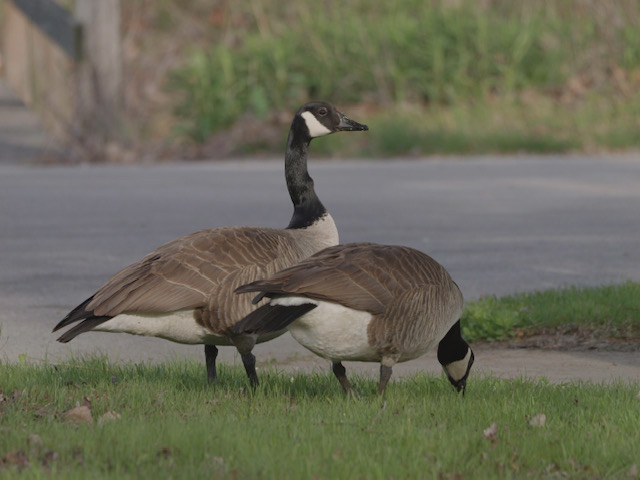
Local Canada geese
Spring is a good time to consider the giant Canada goose and methods of population control that are legal and humane. March is breeding time. Male and female breeding pairs separate from the flock and become very protective of their chosen nesting spot. Each nest will hold, on average, six eggs (between five and ten). Juvenile geese (one- and two-year-olds) are not old enough to breed and will remain in small groups.
During the nesting season (March – May), the mother goose incubates her clutch of eggs, remaining on the nest for the entire six weeks. During this time she does not eat. The gander is keeping a close eye on the nest—he is the guard, the defender, the lookout, and will attack if he feels his family is threatened.
Canada geese (Branta canadensis maxima), like all waterfowl, are protected at the federal level by the Migratory Bird Treaty Act. At the state level, Canada geese are also protected by the Illinois Wildlife Code. It is illegal to kill or remove geese, or to destroy, move, or disturb their active nests, eggs, or young, unless you register with the Illinois Department of Natural Resources (IDNR). Continue reading