Local citizens gather in front of the Urbana Courthouse on May 3 to protest the likely coming Supreme Court decision overturning Roe v Wade and endangering women’s right to choose.
Hopeful signs of a labor resurgence are everywhere. Despite another decline in the unionized percentage of the labor force and the stalemate in efforts at labor law reform, new frontiers in union organizing have emerged, strikes are on the upswing, public support for unions is the highest it has been since 1965, and acute labor shortages offer greater bargaining power to workers. This Women’s History Month, it is important to recognize the centrality of women to the path forward for labor. Women make up the majority of workers in many of the industries essential to union growth. Women have come forward as leaders of multiple organizing campaigns and strikes. And at the national level, one particular woman, Sara Nelson, has successfully identified and practiced a strategy that challenges the staid, almost defeatist stance prevalent among top union leadership in recent decades. Continue reading →
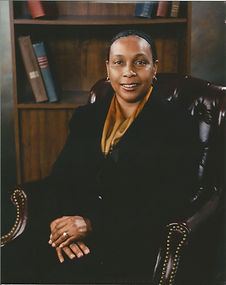
At a time when young African American kids most need guidance, Urbana has lost a most remarkable woman whose life represented a commitment to that guidance. That woman is Janice Mitchell, who passed away in November of last year at the too-early age of 58.
Mrs. Mitchell served African American students and their parents in all grades of the Urbana schools. For much of that time she served as a volunteer. She lived in the area served by what was then Prairie Elementary School, but has been renamed Dr. Preston Williams Elementary School. Her children attended that school. She formed a student empowerment group there, took the students and parents on field trips, and held Black History Month programs that included her famous balloon release. She also worked with a program called Prairie Tracks, which was an after-school program for African American students and parents. It focused on African American culture and performing arts. She led students on trips to important African American sites in the US and Canada. In 2005, she began doing paid work for the Urbana School District. She became the district’s parent and community outreach liaison. Continue reading →
The author on the job at Wesley Food Pantry in Urbana
The University of Illinois is part of the US land-grant university system. Each state has a land-grant university that operates a Cooperative Extension Service, which provides non-formal education to agricultural producers and communities in each county in Illinois.
I work for the University of Illinois Extension SNAP-Ed (Supplemental Nutrition Assistance Program-Education) [editors’ note: SNAP is colloquially known as food stamps] program for Champaign County. I am a community outreach worker in the INEP (Integrated Nutrition Education Program) office, which also houses EFNEP Expanded Food and Nutrition Education Program. U of I community outreach workers are part of the AFSCME (American Federation of State, County and Municipal Employees) Council 31, Local 3700 union, in which I have played an active role as a steward and bargaining committee member. Continue reading →
I recently watched one of the most beautiful and perhaps also one of the most significant movies I have seen in a long time. Passing, based on a 1929 novel by the Harlem Renaissance author Nella Larson (1891–1964), is a story of racial, gender, and sexual identity; of social class, racism, and more. This is the British actress Rebecca Hall’s directorial debut, and it is a smashing success. Aesthetically, the one-hour, thirty-eight-minute film, shot on location in Harlem in black and white, is subtly gorgeous. Continue reading →
Florida’s SB 148 represents the surging wave of white supremacist fascism sweeping across the country. Entitled “An Act Relating to Individual Freedom,” it symbolizes the deceptive, authoritarian, and racist motivations that characterize the white nationalist Republican Party. By making the encouragement of patriotism the main purpose of classroom instruction it reduces the teaching of history to indoctrination.
SB 148 would censor criticism of the US’s racial policies and practices and center the “importance of free enterprise to the United States economy.” And, most perniciously, it opens the doors for individuals to sue boards of education, municipal and state agencies, and private businesses that violate SB 148’s restrictions on academic freedom.
The Champaign County Bailout Coalition (CCBC) is a grassroots organization that uses community donations to pay low bail amounts for incarcerated individuals who don’t have access to financial resources in their moment of crisis. Founded in 2018, CCBC now pays up to $2000 in bail for community members who request bail support.
Since the pandemic started in March 2020, we’ve paid more than $170,000 in bond for more than 130 community members. In 2021 alone, CCBC paid $92,000 in court-assigned bonds for 64 individuals. Over this period of time, we’ve noticed that bail amounts have significantly increased for the same criminal charges. Two years ago, bond amounts in the $100–$500 range were common to see. Now we seldom see bonds for those amounts, and instead commonly encounter them in the $2000–$5000 range. Based on the requests that we receive from individuals in the jail and their support networks, that 900–1900 percent increase represents the new “low bond.”
Several hundred people gathered on February 27 at the Alma Mater on the U of I campus to support Ukraine and oppose Russia’s invasion of a few days earlier. Photo by Rick Esbenshade
Former Champaign Police Chief Robert T. Finney was hired in August, 2020 to teach Community Policing as well as Introduction to Criminal Justice at Parkland College. “Unbelievable” is what one African American community member thought on hearing the news; “Shocking,” noted another. Finney is the former chief (2003–12) of the Champaign Police Department (CPD), who has had a troubled relationship with the African American community. His tenure saw repeated complaints against aggressive, racialized policing in the community, and Finney directed numerous efforts to block citizen review of police actions.
Most notably, Finney was present at the tragic police shooting of 15-year-old Kiwane Carrington in 2009. Carrington was entering the home he was staying at when a neighbor reported a suspected robbery. Finney and another officer arrived, and less than 44 seconds later the unarmed youth was fatally shot under circumstances which have never been satisfactorily addressed. The only eyewitness, another youth, disputed the CPD account. The incident is still seen by the community as the most blatant incident in a history of racist policing by the CPD, which Finney, as chief of police, failed to address. Continue reading →
Presidents Fernando Lugo of Paraguay, Evo Morales of Bolívia, Luiz Inácio Lula da Silva of Brasil, Rafael Correa of Ecuador, and Hugo Chávez of Venezuela, at the World Social Forum Latin America in 2008
The past twenty or so years in South America have seen several powerful electoral victories of socialist-aligned candidates and parties, followed by years of reform. Eventually the momentum for change slowed, however, to be followed by disappointment and defeat. This article is a quick attempt at taking stock, and, on a superficial level, to begin the self-criticism that is supposed to be part of progressive and socialist movements. I highlight three countries: Bolivia, Ecuador, and Venezuela, because those three had unambiguously successful socialist victories in contested elections, and because they illustrate distinct problems.
First I mention a few common features. The main one of course is the United States, and here are several aspects: the many acts of political and military destabilization that originate with the US government; the heavy-handed corporate imperialism, whereby large international corporations control the extraction of key resources and the production of key export goods; and the overall neo-liberal management of the global system of commerce and finance, up to now dominated by the United States via the International Monetary Fund, the World Bank, and the World Trade Organization. This neo-liberal apparatus stymies many independent domestic initiatives, and discredits them as well through research and publications. Continue reading →
UIUC’s Abbott power plant next to the CNR railroad tracks. Screenshot from Google Maps
The University of Illinois wants to install a test nuclear reactor (“micro-modular reactor”) at the Abbott Power Plant on the UIUC campus. It has submitted a letter of intent to the Nuclear Regulatory Commission (NRC) advising that it intends to apply for a license to construct the reactor. An application for a license to operate the reactor would then follow.
I believe this proposed project is a bad idea, especially the location at which the reactor would be placed. A number of my environmentally conscious colleagues and friends agree with me. Continue reading →
The uptick in murders in 2021 represents a national crisis. In 2020, the FBI counted 21,750 homicides in the US, a 30 percent increase over 2019 and the largest percentage increase since 9/11. The total number of murders rose slightly in 2021. While police killings like the murder of George Floyd have drawn the most attention, only an estimated 1,126 of these murders were at the hands of police in 2020, with the number falling slightly to 1,117 in 2021, according to the Mapping Police Violence website. Murders by police are an outrage, especially since more than 25 percent of those murdered were Black in a country where Black people comprise only 13 percent of the population. But homicide and gun violence are about more than police killings, particularly if we look at the local context. Here murders have skyrocketed, with homicides in Urbana jumping from 2 in 2020 to 15 in 2021, and an increase in Champaign from 9 to 16. The vast majority of those killed were Black. Continue reading →
Quansay L. Markham (17 years old), Jonathon McPherson (17), Jadeen Moore (19), Acarrie Ingram-Triner (19), and Jordan Atwater-Lewis (17) are among the people who were shot and killed in Champaign-Urbana in 2021. Are there things we could have done as a community to save their lives?
Champaign’s sharp rise in firearm shootings is consistent with the national gun violence epidemic. And, like other communities across the country, Champaign is scrambling to find solutions to this public health concern. Many of these solutions focus on the symptoms of the problem and thus rely on deterrence, and not on the structural issues or the root causes of the problem. If we are ever going to end gun violence, we must make long-term investments in the people and communities most impacted by gun violence. Continue reading →
On a bad day, those of us seeking justice can find little to be hopeful about. The recent acquittal of Kyle Rittenhouse again reminds us that the law is designed to protect white lives. Even after widespread protests and demonstrations following George Floyd’s murder, we still need to remind the nation that Black Lives Matter.
We have been met by opposition not only from “Tough on Crime” conservatives, but also liberal allies. In Minneapolis, a “Defund the Police” ballot question was defeated by voters, who were swayed by the aggressive attacks of the Police Federation and liberal white mayor Jacob Frey. A day after the vote, Black Visions, the organization that spearheaded the effort to get Question 2 on the ballot, released a statement pointing to how more than 60,000 people voted yes to rejecting the status quo of policing. They remained hopeful: “Our people committing to moving toward a world beyond police is a victory.” Continue reading →
Image from the Urbana Police Department Facebook page
In 2004 the State of Illinois required all law enforcement agencies to report their annual traffic stop data to the Illinois Department of Transportation (IDOT). The Urbana Police Department’s (UPD) data shows they have enforced traffic laws inequitably every year since state reporting was required. During these 17 years, African American drivers in Urbana have made up between 28 percent and 42 percent of all those stopped while being a significantly smaller percentage (14–18 percent) of the local driving public each year. Unfortunately this fact has negatively impacted hundreds of African American people financially, socially, and psychologically in a multitude of ways. Continue reading →
I began writing this reflection on Thanksgiving Day, November 25, 2021, a national holiday created by President Lincoln in the hopes of healing the wounds following the Civil War. Yet for many the wounds still run deep. One of the most influential books on healing, The Big Book, inspired by the brilliant psychologist and philosopher, Carl Jung, begins with the premise that no healing is possible without acknowledging first that we have a problem. Subsequent steps are to make “a searching and fearless moral inventory” of ourselves before then making amends to anyone we have harmed.
As a nation we are quite adept at acknowledging the problems of other countries. In fact, what inspired me to write this was reflecting on President Biden’s declaration in April, 2021 that what happened to the Armenians between 1915–17 in the Ottoman Empire—now Turkey—was genocide. The Thanksgiving holiday, of course, highlights the still officially unacknowledged genocidal practices carried on against Native Americans, but here I wish to focus on another genocide that is both ongoing and invisible in national discussions: the genocide waged against the US African American community. Continue reading →
1,530 total views, 2 views today
Posted inAfrican Americans, Racism, Violence|Comments Off on The Unacknowledged and Ongoing Genocide: Violence against African Americans
We are the Congolese Community of Champaign County. The estimated number of Congolese living in Champaign County is more than 6,000 persons. Our mission is to support each other and help our children learn about the country, as well as assisting new members.
We support each other by collecting money when one of us has a problem or when it comes to mourning. When a person passes, our members contribute $50 to support the family of the decreased. We sometimes collect more than $18,000. We had a situation where one of our community members passed three years ago, but she didn’t have any close family members here. We collected money for the burial expenses, instead of having her cremated, which is against our traditions. We collected enough money to cover all the funeral expenses, and we sent the remaining money to her family in Congo. Continue reading →