

How Privatization Destroyed Award-Winning Suicide Prevention Program in Champaign County Jail

money-jailSeveral years ago, while working at our local Books to Prisoners, I met a volunteer who had formerly worked as a mental health counselor in the local jail. This was just after there had been three jail suicides within a six-month period in 2004. She recalled a time when she worked with the “Crisis Team,” a nationally-recognized mental health program which for 20 years prevented any suicides in the jail. In response to the three suicides, Sheriff Dan Walsh outsourced mental health services to Health Professionals Ltd. (HPL), a private company based in Peoria, Illinois. Yet this has not stopped the loss of life in the jail.

In the current debate about whether to allocate millions of dollars toward a new jail, Sheriff Walsh has frequently cited the large percentage of those with mental illness (as much as 20 percent of the daily population) and argued for the need to expand the mental health facilities. More than just bricks and mortar, this issue demands that we look into quality of services provided by the private company HPL. We have something to learn from looking back at the Crisis Team, a local success story of how we can effectively treat those with mental illness.

Worth Their Weight in Gold
In August 1980, the downtown jail opened on the north side of Main Street in downtown Urbana, replacing an antiquated facility from the 1890s. Within the first 18 months of the new jail, there were three successful suicides. Then-superintendent of the jail, Captain David Madigan, lobbied the county board to approve a 1983 contract with the Mental Health Center of Champaign County to form what would become known as the “Crisis Team.”

The Crisis Team was so successful that it was featured as “A Model Suicide Prevention Program” in a 1990 newsletter out of Mansfield, Massachusetts. According to the article, the responsibilities of the Champaign County jail were taken over in 1985 by Captain Gary Turner, who formally outlined a program for the Crisis Team. “A correctional officer must be more caring,” Turner said, “almost displaying a social work approach to the job.”

David Madigan, who was elected Sheriff in December 1990, said that such mental health programs were, “worth their weight in gold,” providing important services, but also saving taxpayers millions in potential lawsuits.

With the help of Marya Burke,  my Public i co-editor, I was recently able to track down the woman who first told me about the Crisis Team, Heidi Reible, who worked at the jail from 1992 to 2002. According to Reible, they had a “stellar” program. During the time she was at the jail, there were no successful suicide attempts. In April 2000, Reible was presented an award by U.S. Attorney General Janet Reno for her work.

New Sheriff in Town
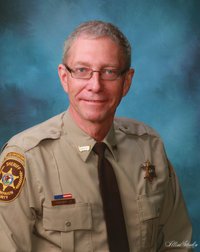
Sheriff WalshIn 2002, local attorney and former Urbana police officer Dan Walsh, a Republican, won an uncontested race for sheriff, replacing Madigan, who had retired. In 2004, three individuals committed suicide in the jail―Joseph Beavers, Marcus Edwards and Terrell Layfield. In response, Sheriff Walsh put out a request for proposals (RFP) to expand mental health services in the jail. In 2005, he abandoned the not-for-profit Mental Health Center in favor of a private provider, Health Professionals Ltd., a company that was already providing medical services in the jail. HPL offered 3.5 positions at a cost of $225,000 per year. The Mental Health Center had made two proposals for even more staff, but the sheriff chose HPL because they were cheaper.

Despite the change in providers, there have still been several deaths in the jail. In 2006, Quentin Larry died after ingesting a bag of cocaine. In 2007, Janet Hahn died from a diabetic emergency. In 2009, Todd Kelly was on suicide watch still but managed to hang himself. In 2011, Jesse Masengale committed suicide the night after he was given a 30-year sentence.

Meanwhile, Sheriff Walsh has quietly cut back the staffing hours for mental health. Currently, the contract includes 84 hours of mental health counselors, a significant rollback from the original contract, which provided for 140 hours.

Jail-Industrial Complex
How were conditions in the jail for those with mental illness allowed to deteriorate in such a short time? There was a convergence of several factors―mass incarceration, a shrinking safety net, and the emergence of a private corrections industry―that has led to the current crisis in the Champaign County jail.

In the last three decades, we have seen the rise of mass incarceration, with some 2.3 million locked up in the United States. Locally, the daily population in the Champaign County Jail went from 115 in 1985 to 158 in 1989. This growing demand led to the construction of a second jail, which was built in 1996. The population continued to grow so that in 2005 there were 325 people held in both the downtown and satellite jails.

These were also the years when we saw an erosion of the social safety net: the restructuring of public housing, cuts to public health, and welfare reform/deform. There was the shuttering of two mental health facilities in central Illinois, leaving only the McFarland Mental Health Center in Springfield, which has 118 beds for the entire region.

The term “prison-industrial complex” captures the nexus of publicly-funded prisons and private companies that are profiting from the current prison boom. The increasing number of privately-run prisons has gained much attention. Yet county jails are still publicly run. Lesser known are the many jail services which have been privatized, what might be called the “jail-industrial complex.” At the Champaign County Jail, Aramark has a contract for food and laundry services, and Evercom Services provides the collect phone calls.

There are several motivations for outsourcing jail services. For example, private companies claim they can free public bodies of legal responsibility. Nevertheless, the Sheriff has still been sued. In the case of Quentin Larry, it cost $57,710 in legal fees to fight the case, which ended in an out-of-court settlement of $40,000. While there has been no settlement in the Janet Hahn case, it cost $132,993 to litigate. The bulk of these expenses went to the Urbana law firm Heyl, Royster, Voelker & Allen, which currently charges $185 an hour. The belief that privatization saves money may not, in the end, prove to be true.

CullinanHPL founder and chief physician, Dr. Stephen A. Cullinan, has had some 30 lawsuits filed against him in Illinois. In May 2013, Cullinan received a 60-day suspension of his medical license (although he is recently retired) in the case of a man who died from a bleeding ulcer in the Sangamon County jail.

HPL is a good example of the rapidly expanding private corrections industry. Founded in 1995, today HPL has contracts with more than 100 jails and prisons. In 2007, HPL was purchased by Correctional Healthcare Companies (CHC).CHC According to their website, two of CHC’s top executives, Don Houston and Wendy Dunegan, came from The GEO Group, one of the largest private prison corporations in the world.

In December 2012, CHC was subsumed by GTCR, a multi-billion dollar private investment firm in Chicago. Today, mass incarceration is big business.

You Get What You Pay For
It appears there’s a growing consensus in Champaign County that mental health services should not be outsourced. I talked to Diane Zell, president of the local chapter of the National Alliance on Mental Illness (NAMI). “We need to return to local providers at our jails,” she said. “We need people who are likely to have contact with those who end up in the jail.” Zell believes we must find funding. “You get what you pay for,” she said. “Doing something because it’s cheaper is the worst reason to do something.”

There is recent good news. On May 22, 2013, the Champaign County Mental Health Board passed a resolution to extend more services to those who get caught up in the criminal justice system. There have been two jobs posted and a drop off center opened.

Dr. Deloris Henry, President of the Champaign County Mental Health Board, spoke optimistically, “It’s going to really be a nice start. It’s not the panacea of all the needs we have but it’s a step in the right direction.”

The article was crowdfunded by contributions from nine individuals totaling $425. A longer version can be read at ucimc.org and SmilePolitely.com.

Posted in Policing, Prisoners | Comments Off on How Privatization Destroyed Award-Winning Suicide Prevention Program in Champaign County Jail

Sunlight Has Begun to Shine on the Urbana Free Library

Public scrutiny of the book weeding controversy at the Urbana Free Library last month has shed light on the leadership of the beloved institution. The Executive Director, Deb Lissak, who had pressured the staff to perform the weeding of books at a reckless pace, and then blamed them for the mistakes, has agreed to step down.

The Library Board of Trustees has bowed to public pressure and has agreed to revisit the new Strategic Plan and allow for addendums based on public input. Important questions are now being asked about how the library serves the community and how the administrators should engage with the public and staff. The attention brought on by the sudden loss of about 9,300 books has brought hundreds of concerned citizens into the board room to learn and participate.

History of the Blunder

This process of inquiry began in June when patrons noticed thousands of books were being removed from the non-fiction shelves seemingly overnight. A couple days after the mass book removal began, several people attended the monthly meeting of the Board of Trustees to ask questions directly to the administrators. Community members were assured that removing books from the collection was painful but necessary, however later conflicting accounts were presented about how the weeding had taken place. As a picture emerged it was clear the library had violated its own policy and thousands of books had been improperly discarded. The tide began to shift when the story broke on Smile Politely and the details of the botched weeding project entered public discourse. The story was shared hundreds of times on the internet and a frank public conversation began about what had happened at the UFL. Who was responsible for the weeding mistakes? Why was the public unaware that such dramatic changes were taking place at the UFL? How did the new Strategic Plan justify such a drastic downsizing of the collection? More questions emerged as voices joined the discussion. People began spreading awareness and advocating for more public scrutiny.

Within days there were concrete results from the community inquiry. Better World Books, the non-profit to whom the books were sent, had already been contacted by outraged Urbana residents and were working with the UFL to send the books back. The library posted a public apology for the overzealous weeding, asserting that problems with the weeding procedures were being addressed.  They also posted a FAQ for the coming changes. When the information packets given to board members at meetings were requested via FOIA, the library responded by posting a whole year’s worth on their website, a true win for transparency. Furthermore, a call was reawakened to begin broadcasting Trustees’ meetings, as already was standard practice with most other local boards.

Shockingly, amidst all the scrutiny, Lissak publicly blamed her staff–in the newspaper, on the radio and on TV–for all the weeding mistakes. Enough people had read the first Smile Politely article, where Lissak claimed that she was “okay with what happened,” to know that she was being disingenuous at best, and outright lying at worst.  With so many people now paying attention to the story, and with numerous statements pointing to Lissak as the instigator of the weeding agenda, her actions rapidly increased calls for her termination. They also increased public advocacy for the staff members who were ordered to weed aggressively and then blamed by their superior.

From all the discussions and documents uncovered through investigation, several clear areas of concern had emerged. There had been an inadequate level of transparency and public accountability on the part of the Board, which over time led to the erosion of channels for public input. The Strategic Plan used to justify the weeding process seems to have been created with only token community input, and has implications that have not been clearly communicated to the public. Personnel conflicts at the UFL had been allowed to simmer for years because no adequate grievance policy existed to allow staff to speak without fear of retribution. The Executive Director, instead of building consensus for change, had adopted a strategic planning process promoted by an outside consultant.  This process had alienated many staff members who raised objections. While the discussion began about an overzealous weeding project, it was now clear that the institutional problems precipitating the weeding mistakes were much more significant than the lost books.

The Remedy of People Power

This whole episode has been an incredible demonstration of people power. Individually, each voice would have been easy to ignore, but a well-informed group acting collectively proved to be an effective force that couldn’t be dismissed. Dozens of letters and phone calls to public officials prompted the Board of Trustees to hold an emergency meeting on June 19th. Over 200 people packed the room, many with prepared statements to be read during the public comment period. With the help of the UCIMC, the event was live-streamed, and as many as eighty-nine people watched live. While Lissak did not attend that meeting, several attendees spoke in her support, citing her long tenure as a library employee. The overwhelming plea however was for the board to take action and many asked for a new executive director.

After the emergency meeting, there was a clear sense that the changes the library needed to pursue were not in the number of books on the shelves but rather in the leadership philosophy guiding the institution. After the meeting the board began to address public concerns. Directives were ordered to halt the aggressive weeding and to review the Strategic Plan, but stopped short of addressing the personnel concerns. The public remained diligent and organized a large turnout for the next board meeting on July 9th. Once again the room was full of passionate and articulate voices urging to board to reflect deeper on its own decisions.

By the July 9th meeting, there was enough evidence obtained through FOIA requests to show that the director’s continued statements to the media were misleading and hurt public trust. At the meeting, the board also embarrassingly admitted that the current grievance policy had not been updated in twenty-one years, and promised to review it. Many members of the public seemed better informed than some board members, and the event seemed more educational to the board members, while cathartic for the audience. Since the board had accidentally violated the Open Meeting Act at their last meeting by going into open session while the building was locked, several dozen people stayed for over an hour to hear if the board would make a public statement. Indeed, after deliberating in closed session, the board announced it would seek to break the existing contract with Lissak and begin searching for a replacement.

While the work needed to rebuild the trust in the library is still far from finished, it’s important to note that in one month public pressure has achieved concrete results.  The books are now being properly weeded according to professional library standards. The grievance policy is up for a total rewrite. The Board of Trustees is now open to broadcasting their meetings and is taking steps towards greater transparency. Implementation of the Strategic Plan has halted until the public is given adequate time to review and comment. The director who steered the library into this mess will soon be replaced with an interim director. Taken as a whole, this represents an unprecedented opportunity for the people of Urbana to reinvest in their library and help it become an even more beloved institution. Despite the intense stress this situation has caused, several of the board members were outspoken in  expressing appreciation to the public for their scrutiny and feedback. As this process continues, the trustees, the staff and the patrons need to work together to rebuild trust and ensure that the library grows into a stronger, resilient, and more responsive institution.

jp_goguen_photoJP Goguen has lived in Urbana for 10 years and currently works for the University Library. He finds the C-U community the perfect place to pursue his many interests.


Posted in Uncategorized | Comments Off on Sunlight Has Begun to Shine on the Urbana Free Library

Shooting the Messenger: Reflections on the Court Martial of Whistle Blower PFC Bradley Manning

I spent five days in and around Fort Meade military base in Maryland, attending the first two days of the court martial of the whistleblower, Bradley Manning.  The trial started on June 3rd, after he had already spent three years in prison–the first eleven months in solitary confinement. I had felt compelled to show my support to Manning by stepping inside the only physical space the public could share with him. What follows is a reflection on my observations and experiences during those days. My hope is that it will encourage all who value justice and human life to help Manning receive a fair trial, if not the justice he deserves.

A June 1st rally was organized by Bradley Manning Support Network and Courage to Resist to start off the International Week of Solidarity with Manning. My hotel was in an isolated location, and had been built to serve military and correctional facilities’ contractors. Anyone else would stand out, rather uncomfortably. While I waited for a taxi to the military base to attend the rally, I saw Dr. Daniel Ellsberg, also waiting. I was unable to contain my excitement; so, I approached him and thanked him for his untiring work for peace and justice. He offered me a ride, which I gladly accepted. While in the car, he talked about his concerns for sanctions against Iran, and his fear of a U.S. airstrike against my birth country.

One thousand people had gathered in front of the main gate of the base.  For two hours, activist-celebrities were interviewed, pictures were taken, and messages of support for Manning were crafted on a huge canvas. We then marched to another gate, where we listened to several speakers. An Iraqi woman, active with the Support Network, asked us to appeal to family and friends for contributions to Manning’s defense fund, which had already spent one million dollars for this purpose. Anti-war veterans spoke against our wars of aggression and in support of Manning. Retired Colonel Ann Wright gave a passionate speech, “…from one Colonel to another,” she urged the judge, Colonel Denise Lind, “to look deep into the law which tells us to whistle-blow on our government’s criminal acts committed in other lands in our name.” Indeed, Manning’s fate is in the hands of the judge, whom the defense had preferred over a military jury.

Dr. Ellsberg gave the closing speech. He called Manning “an extraordinary man,” who had risked his life, so people could “see the real nature of asymmetrical war.”  He also argued that, contrary to the government’s claims, Manning may have in fact saved many lives: After the Iraqis learned about the U.S. military’s cover-ups, their government refused to grant the U.S. army immunity from prosecution, which was the condition the U.S. had set for keeping some of its troops in Iraq. How many American soldiers might have been killed or maimed, if they had stayed?

In a panel discussion on Sunday, Ellsberg and two federal whistleblowers discussed the devastating personal effects of their truth-telling, which had compelled them to speak out in support of Manning and other whistleblowers. They pointed out that the government has refused to refer to them as whistleblowers, in order to deny them support under the Whistleblowers Protection Act. Michael Ratner, one of the WikiLeaks attorneys, argued that the government was intent on convicting Manning of espionage, not only to make an example of him, but also to convict Julian Assange of espionage. Before leaving, I got my black t-shirt, with the word Truth on it, which many of Manning’s supporters had worn during the pre-trial proceedings.

Monday morning, we gathered outside the main gate for a vigil, which was going to be held every day of the trial. At 8:00 the gate opened, cars were searched, and identification cards were copied. When we reached the last checkpoint, the guards told us we couldn’t enter the courtroom with our Truth shirts on.  I mentioned the irony of keeping Truth out of the courtroom, but was hushed by a man in line who perhaps thought my remarks might be construed as provocation. I turned my shirt inside out and waited.

With several quite large courtrooms on the base, the military had chosen one with a maximum capacity of twenty seats for the public.  We were told that most of us had to watch the proceedings via live-streaming in either an auditorium or a trailer, and wait for seats to become available in the courtroom. We had no clue which option would lead us to the courtroom sooner and how to find out when it was our turn.  I opted for the trailer and waited for the trial to begin at 9:30. By 10:00, we were all restless.

The judge entered the courtroom at 10:20 and went over proper procedures.  She asked the prosecutor if the media had been accommodated fully. The “Yes, ma’am” answer belied what we knew. In the opening remarks, the prosecutor declared that the government had enough evidence to prove Manning had leaked specific classified information at the behest of WikiLeaks, and had given “aid and comfort to the enemy.” Hence, he argued, Manning should be convicted of espionage.  David Coombs, the lead civilian defense, argued the evidence showed Manning had acted upon his strong humanistic values, and a naïve belief that the revelations might lead to a national discussion about our wars and foreign policy.

The main evidence Coombs referred to were week-long chats between Manning and Adrian Lamo, the man who had turned Manning in to the authorities. Manning had sought Lamo in confidence because of the latter’s online reputation as a hacker, WikiLeaks sympathizer, and LGBT activist. Ironically, if Lamo had not remained engaged with Manning over the significance and consequences of his actions, the defense would have had little evidence to support Manning’s assertions that his motives were noble.

During the recess, Colonel West and Chris Hedges arrived from New York to express their solidarity with Manning.   We had a lively discussion with them over the corporate media’s maligning of Bradley Manning, and its refusal to scrutinize the content of the leaks.  Before the resumption of the proceedings at 2:00, Colonel Wright brought us the news that now there were enough seats in the courtroom. The atmosphere inside was quite oppressive. Two huge men had created a wall between Manning and the public, so not even our eyes could meet his. As the trial resumed, the guards sat down on a side bench but kept their eyes fixed on Manning’s supporters. A number of private contractors and military personnel testified to Manning’s guilt of the charges he had already accepted.

The next morning, we learned that the judge had ordered security to admit the Truth shirts into the courtroom. I asked the guards about the criteria used to determine the inappropriateness of images and messages on clothing. The answer, “if they smack of propaganda.”  Everyone in line went inside the courtroom. After two technical testimonies, the prosecutor called Adrian Lamo to testify. A young man awkwardly walked to the witness stand. I felt a chill down my spine and decided that I could not despise this man, whose red eyes and sick look spoke to me of a conflicted soul. Lamo answered questions about his mental problems and medications, past hacking activities, arrest, and spending time in prison. In his cross-examination, the defense established that Lamo had thought of Manning as idealistic and not interested in selling and profiting from his access to classified documents.

I left Fort Meade on June 5th but have been keeping track of the proceedings.  I know that without massive popular support Manning will not receive justice. Maybe a conviction considered legally fair, but what about the punishment, ten or twenty years in prison? We owe it to Manning and to our democratic right to know and evaluate our government’s policies to demand that Manning receive justice.

Posted in Human Rights, military, Politics | Comments Off on Shooting the Messenger: Reflections on the Court Martial of Whistle Blower PFC Bradley Manning

Racism in the Land of Lincoln


From: Jim Allen <jimallen@consolidated.net>

Sent: 06/18/13 10:59 PM

To: dibendahl@mail.com

Subject: 13th Congressional District reply

Rodney Davis will win and the love child of the D.N.C. will be back in Shitcago by May of 2014 working for some law firm that needs to meet their quota for minority hires.

The truth is Nancy Pelosi and the DEMOCRAT party want this seat. So they called RINO Timmy Johnson to be their pack mule and get little queen to run.

Ann Callis gets a free ride through a primary and Rodney Davis has a battle.

The little queen touts her abstinence and she won the crown because she got bullied in school,,,boohoo..kids are cruel, life sucks and you move on..Now, miss queen is being used like a street walker and her pimps are the DEMOCRAT PARTY and RINO REPUBLICANS…These pimps want something they can’t get,,, the seat held by a conservative REPUBLICAN  Rodney Davis and Nancy Pelosi can’t stand it..

Little Queenie and Nancy Pelosi have so much in common but the one thing that stands out the most.. both are FORMER QUEENS, their crowns are tarnished and time has run out on the both of them.

The above racist, as well as sexist, email sent by Montgomery County Republican Chairman Jim Allen reminds us of how  racism still pervades society and politics in Illinois despite the election of Illinois’ own Barack Obama as the first black president of the United States.  The above words come from a county chairman of the party of another son of Illinois, Abraham Lincoln.

This really should come as no surprise.  While Illinois was not a slave state and while certain communities in Illinois were way-stations for fleeing slaves in the underground railroad, the history of Illinois is also replete with segregation and anti-black behavior, some of it very violent.  This is certainly true of my hometown Chicago, one of the most highly segregated cities in the United States in which the July 27-August 3, 1919 race riots resulted in the death and injury of hundreds of black people.

But it is also true of downstate Illinois.  Eleven years before the above race riot in Chicago, in August of 1908, blacks were lynched and injured in a race riot in Springfield.  This race riot was largely responsible for the founding of the NAACP in 1909.

I personally experienced the effects of racism in the town of Pontiac, Illinois in Livingston County. When I was a young boy I would spend a certain amount of time each summer visiting my aunt and my younger girl cousins.  My aunt owned the two hotels that were then there, the Pontiac and the Imperial Hotels.  She employed an African American maid who had a son my age.  When Johnnie and I went to the movies together, he and I would sit in a tiny balcony reserved for blacks, and out of sight of other whites.  I could have sat on the main floor but chose not to because I wanted to sit with Johnnie.  Johnnie had no choice.

One day my aunt gave me money to buy a model airplane kit.  To my aunt’s chagrin, I split the money and bought a kit for myself and one for Johnnie as well.  To her greater chagrin, we sat down together in the hotel lobby to assemble our kits. My aunt called me into her apartment and told me that blacks were not acceptable in the lobby (unless of course they were cleaning it.)  Once again our being together had to be out of public sight, this time in the hotel’s basement.  This was not in the South.  It was only a couple of hours southwest of Chicago on the old Route 66.

That was in the 1940s and 1950s.  I have no idea what Pontiac or Livingston County are like now.  But I have heard of a mayor in Champaign County, one even belonging to the party of Lincoln just like Mr. Allen, who only a couple of years ago denied that our first black president was even an American.


Posted in African Americans, Human Rights, Politics | Comments Off on Racism in the Land of Lincoln

GMOs Are Not the Answer

This past Fourth of July, a nationwide coalition of concerned mothers and their supporters joined the fight for food freedom. Mothers across the country who have been struggling with the increase in food-related allergies, autism and other health problems that their children suffer from have united as they have seen their health improve when they remove Genetically Modified Organisms (GMO’s) from their diets.

Moms Across America’s March to Label GMO’s formed over 150 groups across the United States who marched in their local Fourth of July Parades.  After participating in the March Against Monsanto demonstration on May 25, I learned about Moms Across America, and took it upon myself with the help of others, to organize a group to march in the Champaign County Freedom Celebration Parade.

I found support through another concerned mother, Jessica Rasmussen, who helped organize two free showings of the film Genetic Roulette at the Common Ground Food Co-op. This documentary style film highlights the health risks of Genetically Modified Organisms in our food supply, as well as damage to our environment and negative economic impacts for our farmers and our country. I also found support from the Food and Water Watch Group, who helped to spread the word about our march in the parade, and who joined us on the big day with enthusiasm and wonderful signs.

Chambana Moms also took notice of our efforts and promoted our march by providing me with the opportunity to respond to a Q and A as the Chambana Mom to Know at www.chambanamoms.com. We decorated my van, and were joined by another concerned mom, Rebecca Butler, who helped make the day fun for the kids by pulling a hay rack with her truck for the kids to ride on. Another local mom who has two children on the autism spectrum, happily donated by purchasing our banner, flyers, buttons and stickers!

Our goal is to raise awareness in our community about Genetically Modified Organisms, and we think our march was a success as we saw many conversations sparked along the parade route. We heard shouts of “What’s GMO?” and “Why does it matter?” We were cheered by some and saw others shaking their heads. A few people asked me to stop and explain it to them. We had hundreds of flyers full of information, but were unfortunately not allowed to pass those out, so we passed out organic lollipops with “GMO FREE” signs stuck on them.

So why did I feel so compelled to participate in the effort to label GMO’s? I am mother to a six-year-old daughter who has food allergies.  In this community, we are surrounded by fields of GMO crops, especially corn, and allergies are high.  During planting and harvesting season, we have learned that we just have to keep our home closed up with an air filter on high, and we learned this the hard way. This past fall, my daughters’ allergies became so severe that she developed a hacking cough that persisted for months. This resulted in the most frightening night of my life, when she stopped breathing during a tonic seizure that sent us to the emergency room. Thankfully, she recovered quickly, and the air filter by her bed has improved her condition. Was this caused by GMO’s and the heavy use of Roundup? Well, when the sprayers go by in the field across the street from our home, I’m not taking my chances. Shut the windows!

The GMO crops primarily used around here are Roundup Ready corn and soy. Roundup Ready crops are genetically modified to withstand heavy spraying of Roundup, so they can survive while all the weeds die. The active ingredient in Roundup is Glyphosate, a chemical which has been linked to the dramatic decline in bee population, as well as to the dramatic increase in autism, digestive issues and food-related allergies. GMO food consumption has even been shown to cause an increase in mammary tumors in rats in one of the first comprehensive independent studies of the effects of GMO’s and glyphosate.

GMO’s are banned in 47 countries, and many countries are no longer importing crops from the United States as a result of the continued use of GMO’s in the US. The problems caused by this path we have taken with the biotech industry do not stop there, however.  Nature seems to find a way to evolve, and farmers are now contending with ‘superweeds,’ taking them back to square one, only now the weeds are more difficult to deal with and the soil is full of poison.

Do we continue to use even more toxic glyphosate, allowing the EPA to raise the ‘safe’ limit again, or stop this insanity? Our first step is to get our lawmakers to require labeling of GMO’s so that we can at least have the freedom to make a choice.

GMO’s are not the answer. Listen to your Mother.

Jessica Nolen


Jessica Nolen is a Licensed Massage Therapist and Reiki Master Teacher. She works in her home with clients and at Green Yoga Spa in downtown Urbana. She teaches water yoga at Indian Acres Swim Club and volunteers for free Yoga in the Park at Meadowbrook. She is also a mother, and enjoys taking care of her chickens, cats, and working in the garden.

Posted in Environment | Comments Off on GMOs Are Not the Answer

Update from Food and Water Watch

Food and Water Watch (FWW) is a national organization fighting for clean water issues ranging from contamination from hydraulic fracturing (fracking), to pollution caused by factory farms (CAFOs), to the bottled water industry. Our insidious and dangerous food system, which we Americans like to think is the standard of safety for the world, is laid bare by Foodopoly, the new book written by FWW’s Executive Director, Wenonah Hauter.  FWW has also just recently released two unsparing reports, one on Monsanto’s corporate history and the second on how our very U.S. State Department acts as “biotech ambassador” around the world for the seed industry. Please go to www.foodandwaterwatch.org to read these reports and many other reports and fact-sheets about these issues that are so immediate to our lives and to the health of our planet.

FWW has also been working for the labeling of genetically engineered (GE) foods in Illinois with our “Let Me Decide” campaign. In the fall Senator David Koehler (D-Peoria) declared his support for labeling GE foods in Illinois, and he is holding Senate hearings this summer on the issue. FWW has been working closely with Senator Koehler to bring to the hearings qualified and impassioned speakers to stand up to anti-labeling “experts” who want to deny Illinois residents their right to know what is in their food. The second hearing will be held in Carbondale on the campus of Southern Illinois University on August 7, and the third in Chicago on September 17.

As for our local FWW group, we have been at the Farmers’ Market on two Saturdays and have really enjoyed talking with so many people (even those who did not agree with us!) about the issues surrounding GE crops and our right to know what’s in our food. We’ll be at the Market again on July 27. Come by. Chat with us. Sign our petition for labeling in Illinois. We were very lucky to have hooked up with Moms Across America just in time to join them in the July 4th parade. Come hook up with us!

Posted in Environment | Comments Off on Update from Food and Water Watch

Saying Goodbye to Marianne Ferber

marianne_ferberThe Champaign-Urbana community lost a pioneering “second-wave” feminist scholar and social justice advocate with the passing of Marianne Ferber at her Clark-Lindsey home on May 11, 2013 at 90 years of age. Marianne’s rich life history began in 1923 when she was born into a Jewish family of cattle dealers and farmers in a small village in Sudetenland, Czechoslovakia. Upon the Nazi invasion of their homeland in 1938, her father, Karl Abeles, led an extended family clan (Abeles-Popper) across the Atlantic to Canada. The 39-member clan had first attempted to immigrate to the United States, but due to strong anti-Semitic attitudes among Congressional representatives and even Roosevelt Administration bureaucrats, the miserly quota for Jewish refugees had already been filled. Abeles turned next to Canada, where anti-Semitism also influenced public policy, but given a shortage of farmers in the country, Marianne’s father applied for entry for himself and his relatives as farmers. The clan was allowed entry and Marianne arrived in Canada at the age of 15.

For a year, she worked on the farm and then stuffed envelopes with advertisements in an attempt to earn enough money to return to high school. Impressed by her gymnasium education in Europe, the high school principal suggested that she instead apply for admission to McMaster University. To her surprise, Marianne was accepted at McMaster, where she earned an undergraduate degree in economics and then moved on to the University of Chicago for her doctorate during World War II. As she repeatedly observed, the University of Chicago’s Economics Department was not then the bastion of neo-classical conservatism that it would later become with the arrival of Milton Friedman in the 1950’s. However, not surprisingly, she encountered no female faculty in the department and only two other female graduate students.

Marianne married Bob Ferber while at the University of Chicago and was pregnant with their first child when Bob received a job offer from the University of Illinois’ Economics Department, which he joined in 1948. Having done well in graduate school, Marianne expected shortly to find work in the same department, but she would have to wait until 1955 before being offered a job as a visiting lecturer. During her time as a lecturer, she had a second child and although she always credited Bob with being a “feminist”, her less demanding work schedule meant that in traditional fashion she assumed the major portion of childcare and household work responsibilities. She would remain in the highly contingent Visiting Lecturer position for fifteen years before receiving, not least because of her great success as a teacher, the title of Assistant Professor with tenure in 1971. She became a Full Professor in 1979 and worked at the University until her retirement in 1993

Once slotted into a regular faculty position and with her children now attending high school, she initiated a rigorous research agenda. Her first major effort was an examination of female academic salaries. Her substantiation of major gender inequities in pay, combined with her own experiences of discrimination in academia and with the growing influence on her thinking of second-wave feminism after the late 1960s, spurred her to concentrate her efforts on women’s economic condition, both in paid and unpaid labor markets. Her most well-known contribution in this regard is the textbook she co-wrote with Fran Blau and Julie Winkler, The Economics of Women, Men, and Work. She also became a trailblazer in the development of feminist economic theory, co-editing along with Julie Nelson, Beyond Economic Man: Feminist Theory and Economics and was a founder and first President of the International Association of Feminist Economics. She also served as the head of Illinois’ Women’s Studies Unit in 1979-83 and in 1991-93.

Her list of journal articles is lengthy and she continued to publish into her late eighties. I had the privilege of being her co-author on two articles on social security reform and the especially deleterious impact on women of conservative proposals to privatize the system.

With regard to theory, Marianne was always uncomfortable with the neoclassical perspective. As she observed, “I always had reservations about neoclassical theory.… At the most fundamental level, I don’t think people are rational maximizers. This is something that bothered me for a long time.”

That Marianne should be a critic of neoclassical economics is hardly surprising. This framework lends to a vision of humans as isolated, self-seeking units of conspicuous consumption. Although some neoclassical economists would hardly want to be aligned with such statements, there is much within neoclassical theory that harmonizes with Margaret Thatcher’s dictum: “There is no such thing as society.” Alternatively, with her strong aversion to inequity and commitment to social justice, her profound sense of the importance, indeed the necessity of social solidarity, Marianne set out – along with other feminist allies – to swim courageously against the mainstream currents. There was cost to her in terms of professional rewards and accolades, in terms of being rebuffed and derisively dismissed – but although small of stature and never vindictive or deliberatively unkind, Marianne was a fighter who ever valued her own personal integrity over personal advancement.

Her family, colleagues, and many, many friends (myself included!) will miss her.

Posted in Uncategorized | Comments Off on Saying Goodbye to Marianne Ferber

CU Immigration Forum Steps Up Push for Comprehensive Immigration Reform

(Compiled from material provided by CU Immigration Forum)

Champaign-Urbana activists and other supporters of immigrants and a diverse and stable community have been working on a number of new initiatives to pressure legislators to make immigration reform a reality.

During the week of June 10th, 50 community volunteers met at the University YMCA to call and urge community members to send a voicemail message to Illinois Senator Mark Kirk telling him to vote YES for Comprehensive Immigration Reform. Volunteers called 793 people, and 266 of those people committed to calling Kirk. On June 27, the Senate passed overhaul for immigration by a margin of 68 to 32. Thanks to the efforts of our community members, Senator Kirk voted “Yes” on the bill, after voting “No” in the cloture two weeks prior.

The strong vote in the often polarized Senate tossed the issue into the House, where the Republican leadership has said that it will not take up the Senate measure and is instead focused on much narrower legislation that would not provide a path to citizenship for the 11 million unauthorized immigrants in the country. Supporters of true reform hope that the Senate action will put pressure on the House.

On Father’s Day, families all over the 13th Congressional district delivered an oversized Father’s Day card to Representative Rodney Davis (R). The card emphasized the need to “Keep our Families Together.” “Too many families are being torn apart each day that immigration reform is not passed,” explained C-U Immigration Forum member Lorenzo Macedo. “Over 1,100 families continue to be separated each day, and here in Illinois 56,108 children have lost a parent because of deportations. Father’s Day is a time when we celebrate the important role that fathers play in the lives of our children. We are encouraging Congressman Davis to join us in ending this tragedy by supporting comprehensive immigration reform.”

Not long after he received the card, Davis reached out to CUIF members to set up a meeting with a small group of community representatives on Monday, July 1st. Community representatives walked away from the meeting with a better sense of Davis’s take on comprehensive immigration reform. Davis is likely to support a Senate/House conference to negotiate the likely chasm between the Senate bill and any that may come out of the House of Representatives. When asked if he would attend a community meeting on comprehensive immigration reform later this summer, Congressman Davis directed his staff to work with us to find a date.

The Allies of Faith, a working group of the Immigration Forum, is currently seeking volunteers to help out in getting the word out about immigration in general and to encourage people to contact their local representatives. A table every other Saturday at the Farmers’ Market at Lincoln Square is an important part of this outreach. “Several folks have thanked us for bringing immigration reform to the Farmers’ Market,” said community member Pat Nolan. “There’s been an earnestness among people to find out more about immigration issues and to reach out to Senator Kirk and Congressman Davis by signing postcards.”

Beyond the humanitarian benefits, advocates are also emphasizing the economic advantages of immigration and legalizing the undocumented. A Congressional Budget Office analysis of the Senate bill shows that, if passed, the legislation would reduce the federal budget deficit by almost $700 billion over twenty years, in addition to significant upturns in GDP, productivity, investment and job creation.

For more information, visit CU Immigration Forum’s website: http://immigration-forum.blogspot.com/ CU Immigration Forum meets at the University Y every second Tuesday of the month at 5 p.m.

Posted in Immigration, Voices of Color | Comments Off on CU Immigration Forum Steps Up Push for Comprehensive Immigration Reform

What is a nüz/böx?

nuzboxHiRez2What is a nüz/böx? First, it’s spelled with an X, a Z, two ümlaüts and a slash/. Even the name calls your attention. The pronunciation of nüz/böx is intentionally ambiguous. How do you pronounce it?

Pronunciation, like many aspects of a nüz/böx, is something the curator(s) – which is you if you decide you want to do it – give(s) form and direction to. A nüz/böx is purposely designed along minimalist lines, of concept, architecture, labor, and materials. It’s easy to do.

In simple terms, a nüz/böx is a hyperlocal, off-the-grid nexus of news, media and arts hosted by one or more households. There’s just one so far in the whole world, but I think it has wide appeal. Your neighborhood can have one …or more! I intentionally designed it to be a flexible concept, but can see networks of people joining together to put nüz/böxes along streets around town

“Is the nüz/böx part of a movement?” It could be, but it doesn’t have to be. It’s what you want it to be. Maybe you’re an artist and want a small way to display what you do. Or a craftsman and want the nüz/böx itself to show your chops. Or you’re a social worker and want to try outreach in a new way. A teacher may want to help kids and adults learn something. Perhaps you aspire to public office and want to test the waters with your ideas.

Fill in  __________  the blank with your great idea.

The nüz/böx builds on several traditions. There is a long history of precarious libraries. People always carried books with them, even in a mobile nation like the United States. Neighbors trade books. There’s the modern, yet edgily nostalgic Little Free Library movement (http://www.littlefreelibrary.org/), if you just want a library. Very cool ideas there to build – and a good movement to join, too! Then there are the wayside shrines of the world, where their peaceful and welcoming nature expressed through many different beliefs suggests something to help heal things needing healing.

But I’m an Indymedia activist, living in an active media town, Urbana. I had other things I wanted to address, like where do you put lost cat posters if it’s not legal to put them on sign posts? Sometimes I want to put out something interesting to read. Imagine the possibilities. So I did.

The neat thing about the nüz/böx is that it’s mostly 1st Amendment justified. I did want an exchange library and I think this is a vital part of the concept. My edgy political stuff is probably outside the circle of the rather non-political Little Free Libraries, although they give off a cozy upper Midwest anarchist vibe. I basically wanted a miniature Independent Media Center.

You don’t need to have an IMC in your nüz/böx, though. Just fill in  __________   the blank above. Do your own thing, join with others in your own network, or drop me a line through the contact below.

What’s in my nüz/böx? There are books occupying the library. Dozens of books have come and gone, but it’s never empty. In the upper half are the Public i, maps of Illinois and Urbana, the C-U Bike Map, literature about the IMC, info on the Urbana artist grant program, and – recently – a small show of support for Edward Snowden. I believe it’s important everything in a nüz/böx is either free or in exchange. That money thing is way over-rated. This isn’t a vending machine for media or art, plus that would likely require a variety of other permits, taxes, etc.

There is a hook to hold your grocery bags while browsing the nüz/böx and a leash latch if your dog is along. Nearby is a refuse container and a bench on a small plaza. It’s a rest area for your mind.

The nüz/böx was made of some recycled materials and some new. The main thing you want is a water-tight nüz/böx that is easily accessible, yet still has a little ventilation. I mounted mine on a post; just make sure it’s solid. Make windows into it, as seeing into the nüz/böx  attracts people; only use acrylic or lexan plastic or other safe glazing materials, not window glass. The backside has an area covered by clear flexible plastic for posting neighborhood  notices. As curator, I manage the page-size display space on each side. Just ask if your cat or dog is lost, I’ll be glad to put your flyer up. Remember to keep it neat and check on it daily to tidy and reshelf books.

Light is important, as you’ll want people to be able to see in after the early wintertime sunsets. Take advantage of a nearby street light or go solar. For relatively little expense, adapt a solar powered yardlight set to light your nüz/böx.

In Urbana, a nüz/böx like mine requires no permit. It’s generally a good idea to contact the community development department and have them take a quick peek at your plan in any case. It must be located wholly on your property; any open doors or other projections should not intrude on the city right-of -way. If you want a plaza adjoining the sidewalk, there is usually a ROW permit required ($75).

The month since the soft opening indicates the nüz/böx is a hit with everyone, from kids to librarians. Literally hundreds of people have stopped, looked, swapped books around or just said, ‘Great idea!” A nüz/böx is a great way to interact with neighbors.  You can spot the first nüz/böx on East Green Street in Urbana.

For more info about the nüz/böx concept, questions about construction, or how to go about any aspect of nüz/böxery, you can reach us through our Yahoo group, no ümlaüts required, just put the slash in a different place:

http://groups.yahoo.com/group/nuzbox/

nüz/böx – Draft, public I article June 2013                            Mike Lehman

Posted in Community Forum, Education, News, Uncategorized | Comments Off on What is a nüz/böx?

Juneteenth Bike Ride

Juneteenth bike riders outside the Boys&Girls Club

Juneteenth bike riders outside the Boys&Girls Club

Community members organized a bike ride throughout Champaign-Urbana for Juneteenth. The ride helped publicize the opening of the Lifecykle Bike Klub, a partner of the Bike Project which also has shops at the Independent Media Center and on the University of Illinois campus. The bike project on the North End is located at 79 E. Beardsley Ave. in Champaign. Its hours are Tuesday/Thursday 4:30-8:30 p.m.


New bike shop on the North End is open!

Melissa Neely repairs a bike in the new bike shop on the North End.

Posted in Uncategorized | Comments Off on Juneteenth Bike Ride

Summer Classes at Common Ground’s Flatlander Classroom

Visit Urban Bees!
Led by Maggie Wachter
$10 owners/$15 non-owners
Saturday, July 27th, 1-3pm
Min 4/Max 12
Local beekeeper Maggie Wachter will take you on a thrilling journey in her teaching apiary located just a few blocks from the Common Ground Co-op. Watch beekeeping in action as Maggie opens hives and explains the phenomena of the honey bee society. Visitors will not be required to approach the hives. Viewing may take place from behind a screened window or from outside the enclosed apiary. Visitors who wish to enter the apiary should dress appropriately in thick clothes with long sleeves and long pants. Gloves and veils will be provided. Small amounts of freshly made honey from honeycomb inside the hives will be available for tasting. All visitors are requested to sign a disclaimer prior to the tour.

Cheese 201: Meet the Cheese Makers/Mongers
Led by Billy Specialty Dept. Manager
with Nat Bjerke-Harvey and Alison Olewnik, Prairie Fruits Farm
Tuesday July 30 , 7-8:30pm
$10 owner/$15 non-owner
4 min/ 20 Max
Say you’ve had a few cheeses here and there, know a thing or two about cows and goats, and generally have a bit of a ‘lactic’ thing going on… then you are just like us!  This class will feature a broad tasting which delves deeper into all things cheese – seen from the perspective of those who make, age, sell, discuss and eat cheese for a living!

AUGUST

Composting Basics
Led By Carey Smith
Sun Aug 4, 3-4pm
$7 owners/$12 non-owners
Min 4/ max 25
Want to make compost, but don’t know how?  This class will cover the basics of composting, including compost ingredients, basic compost bin structures, making compost fast or taking it slow by being lazy, worm composting, and more.

Honey 101
Led by Maggie Wachter
Saturday, August 10th, 1-2pm
$10 owners/$15 non-owners
min 4/ max 15
It is honey harvest time! Join this experiential class and discover how honey is extracted from honeycomb under the guidance of Urbana beekeeper Maggie Wachter. Starting with raw comb, the class will uncap, centrifuge and strain local honey. Each participant will leave with a half pound of pure, local honey. Jars and honey will be provided.

All About Italian Wine
Led by Domenico Musumeci
$10 owners, $15 non-owners
Tuesday, August 13, 7-8:30
min 4/max 20
Love wine but feel daunted by the endless varieties and unfamiliar regions?  Then join Italian wine expert Domenico Musumeci for a delicious whirlwind tour of Italian wines and regions!  Tried a few Italian wines and want to know more?  Step right up!  Think you’re an expert and seen it all?  He’ll have a few hidden gems for you to try!  Don’t miss this incredible opportunity.

Transitioning to Vegan Cooking
Led by Annie Weisner of HeRMES Clinic
Wednesday, August 14th, 6-7:30pm
$15 for owners/$20 for non-owners
Minimum 4/Maximum 10
The transition to eating and cooking vegan can bring up a lot of questions: Why I am hungry all the time? Am I getting enough protein? Why is everyone I know suddenly asking me about my B12? In this class, we’ll talk about avoiding some of the pitfalls of a new diet, and making sure your diet is getting your body and your tastebuds what they need. I’ll be cooking some of my favorite dishes from my first month of vegan cooking, so bring your appetite! Whether you’re new to vegan eating, just considering it, or an experienced vegan cook, you’re welcome to come along and share your questions and advice for others!

You Can Pickle That!
Led by Stefan Johnsrud
Saturday, August 17th, 3-4:30 pm
$10 owners/$15 non-owners
min 4 / max 10
Tired of boring store-bought pickles that lack texture and full bodied flavor? Are you having difficulty using up all the vegetable bounty coming from your garden? Are you looking to stock your winter pantry with veggie snacks or simply trying to make a good relish?
This hands-on class teaches the basics of pickling a wide variety of vegetables, covering both quick pickles and fermented sour pickles. Veggies and jars will be provided; come ready to pickle!

GMOs and Your Co-op
Led by Co-op GM Jacqueline Hannah
Tuesday, Aug 22nd at 6:30-7:15pm
This class is free to all, but pre-registration is required.
Min 3/Max 12
Wondering how you can truly shop GMO-free at your co-op? What is the status of current labeling efforts nationally and in our state? And just what is your co-op’s stance on GMO labeling? Come join CGFC General Manager, Jacqueline Hannah, to hear the answers to these questions, and get a brief store tour showing you how to shop GMO-free at your co-op!

Craft Beer 101
Led by Billy Specialty Dept. Manager
Tuesday August 27, 7-8:30pm
$10 owner/$15 non-owner
4 min/ 20 Max
Interested in craft beer but don’t know where to start?  Start here!  We will taste our way through a broad range of beers, developing confidence and familiarity with a variety of beer-making styles and producers. By the weekend, you’ll be celebrating Labor Day just right!

Posted in Community Forum, Education, Environment, Food, Uncategorized | Comments Off on Summer Classes at Common Ground’s Flatlander Classroom

CU Takes Part in National March for Trayvon Martin

Trayvon 027Approximately 150 people in Champaign-Urbana, Illinois took part in the national march called by the NAACP for a federal civil rights case against George Zimmerman who last week was acquitted for stalking and murdering 17 year-old African American youth Trayvon Martin. Sponsors included: Champaign County NAACP, CU Citizens for Peace and Justice, National Council of African American Men, Citizens with Convictions, NorthEnd Breakfast Club, Sisternet, Illinois Council Against Handgun Violence, an AON CCAD.

The march kicked off from Martin Luther King, Jr. Park in Urbana. Youth led the march carrying a sign to remember Kiwane Carrington, a 15 year-old black youth killed by Champaign police in 2009. Aaron Ammons led the march on bullhorn.


Trayvon 017

Marchers raised up their hoodies in memory of Trayvon as they went down University Avenue.

Trayvon 054

Trayvon 062


Marchers chanted, “Stand Your Ground Must Go Down.”

Trayvon 066


Treyvon JPutney2

“Treyvon was not dangerous, the system is dangerous.”

Treyvon JPutney4

Sundiata Cha-Jua, Professor of African American Studies and member of the Breakfast Club, led a rally on the plaza of the federal courthouse.

Treyvon JPutney3

NAACP President Patricia Avery addressed the crowd.


Posted in Uncategorized | Comments Off on CU Takes Part in National March for Trayvon Martin

Progressives March in 4th of July Parade

4thJulyNoMoreJails 010This year’s 4th of July parade in Champaign-Urbana had the usual patriotic floats, but this year also included a float by the “No More Jails” campaign organized by CU Citizens for Peace and Justice.

The recently-formed Moms Across America (a.k.a. Moms Against Monsanto) also marched in this year’s parade. Below is the founder, Jessica Nolen, next to a No-GMO cornstalk carrying the sign “Don’t Modify Me.”

4thJulyNoMoreJails 042

The local anti-war group, AWARE, also was in the march.

AWARE 4th


Posted in Uncategorized | Comments Off on Progressives March in 4th of July Parade

The New Civil Rights Campaign-Health Care is a Human Right!

DEMOCRACY AND JUSTICE DENIED

In May of 2009 the U.S. Senate Finance Committee, chaired by Democratic Montana Senator Max Baucus, pressured by President Barack Obama, held hearings about healthcare reform in the U.S. Over the course of several weeks, only corporate health insurance lobbyists were allowed to give testimony.

On May 5th Dr. Margret Flowers rose to her feet from the spectator gallery and stated ; “ Will you allow an advocate for Single Payer Medicare for All testify ? “

The answer from Sen. Baucus was a loud “ Get more police in here “.

Over the course of the next several days over 100 Doctors, Nurses, and other Healthcare advocates were arrested while attempting to testify.

After the Senate hearings concluded and corporate healthcare industry lobbyists began working with the Obama administration in writing a healthcare bill, twenty-one unions led by the National Nurses Union and the Steel Workers campaigned for a Medicare for All provision in the developing healthcare bill. But the Obama administration and most members of the U.S. House and Senate ignored the Trade Unionist’s campaign as well as the will of 2/3 of the American people.

TO HELL WITH THE POLITICIANS IN WASHINGTON D.C.

When Barack Obama signed the “ Affordable Health Care Act “, also known as  “Obamacare”, in March 2012, many thought the debate about healthcare reform was over. But while the country was consumed within an imposed limited debate by politicians in Washington D.C and the corporate media, which was dictated by drug and insurance corporate lobbyists, a REAL healthcare battle was happening in the State of Vermont.

In March 2012, the Vermont Workers Center was already four years into its successful HEALTHCARE IS A HUMAN RIGHT campaign.

James Haslam, the Director of The Vermont Workers Center considered the so-called debate in Washington D.C. And the corporate media about the Obamacare Bill a distraction because the Bill did absolutely nothing to solve the healthcare crisis in the U.S..

The U.S. Healthcare system is the most expensive in the world yet ranks only 38th in quality of care. Even Americans with health insurance are subjected to cost limit caps which if exceeded results in people losing their homes and having to declare bankruptcy.

While so called healthcare “ reform “ was bargained in closed door meetings between politicians and corporate healthcare industry lobbyists, in Vermont there was a drive for change that came from the bottom up.

THE GRASSROOTS

The Vermont Workers Center activists made their way across the state of Vermont, passing out surveys and listening to stories from people who were victims of the current U.S. healthcare system. They held self-organized public hearings all over the state and heard horrible stories of needless deaths of loved ones who were uninsured. Women who stayed in abusive relationships so their children would not lose healthcare coverage, and families WITH health insurance who faced bankruptcy and home foreclosure because the insurance they paid for didn’t protect them.

While conducting the public hearings and getting more people to respond to the surveys, the Vermont Workers Center was able to get people involved and they began to take their campaign of healthcare is a human right directly to elected officials with ; parades, rallies, petitions and face to face encounters, including testimony at State committee hearings, often demanding to be heard.

Many Vermont politicians were running election campaigns that declared themselves in support for healthcare for all, but after getting elected they would abandon the issue because they said that it was not “ politically possible “.

In other words, the elected officials were unwilling to oppose the healthcare industry. Through their grassroots organizing, the Vermont Workers Center was able to convince every legislator in Vermont that the vast majority of their constituents supported healthcare for all and were willing to back up their demand.

They showed ambitious politicians that supporting healthcare for all was in their best interests and that ignoring Vermonters who elected them would be politically costly, regardless if they were Republicans or Democrats.

After four years of organizing and mobilizing the people of Vermont and putting extreme political pressure on Vermont legislators, Vermont Governor Peter Shumlin signed ACT 48 into law which has set Vermont on course to become the first U.S. state to have a universal Medicare for All healthcare system. Currently the State of Vermont is fighting the Obama administration to get the necessary Medicare funds to implement their healthcare system. The Obamacare Bill prohibits states from enacting their own Medicare for All systems until 2017 ( originally 2014 ).

COULD VERMONT LEAD THE WAY ?

Politicians of both political parties in Washington D.C. Have proven they are unwilling to stand up to corporate special interests and an increasing number of Medicare for All activists believe that the way we as a nation will join the ranks of EVERY economically advanced country in the world that have universal medicare for All for it’s citizens, is to enact it State by State. This is what the citizens of Canada had to do in their tough battle during the early 1960’s to enact medicare for All. Hence the successful battle in Vermont should be seen as a first step in a national campaign. In fact, state-wide Medicare for All movements are forming in various States all over the country.

THE CHALLENGE AHEAD

It is a proven fact, based on the experiences of other countries going back 60 years and longer, that private for profit corporate healthcare is unsustainable.

Obamacare is NOT the solution to the U.S. Healthcare crisis because despite it’s helping a small number of people, it will fail because it does NOT help the vast majority of Americans with their healthcare needs and does nothing to contain healthcare costs because it’s primary goal is to preserve and protect the for profit corporate healthcare system. This should be of no surprise considering the Obamacare bill was written by corporate healthcare lobbyists.

According to James Haslam, the Director of the Vermont Workers Center ; “ In 2008 when we launched the Healthcare is a Human Right Campaign, we were told by almost everyone that it couldn’t happen, but with a LOT of hard work and grassroots organizing it did happen ! “

Haslam also stated that ; “ What matters most is having the organized people power to convince politicians to act on the will of their constituents. We had to put INTENSE pressure on our elected officials with an active state-wide network of thousands of people. We formed organizing committees in every region of the state, whose members mobilized their; friends, neighbors, co-workers, and church members to make phone calls, send letters, and turn-out for rallies and events. Every single day we held our elected officials accountable.”

During the 2nd week of January 2013, a National Labor for Single Payer Healthcare conference occurred in Chicago, which began the Healthcare is a Human Right Campaign in Illinois. The Vermont Workers Center activists are scheduled to come to Illinois this Summer 2013 to help begin the State-wide campaign.

David Johnson is host of the Labor Hour on WEFT 90.1.

Posted in Healthcare, Human Rights, Politics | Comments Off on The New Civil Rights Campaign-Health Care is a Human Right!

Trivializing the Not-So-Trivial: the News-Gazette and Mr. Khan

In its editorial of April 23, the News-Gazette took members of the U of I Senate to task. These members had challenged the decision to award an honorary degree to Mr. Shahid Khan.  Mr. Khan, an engineering graduate of the University of Illinois, has made a fortune with his company, Flex-N-Gate. Khan has made very significant financial contributions to the university.

The News-Gazette editorial reads, in part, “Khan is the personification of the American success story, a living, breathing example of the fact that in this country all things are possible no matter how humble your beginning.”

It goes on “…he has created economic opportunities for thousands of people across the country and the world.  Flex-N-Gate, an automobile parts manufacturer, employs more than 12,000 people.  Ironically, it’s Khan’s job-creating activities that have him in hot water with some faculty members, specifically his local facility in Urbana.”

The editorial then goes on to refer to “an accidental release of sulfuric acid vapor that caused a worker evacuation and complaints from those who wish to unionize plant employees.  The apparent intent is to portray Khan as some kind of corporate pirate not worthy of the recognition signified by an honorary degree.”

There are serious problems with the Gazette’s analysis.  The accusations against Mr. Khan are not limited to the sulfuric acid vapor incident. Even if they were,  unintentional negative consequences can sometimes be traced to negligence and that might be why OSHA cited him. Beyond this, there are at least three other areas of complaint against Mr. Khan that cannot be written off as accidental (for more background, see the April 2012 edition of the Public i).

The first of these complaints center on the fact that workers in Flex-N-Gate here in Urbana have not been given sufficient protective gear for working with the dangerous chemicals, especially chromium, which is used in electroplating.

One of the fascinating aspects related to this issue is that Mr. Khan has imported a large group of workers from the Congo in Central Africa where such chemicals are mined. If his intent was to gain a docile workforce that would not stand up for their right not to be poisoned, he was badly mistaken.  I myself have heard some of these workers tell of their exposure to toxicity without being given the proper protective equipment.  OSHA inspectors apparently agree with the workers and have issued several violation citations and fines against the Urbana facility. Initially fines were set at $57,000, but they were negotiated down to what a billionaire could afford.

A second complaint was made about environmental degradation cause by one of Khan’s plants in Highland Park, Michigan.  According to a report by Tina Lam of the Detroit Free Press, the Chrome Craft plant was cited for discharges of hexavalent chromium into sewers, lack of a permit to store hazardous waste, improper storage of waste, and failure to train workers. There have been 39 city, state, and federal violations noted over a 20 year period.  The plant has since been closed, but people in Highland Park continue to worry over lingering toxic effects.

A third complaint is that Flex-N-Gate has engaged in unfair practices against workers who attempt to unionize.  The United Auto Workers reports that workers at a plant in Puebla, Mexico complained about imposed “representation” by the labor arm of the Institutional Revolutionary Party (the Confederacion de Trabajadores de Mexico). The workers wanted the right to choose their own union. Khan, and his managers were apparently very content with the existing arrangement with the PRI-affiliated union and responded by firing at least 10 workers who spoke out against it.

The News-Gazette trivializes some very serious issues in the last substantive paragraph of its editorial:  “Skirmishes with OSHA, workplace accidents and union activities occur on a daily basis in factories across the country.  It’s virtually impossible for a manufacturer of substantial size to avoid them.  They go hand in hand with being in business, and, under the laws governing these difficult issues, the disputes are worked out in accordance with the law.”

Indeed, all to often, this kind of behavior is business as usual.  The anti-regulatory forces in this country have seen to it that regulatory agencies are understaffed, are having their powers curtailed, and are only able to levy such minimal fines against companies who endanger workers or the public that they are seen as a joke by offenders while truly being an insult to the rest of us.   In most cases, criminal prosecution is out of the question for these huge manufacturing  “job creators,” just as it is for the “too-big-to-fail” financial houses.  From this perspective, it all “works out” very well for them.

The editorial ends: “To deny Khan an honorary degree on such nebulous grounds reflects more on the judgment of the UI senators than it does on Khan’s many accomplishments.” On the contrary, the senators raised serious and pointed issues concerning Mr. Khan’s treatment of workers and its relevance to the granting of the honorary degree to him. They are the ones who should should be honored for bringing these to the attention of their fellow senators.


Posted in Environment, Human Rights, Labor/Economics | Comments Off on Trivializing the Not-So-Trivial: the News-Gazette and Mr. Khan

Fight to Stop New Jail Coming to a Head

I’ve been involved in the No New Jails in Champaign County campaign for over a year. Likely sometime in June or July our efforts will come to a head. The County Board likely will take a vote on whether to close the downtown jail, whether to spend more money on jail construction and whether to fund alternatives to incarceration. This is a crucial turning point. The decision the County Board takes will shape criminal justice in this county for at least a decade. In this article I want to outline some of the work of our campaign and look at what the possibilities are for the future.

In January of 2012 Sheriff Dan Walsh and other elected officials brought forward a proposal to close the downtown jail and build a multi-million dollar extension onto the satellite jail in East Urbana. The idea of millions of taxpayer dollars going into a new jail sparked many of us into action. We were determined to stop this initiative in its tracks. The U.S. already incarcerates more people per capita than any country in the world. We didn’t want to add to that horrific reality in our own county.

Our campaign has involved a number of strategies. A  first and perhaps most important move  was to holler as loud as we could that there was no way we were going to put up with the Board spending millions of dollars of taxpayers’ money on a new jail. Then County Board member Carol Ammons led the charge, pointing to the fact that African-Americans consistently made up more than 50% of those in the jail, despite being only 13% in the general population. Others joined in as well. Week after week, opponents of the jail, including people from CUCPJ, the Immigration Forum, the ACLU, the Graduate Employees’ Organization (GEO), the NAACP, the National Alliance on Mental Illness (NAMI), the Friends Meeting, and many others came forward in the public participation sessions of Board meetings pointing out why spending on jail cells was inappropriate.

But we didn’t just obstruct. We also did research to strengthen our position. This research revealed a number of important things: 1) that 15-20% of those incarcerated had nothing more than non-DUI traffic violations. Why would we want to dedicate millions of dollars in new jail space for them when they didn’t belong behind bars in the first place? 2) that the county took in $4.5 million annually in public safety sales tax. While the county was supposed to be spending this money on law enforcement construction, we began to see it differently―as a pool of funds to change our county’s priorities from incarceration to prevention, from punishing people to developing peoples’ potential through education, treatment, job creation and other programs; 3) that many people in other parts of the country were successfully decarcerating―reducing the number of people behind bars by closing prisons and jails and blocking proposals like what was on the agenda in our county. New York had closed seven prisons, Michigan thirteen. We were not alone.

Aside from our engagement with the board and our research, we did public education and mobilization. We brought four activists from Bloomington, IN to town to speak at a public forum about their success in stopping a jail proposal in their county. This gave us inspiration, assured us that we could win.  We also carried out a door to door survey in East Urbana and South Champaign both to get a sense of peoples’ views and inform them what the Board might be doing with their tax dollars. In addition, we collected signatures on petitions to oppose the jail at the Farmers’ Market and other venues. We also made use of social media through a web presence on Facebook and a site housed by a national media group focused on incarceration issues―Nation Inside (The No More Jails In Champaign county is housed at: http://nationinside.org/campaign/stop-jail/)

On one level, these efforts paid off. We contributed to slowing down any moves toward building a jail and have helped to broaden debates about criminal justice in our county. Instead of charging ahead with the architects and engineers, the Board opted to do a needs assessment. They hired a consultancy from Berkeley, a non-profit known as the Institute for Law and Policy Planning (ILPP), to do a thorough investigation. Due to pressure from the community, the ILPP’s work had to cover not only questions of construction, but also possible ways to reduce the need for jail bed space through re-structuring criminal justice operations and providing alternatives to incarceration. In addition, the Board appointed a Community Justice Task Force to look into alternatives to incarceration.

Now however, after more than a year, the process is drawing to a critical point-one where the Board may actually take a decision. The ILPP will submit a final report at the end of May which will include an action plan for the Board. On June 25th the Task Force will submit its final report with recommendations for the development of a number of new alternatives to incarceration.

We don’t know how this will turn out but we have had some glimpses and we are far from winning this battle. On May 2nd, ILPP presented its draft report to a public hearing attended by more than 70 people. Nearly two dozen different residents spoke, largely expressing their concerns that the report did not recommend an enhanced role for the community in the criminal justice system and that there was little funding recommended for alternatives―like community-based mental health services, re-entry programs for those returning from prison and the formation of a racial justice task force to address racial disparities in the jail population. If we want the Board to re-direct money away from jail construction to projects that will keep people out of jail and improve their lives, now is the time to keep up the pressure. Contact your county board member and let them know you don’t want your tax dollars spent on jail cells. Circulate the message through social media that Champaign County does not need new jail facilities. Add your presence at the future Board meetings where decisions will be taken. No More Jails in Champaign County!

James KilgoreJames Kilgore belongs to Champaign-Urbana Citizens for Peace and Justcie (CUCPJ) and Citizens with Conviction, a local group that advocates for the rights of people with felony convictions. He has been active in the No More Jails campaign and is also a member of the Community Justice Task Force in Champaign County.

Posted in Policing | Comments Off on Fight to Stop New Jail Coming to a Head

A Poem by T’Aari D. Hunter, “ME”

ME
by: T’Ari D. Hunter

They said I wasn’t Pretty,
They Lied.
To be like them,
I tried.
But being like them wasn’t for me.
Being like them,
I didn’t feel pretty.
I felt ashamed,
Like I was a follower.
I realized, I had to take the Lead,
The ONLY person I want to be…
IS ME!

May112013 017T’ari D. Hunter is the oldest daughter of Calvin and Ion Hunter. She is a ten-year-old 5th grader, Supernova student at Booker T. Washington STEM Academy in Champaign. Surprisingly, at this young age, she has had to deal with the petty groupings of girls (clicks), focusing on what she wears, and the taunts of others withdrawing “friendship” on a whim. Her family has always encouraged her to concentrate on getting a great education and let the social discord pass her by. We were pleased to find out through her poem that it was a lesson well learned.

Submitted by her very proud grand-mother, Mrs. Sheila D. Capers


Posted in African Americans, Arts, Voices of Color, Women | Comments Off on A Poem by T’Aari D. Hunter, “ME”

Newspoem by William Gillespie

Albatross: Newspoem May 2013

we don’t know how we don’t know you
demapped: ignorance is scribbled across an ancient terrain
by plutocrats rethinktanking ancient cartographies
a two hundred year civilization
rejects the sovereignty of a six thousand year one
remember when war meant a conflict
between our safety and a credible threat
from an advanced industrialized militarized country?
and the idea of war was to win them and end the threat of them? forever?
remind me our mission in afghanistan i forgot

i’m too distracted playing by the rules
monopoly on credit
owing more on my house than its value
student loans worth more than my degrees
owing creditors more than i can ever earn
a rising tide sinking all ships
my shameful life has rejected the american dream like a bad heart transplant
i have a bad heart and 18% APR, nothing can make sense
so go ahead, repeat the idiocy endlessly until it overwrites truth
prepare me for endless war
against persia, against the ocean, against our gulf and theirs,
against ice, against alaska, north korea? of course.
democracy not a commons but an asinine payground, a dogpark
serving the interests of invisible CEOs
know how to solve the real problem of terrorism?
bomb countries where there aren’t enough terrorists yet
our soldiers who will put your lies on the line
we made the airplane, the light bulb, the car, the nuclear bomb, the drone:
of course we can make enemies
ice the geostrategic cake—the deliciousness of righteousness

first they brought back 1991, now 1979
1979 changes everything
Reagan arming Iran, Iraq, Central American torturers, Afghan rebels
disco bad haircuts Dahmer glasses red white blue crepe paper in the bicycle wheels
Jimmy Carter wore blue jeans and yellow boots to Three Mile Island
Truman Capote wore the same outfit to Studio 54
the color cables unfurled and were plugged into every home
the brainbomb fuse lit and on these strings we became entertainment marionettes
unable to finish a book or side two of Marquee Moon
North Korea? sure, bring back 1950 too. 1929? check.
but bring back the ocean, spring, gentle summer rains?

the concentration electronics splinter
phones smarter than us getting richer than us with more future than us
fight through this cobwebby fog of internet psychosis.
attention’s gratification, every day put a new ad for yourself up in lights
if the only way to think, to know, to connect
is to cut myself off, terminate the information, delete accounts
turn off the 95% of the phone that isn’t really a phone
ride out excruciating contractions for about forty weeks
the hallucinations, cravings, nausea, and voices that say you are no longer human
missed memes, amputated avatars, cadaverous miis rotting back into pixels
facing starvation without google to help you find a restaurant
and when finally forced to look inward into that void
and give expulsive birth to the bloody deformed self
screaming mad cold and unable to focus
life begins

get it? okay, so let me put it like this. water used to be free.
now water is poison, so we have to pay for it.
air is still free. think there aren’t people working on that?
you know how to boil a toad? slowly so it never looks up from its iphone
don’t look up
all you’ll see are record highs and angry birds

William_Gillespie_headhsotWilliam Gillespie is the author of Keyhole Factory (Soft Skull, 2012), and publisher of Spineless Books. He has been writing newspoetry, mostly in and about Urbana, since 1996. You can see more of his poetry at newspoetry.com.

Posted in Arts | Comments Off on Newspoem by William Gillespie

Poetry by Robin Arbiter

Adoption Stories
By Robin Arbiter

One mother is still convinced,
And one is still assured,
And I must deal with history,
The dawn of which was painful,
The end of which approaches.
In the face of stories
More certain than stone,
I cannot trust my heart,
Which after fifty years is still flying,
No land in sight.
I believe in all kinds of mothers,
But the one I am turning to
Is the one whose arms are always open;
Take me back,
And forgive the poverty of my life.
You gave me everything,
But I only held on to sorrow.
Sometimes I Forget the Moon
By Robin Arbiter

A fat moon is hiding her face
behind a mackerel fan. The night
and a strong summer breeze are
making shameless love, and humid
drops of their sighs are disturbing
the sleep of lonely people.

A fat moon is baring her thighs
to a quiet city at midnight. I am
tempted to bite her in an excess
of love. She has outdone the stars
in a flagrant display of her breasts. Drivers
are having a hard time keeping their eyes on the road.

A fat moon generously grants
what she cannot hold- light-
while I am writing songs
in a language I frequently forget.
Someone has put out one of her eyes;
someone has parked a car on her skirt.

A fat moon is telling a story,
But no one in my town is listening because
her voice is high and her ankles thick.
Even I will forget her a hundred times
before I remember I love her.


Robin Arbiter is a writer, artist, and community activist living in Urbana, Illinois.

Posted in Arts, Women | Comments Off on Poetry by Robin Arbiter

Who’s the Bigger Scapegoat in Europe, Roma or Jew?

On October 24 of last year, the Memorial to the Sinti and Roma of Europe Murdered under the National Socialist Regime was unveiled and dedicated in Berlin, Germany, with German Chancellor Angela Merkel and President Joachim Gauck in attendance. Almost 70 years after the fact and after decades of delay, the small circular pool with a triangular plinth in the middle joins the 5.5-acre Memorial to the Murdered Jews of Europe, completed in 2005, and the single-block Memorial to the Homosexuals Persecuted under the National Socialist Regime (2008) nearby in the center of the German capital. This apparent convergence and cooperation between the Jewish and Sinti/Roma (these are the currently accepted terms for those previously—and still, colloquially—referred to as “gypsies”) is belied by the conflicts over the monument. The leadership of the Jewish community of Berlin refused to allow the Roma and Sinti tragedy to be jointly commemorated with the Holocaust in a single memorial, a factor contributing to the long delay in its realization.

Germany Sinti Roma Holocaust Memorial

(Caption: Dedication of the Berlin Roma monument)

With the rise of extreme right-wing movements across Europe, especially in response to the European Union’s economic crisis, both anti-Semitism and anti-Roma agitation—and action—have come to the fore again. Just as Jews in the 1930s and ‘40s became scapegoats for the real and perceived ills of Europeans, “the gypsies” have come to fill this role in recent decades. Those Jews who remained in or returned to Europe after the Holocaust tend to be socially and economically well-integrated; anti-Semitism is generally expressed in rhetoric, and in graffiti and desecration of Jewish cemeteries and monuments. The Roma, however, have sunken into a separate underclass, impoverished and despised by large majorities, and their communities victim of physical assaults and even murder. Individual Jewish Europeans do face risk of uncomfortable confrontations and even attacks on the streets in some contexts, both evoking sinister historical echoes. But the Roma are subject to systematic discrimination and abuse practically everywhere they live or try to move to, from governments and ‘normal citizens’ as well as extremist groups.

My own second home, Hungary, has unfortunately distinguished itself recently on both counts. Budapest, the capital, is home to the largest Jewish population in Eastern Europe, some 100,000 Holocaust survivors and their descendants, after deportations to the death camps, having completely ‘cleansed’ the provinces, were halted at the city limits in Summer, 1944. Highly assimilated already, the Communist-era emphasis on atheism and cultural conformity pushed them to become indistinguishable from their fellow citizens—except for a Hungarian ‘sixth sense’ that sniffed them out and subject them to playground insults and behind-their-back whisperings. Hungarian Roma suffered a smaller but still significant Holocaust toll—up to a quarter of an estimated 100,000 prewar population; Jewish losses were over half a million, over two-thirds of their prewar total—and their population grew in the postwar era, to around half a million (5% of Hungary’s total) today. The 1948-1989 Communist system attempted to tame the Romas’ traditional ‘traveling’ culture with both threats and enticements. The jobs and housing they did receive, though typically the dirtiest, worst-paid and worst-located, led to the perception among non-Roma that the ‘anti-Hungarian’ dictatorship gave them unfair advantage.

The formation of the extreme nationalist paramilitary Hungarian Guard in 2007 crystallized long-simmering tensions. Many Hungarians struggling with political dysfunction and the absence of the prosperity promised by the 2004 European Union accession blame the Roma, who by all statistical indicators suffer much more, for hardship, corruption and general insecurity. The Guard organized series of aggressive demonstrations against “gypsy crime” in various towns and in Roma communities. There followed a number of attacks in 2008 and 2009, involving Molotov cocktails and firearms, killing six Roma and injuring several more, and creating a climate of fear among Roma nationwide. Police investigation was half-hearted and ineffective; the most famous case, in which a young father and his four-year-old son were shot to death fleeing their home, which had been set on fire by firebombs, was initially investigated as a case of an explosion caused by Roma illegally connecting to the electrical grid.

The situation has only deteriorated since, with economic crisis and a conservative nationalist government replacing the liberal socialist one in 2010, and the Jobbik party, the political arm of the Hungarian Guard, entering Parliament as the third-strongest party, with 17% of the vote (see my article “‘Hungarian Tea Party,’ or ‘Occupy Brussels’?” in the December 2011 Public i). While anti-Roma demonstrations and attacks continue, recent months have seen a number of blatant, if not (yet) violent, anti-Semitic statements and incidents. In November, Jobbik representative Márton Gyöngyösi called in Parliament for a registry of the country’s Jews to be drawn up so that they could be checked for risks to national security. This March, stickers appeared on a number of professors’ office doors at ELTE, the public humanities University in Budapest, stating: “Jews! The University is ours, not yours.” The World Jewish Congress cited “exceptionally strong” anti-Semitism in deciding to move its annual assembly on May 5 from Jerusalem to Budapest, in solidarity with Hungary’s Jews. Of course the Jobbik protested the meeting; Gyöngyösi  stated that “Our country has become subjected to Zionism, it has become a target of colonization while we, the indigenous people, can play only the role of extras.”

JobbikDemo2

(Caption: The Jobbik demo on May 4, against the World Jewish Congress)

But there have also been positive signs: several demonstrations against anti-Semitism and the far right, culminating in a march of over ten thousand (several times the usual attendance) at the March of the Living, the annual Holocaust commemoration, on April 14. The government refused a permit to the far-right Motorcyclists with National Feeling to march on the same day; they proposed to roar pass the landmark Dohány Street synagogue with the slogan “Give it gas.”

BpMarchofLiving1

(Caption: The anti-anti-Semitism demo on April 15, the “March of the Living”)

It would be wrong to think that scapegoating of Roma and Jews is just an East European phenomenon. The French government of Nicolas Sarkozy was widely criticized in 2010, and even compared to the Nazis and their allies during World War II, for its raids on and destruction of encampments where Roma from Romania and Bulgaria had settled in pursuit of work and legal residency, and its expulsions of those citizens of fellow European Union states. Other West European countries, most notably Italy, have also seen violence against Roma migrants, with tacit or explicit support from politicians. Peter Feldmajer, a leader of the Hungarian Jewish community, has stated that Hungarian Jews today are much less at risk of assault or even murder than Jews in France, where anti-Semitic attacks and desecrations have been a regular feature for over a decade, often stemming from anger on the part the large Arab immigrant population at Israeli policies towards the Palestinians.

Yet the people of the former Communist countries of Eastern Europe, buffeted by decades of oppressive state and Soviet domination followed by dashed expectations of a better life in a free, united Europe, are especially challenged by the need to coexist and respect other ethnic and cultural communities. Their troubles over the past half-century are compounded by a historical sense of victimization by outside empires, as well as equally benighted neighbors, that makes generosity towards others difficult. On my first visit to Prague, Czechoslovakia in the 1980s, I looked up a friend (and presumably lover) of a gay London associate in the European peace movement. Over bottomless mugs of the exquisite Czech beer at the local pub, he told me that “I’m not a racist, but if there were a KKK against the gypsies, I would be the first to join.”

Citizens of France and other Western European countries, having been conditioned by the EU rhetoric of tolerance, are unlikely to speak so boldly. But the liberal attitude towards minorities, which sanctions monuments in Berlin and elsewhere to crimes that are safely in the past, denies their echoes in the discrimination and violence carried out against Roma today, or dismisses them as only possible in the “wild East.” What is needed is an all-European push to eradicate scapegoating of all minorities and immigrants, wherever it may occur, supported by economic policies that address the wealth gap between West and East, to mitigate East Europeans’ sense of second-class status in the New Europe. Only this holds a hope of validating the quest animating Holocaust memorial culture: Never again!

Posted in Human Rights, International, Politics | Comments Off on Who’s the Bigger Scapegoat in Europe, Roma or Jew?