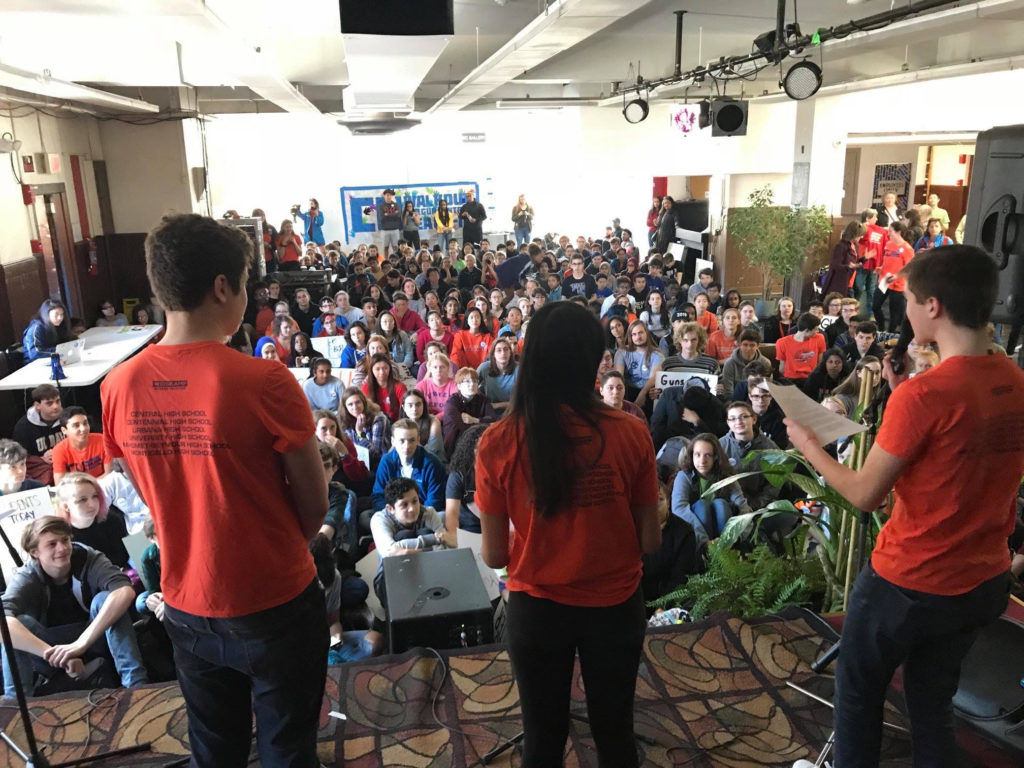
Student-led March For Our Lives Walk Out/Teach-In event at UCIMC in March, 2018
Another round of mass shootings in the news and once again Americans ask, “What can be done to keep my loved ones safe?” Sadly, these tragic events are only the tip of a terrible iceberg of violence that devastates families and communities each day. Despite increases in law enforcement, incarceration, and investigation of criminal networks, the violence continues. Desperation and fear have even resulted in misguided calls for the arming of teachers or other community members. Rather than adopt quasi-vigilantism, however, we need to address violence as a public health priority. Just as past public health campaigns were effective in decreasing the incidence of communicable diseases and workplace injuries, public health approaches can work to reduce violent acts.
The FBI and Centers for Disease Control (CDC) categorize violence in slightly different ways, but by any measure the impact is appalling. In 2017, there were 1.28 million incidents of violent crime in the U.S, including 19,510 homicides (14,542 by firearms, with 117 killed in mass shootings), another 85,000 non-fatal gun injuries, and 47,000 lives lost to suicide. Violent events also include often under-reported incidents of domestic violence; sexual assault (affecting one out of every six US women); approximately 674,000 victims of child abuse and neglect each year, in addition to victims of trafficking; and law enforcement violence. Each individual victim also represents family members whose lives have been changed forever by an act of violence. Continue reading