HAPPY MAY 1 FROM THE PUBLIC I!

656 total views


656 total views

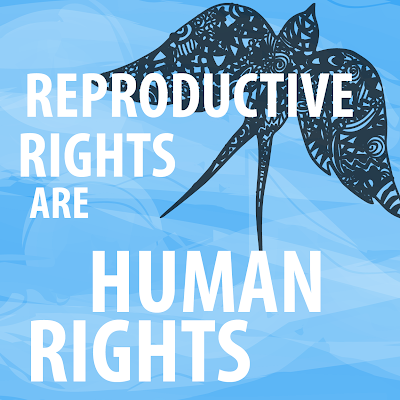
Image by Adrian Meadows for Fine Acts, used under
Creative Commons License CC BY-NC-SA 4.0 DEED
1,236 total views, 2 views today

Union officials in early 1865 promised slaves “forty acres and a mule” upon their emancipation, but never followed through. Photo courtesy Library of Congress, used by Creative Commons License CC0 1.0 DEED View public domain image source here
According to the Descendants Truth and Reconciliation Foundation, Black people in America own 10 cents of wealth for every dollar a white person owns, have lower life expectancies and higher unemployment, will earn $1 million less during their lifetimes, are 40 percent less likely to own a home, and are five times more likely to be imprisoned.
How Did We Get Here?
There are a couple of typical reactions when hearing of such stark differences in status and well-being between Black and white people. One can be described as a combination of defensiveness, denial, minimalization, and deflection. This reaction might include statements such as “it is because of the breakdown of the Black family” or “the lack of good Black role models,” or “a poor work ethic.” After all, slavery was so long ago that it surely has no impact on the ability of African Americans to be just as successful as Caucasian Americans today, right? Continue reading
1,301 total views, 1 views today

Champaign County Clerk and Recorder Aaron Ammons and Illinois State Rep. Carol Ammons (D-Urbana) examine land records
Can you imagine, as a resident of Champaign County, being told you aren’t allowed to live in a neighborhood because you’re Black? By today’s standards, such blatant racism would be met with disgust and rejection—at least by the majority of us.
But if you’re a student of history; you know about the torturous, inhumane treatment of Black people in this country through what is known as the transatlantic slave trade. You’ve read about the weaponization of laws after that period, resulting in the Jim Crow era of organized racism in the form of legal barriers to equality and terrorism committed against Black people by groups like the Ku Klux Klan. So when you hear that a resident couldn’t live on some properties throughout Champaign County, surely you imagine the age of Abraham Lincoln—a time long ago.
You would be wrong. Continue reading
2,125 total views

How Do We Define the “Black” Church?
In some sense, the Black Church can be readily defined by its music, style of preaching and sounds. Yet these are only surface definitions—it is so much more. The Black Church was born in enslavement and represented our first true freedom movement; it was a space where enslaved Africans blended indigenous African practices with the version of Christian text which was given to them.
At its formation, the Black Church was an underground, counter-cultural, fugitive formation of enslaved Africans who rejected the social and religious construction of the slaveholding world. The Black Church was and should unequivocally be, in the words of Dr. Vincent Lloyd, the “church of the field negro”: a courageous and bold rejection of a world tethered to white supremacy. It was the Invisible Institution, which provided a hush harbor for Africans held in chattel slavery and free Africans still treated as second-class citizens in America.
This Invisible Institution was the primary source of resistance for Africans in America. This reclaiming of the Christian tradition enabled Black folks to resist chattel slavery in both passive and active ways. Continue reading
985 total views, 1 views today

IL Representative Carol Ammons with a group of Illinois Legislative Black Caucus members and Champaign County Clerk Aaron Ammons after Rep. Ammons was crowned Queen Mother Aguadze of Kéta in the Volta Region of Ghana—a historic first for an African American. Photo courtesy Carol Ammons
“Visiting Ghana had a significant impact on me, both personally and professionally. It solidified my perspective on the importance of building bridges between African nations and the African diaspora. My visit home inspired me to integrate these newfound insights into my legislative work, such as [IL] House Resolution 453 Family Roots Genealogy Pilot Program. HR 453 seeks to reconnect people of African descent with African ancestry by using genetic genealogy to identify both reference and living African relatives. It also allows those who were separated from their ancestral homeland to find possible living relatives in their ethnic homeland.” (Carol Ammons)
For the descendants of Africans who were enslaved by colonial powers, family history might only be traceable back to the Middle Passage of the transatlantic slave trade. Even then it is often impossible to trace their family trees, since births and sales of the enslaved were poorly documented, marriages often unrecorded, and fathers unacknowledged. Thanks to the genomic revolution, private corporations offer the ability to restore these lost family trees or give an estimate of ethnicity. Using a sample of saliva, researchers can estimate ethnicity and find relatives not only in the US, but an ocean away, and (depending on the service) provide a platform to message consenting relatives. All this if an individual can pay the asking price of $99 or higher.
Illinois State Representative Carol Ammons (D-Urbana) went through this journey. She had her DNA tested by two companies, a common occurrence for genealogy consumers. Her quest for reconnection with her own family history saw her visit Ghana, where test results showed she had relatives. This experience caused Ammons to wish other African descendants could have the same experience without paying a private corporation. As it was the US government that profited from slavery, Ammons believes the government should pay for individuals to access this new tool to restore family histories. Continue reading
1,734 total views

F-House at Stateville Correctional Center, the last panopticon-style prison building in the U.S., seen in October 2018
Criminalization, abolition, and prison reform have long been third-rail issues in America. The only benefit to this impasse of ideologies is the mountain of research that has been collected in the interim.
Those of us in camp reality, camp humanity, have long known the roots of these problems—and now we have the proof. A collection of federal studies has found that youth who witness or are direct victims of violence, are raised without the full support of both parents, or do not have access to quality education have a much higher risk of justice-system involvement later in life. The inverse is also true. Continue reading
886 total views

The author receiving the Generation Next Leadership Award from the Illinois Legislative Black Caucus Foundation in February
Nineteen-year-old Shamar Betts of Urbana had no previous criminal record when he was arrested for “inciting a riot” via a Facebook post he wrote after witnessing the video of George Floyd’s murder in 2020. He was sentenced to three years in federal prison and made responsible for all the property damage and theft ($1.68 million) committed across town during that time of national anger. This second excerpt (the first appeared in the November/December 2023 Public i) from his forthcoming memoir describes how he supported himself while in United States Penitentiary Hazelton.
You need people outside jail for money. You call your people outside and ask them to put money on your account so you can go buy your stuff. They have underwear and socks for free, but not toiletries. You have to buy those. And there are other things people want or have to pay for. If you want the cell with a TV view, you maybe pay $2500. Or you might just need to pay for people to leave you alone.
Since my people weren’t really able to help me, I had to do things on my own. In the county jail I had a job in the laundry, so I could earn a little money ($1 an hour) for the things I needed. In the federal jail I did need some money from outside, but I also tried to make the money I needed. I never had a job given to me, but I had jobs I made up myself. For example, I used to cook. I’d make cheesecake and then go out and sell it at chow. I could make twenty-five dollars from a cheesecake. Continue reading
1,378 total views

A version of this article originally appeared on IPM Newsroom on January 9, 2024. It has been edited for space and style. See the full version on the Public i website.
This story is part of a partnership between the Champaign-Urbana Civic Police Data Project of the Invisible Institute and IPM Newsroom, and was supported with funding from the Data-Driven Reporting Project.
When Timothy Tyler applied for the Champaign Police Chief position in 2022, the city council was given his “resumes and cover letters and recommendations—things of that nature,” according to councilmember Davion Williams. Documents suggest the council was not privy to a more detailed accounting of Tyler’s policing history, which is marked by a trail of disciplinary actions and other incidents ranging from suspensions for “unfavorable” conduct to entanglements in several federal civil rights lawsuits. After receiving questions about Tyler’s background from a reporter, Williams forwarded the email to City Manager Dorothy Ann David, and asked, “Were we aware of these incidents as a city?”
Several of the investigations into Tyler’s misconduct led to settlements and disciplinary action. Among those: an off-duty domestic incident with an ex-girlfriend and an improper vehicle pursuit that ended in a crash outside of Chicago Police headquarters. In addition, civil rights lawsuits accused him of false arrest and conspiring with city officials to illegally shut down a nightclub. Continue reading
1,195 total views

A version of this article originally appeared on IPM Newsroom on January 9, 2024. It has been edited for style. See the shorter, print version here.
This story is part of a partnership, focusing on police misconduct in Champaign County, between the Champaign-Urbana Civic Police Data Project of the Invisible Institute, a Chicago-based nonprofit public accountability journalism organization, and IPM Newsroom, which provides news about Illinois and in-depth reporting on Agriculture, Education, the Environment, Health, and Politics, powered by Illinois Public Media. This investigation was supported with funding from the Data-Driven Reporting Project, which is funded by the Google News Initiative in partnership with Northwestern University | Medill.
When Timothy Tyler applied for the Champaign Police Chief position in 2022, the city council was given his “resumes and cover letters and recommendations—things of that nature,” according to councilmember Davion Williams. New documents obtained through open records requests by Invisible Institute and IPM Newsroom suggest the council was not privy to a more detailed accounting of Tyler’s policing history, which is marked by a trail of disciplinary actions and other incidents ranging from suspensions for “unfavorable” conduct to entanglements in several federal civil rights lawsuits.
After receiving information and questions about Tyler’s background from Invisible Institute and IPM Newsroom,, Williams forwarded the email to City Manager Dorothy Ann David, and asked, “Were we aware of these incidents as a city?” Continue reading
754 total views, 2 views today

Activists of new local group UC Jews for Cease-Fire. Photo by Al Kagan
773 total views

“Gaza’s Grim Holiday: A Shameful Legacy for President Biden,” cartoon by Khalil Bendib, OtherWords.org, used under Creative Commons License CC BY-ND 3.0 DEED

Demonstration in Champaign for an immediate cease-fire and end to US aid to Israel on January 27. Image by Paul Mueth
The hypocrisy gap between US diplomatic pronouncements and US actions is no surprise to world audiences, but the disconnect on display since October 7 has put the nail in the coffin of the American Century. American officials have been invoking caution against a “wider war” for months as they shuttle from capital to capital across the Middle East, portraying themselves as smokejumpers ahead of the fire. They are discounting the war raging in Gaza as if it were a sideshow. It’s true the situation could get much, much worse, but from the point of view of the region the “wider war” is already here. It’s been burning for decades, not just in Gaza but across the Middle East—and the US lost the future years ago.
The US Disconnect and the Pivot to Asia
For the last decade US policy hasn’t centered on combatting terrorism or protecting energy supplies, and certainly not on promoting democracy or cooperating on the climate; instead, it’s been obsessed with China. That has been the inspiration driving US diplomatic efforts to tie up loose ends in the Middle East. Facile treaties such as the Abraham Accords provided Washington with the illusion that they could quickly and easily box up boring old problems like the Palestinians for deep storage. The transition to drone warfare, or “over-the-horizon” strategies, offered a way to literally keep troublesome actors under the gun while freeing up US forces for future engagements elsewhere. This was not a Middle East policy, but the absence of one as Washington attempted to pivot away from regional disappointments to shiny new priorities in Asia. Continue reading
1,971 total views

Migrants at the Latvia-Belarus border in February 2022; used under Creative Commons License CC BY-SA 4.0 DEED
In an article in our last issue (November-December Public i), I used the case of Hungary—its positive reception of Ukrainian refugees, alongside its negative role in hindering EU political and material support of Ukraine in its defense against Russian aggression—to explore some of the contradictions of current European migrant politics. The EU welcomed with open arms the Ukrainian millions, while trading financial backing to authoritarian strongmen beyond its borders—most prominently in Turkey and Tunisia—to keep war and climate refugees from the Global South at bay, by any means necessary. Western European opinion, expressed through dominant positions in EU bodies, decries the crude anti-migrant politics and practices in many of the eastern member-states, while their own populist politicians ride anti-migrant rhetoric to political success—dragging centrist and even liberal parties in an anti-immigrant direction. In this article I will expand my scope to other East European contexts to argue that these contradictions should complicate our view of Europe’s immigration issues. Continue reading
982 total views

Crime is going down in Urbana, but you wouldn’t know it from looking at Urbana’s police budget. After a $2.25 million increase in the police budget in the last two years—largely for salary increases and bonuses—Urbana leadership is pushing to hire 15 new police officers for another approximate $2 million. In sum, these recent and proposed sums represent a 34 percent increase that is likely to come with a tax increase. On December 4, a proposal to hire the first four was put on pause by the Urbana City Council after dozens of residents spoke up with concerns.
This focus on policing and criminal justice comes at a time when members of the community and city council have expressed strong interest in investigating alternative public safety models. Per council request, a study of alternative models is currently underway, with a report expected this spring. At a recent series of police listening sessions, community members questioned the centrality of criminal justice in the discussion of public safety. Attendees brought up material necessities like housing, health care, food, employment, and recreation as vital components of public safety. Continue reading
2,011 total views

This article originally appeared at Smile Politely on December 5, 2023; reprinted with permission. It has been lightly edited for style.
“He calls first thing in the morning just to say good morning,” said Blaine Sherase Lee, whose son was arrested in Urbana on a gun charge and has been in jail for two years. “Usually, he hangs up because he needs to eat and shower. Usually, he calls back maybe by noon. Then, after that phone call, he said they go on lockdown, I think around 3 p.m. for like an hour or two. He calls back maybe around six. And then again, right before he goes to bed.”
Over the two years, Lee estimated that she and other family members had spent around $3,000 on phone calls and commissary—additional food, hygiene products, and other supplies that can be purchased at inflated prices. “It’s extremely expensive,” Lee told me.
Champaign County is introducing free phone calls at the jail after activists exposed that Securus, a major prison profiteer, was charging a whopping six dollars for a 20-minute phone call. Sheriff Dustin Heuerman announced the new deal at a county board meeting on November 21, 2023. Under a new contract with Consolidated Telecom, Inc., those at the jail will receive two free phone calls a day. Continue reading
1,435 total views

Illinois Third Acters joined by folks from the C-U area rally in front of Chase Bank’s Chicago Headquarters, March 21, 2023
It’s March 21,, 2023, a cool, just barely spring day, and the sidewalks surrounding JPMorgan Chase Bank’s downtown Chicago headquarters are filled with hundreds of chanting, white-haired elders. The cops flanking the bank’s entrance seem more bemused than wary as the protestors file past offering full-throated demands: “Divest now!”; “Our grandchildren are watching”; and “Dump fossil fuels.”
This is the first direct action of Third Act Illinois; among the participants are Champaign-Urbana area residents who will organize an affiliate branch of the state group and go on to work intensively on fossil fuel divestment legislation initiatives that are still ongoing. No quiet retirement for Third Acters: they plan to go out fighting. Continue reading
1,178 total views

Jim Holiman
Before there were cell phones, or the internet or Zoom, campus activism in C-U was alive and well. Posters and word of mouth brought people of conscience together for strategy sessions and social justice cultural events at the Illinois Disciples Foundation (IDF)—now gone—at the corner of Springfield and Wright. The late Jim Holiman, who died in November at age 88, was the campus minister there from 1963–99. What a character he was, and what a time it was.
Jim was a strange and wonderful man. A biblical prophet. A provocative trickster. A cantankerous gadfly. A relaxed conversationalist. Quite the storyteller. He could be surprising, exhilarating, puzzling, infuriating, inspiring. Everyone back then had their own Jim Holiman experience. Continue reading
990 total views

Arnie Alpert and Mary Lee Sargent in front of the Elizabeth Gurley Flynn highway marker they sponsored, before its removal
This article, commissioned for the Public i, appeared first in a longer version in Monthly Review on November 29, 2023, under the title “Gender, Labor, Democracy, and Americanism: U.S. History in the (Un)Making”; reprinted with permission.
In the early hours of Monday, May 15, 2023, a historical highway marker recognizing the birthplace of a renowned early 20th-century feminist, anti-racist labor organizer, and defender of reproductive rights was taken down.
The marker had been formally approved and erected by the state, following years of community effort.
It stood for two weeks before being removed by the governor. Continue reading
1,629 total views